Explore Religious Heritage Across Europe

Here you can search for a building to visit. You can use the map find destinations, or you can use the filters to search for a building based upon what different criteria.

Refine search

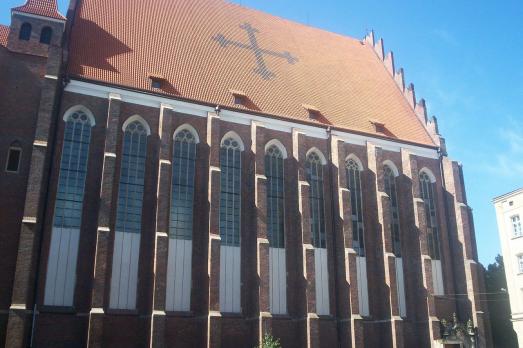
Church of St. Dorothea

Church of St. Dorothea

Wrocław, PL

St. Dorothea is a 14th century Gothic hall church, originally an augustinian hermits monastery, and then Franciscan. After the dissolution of the order in 1810, the building experienced a century of decay; the building was finally fully restored after the second world war.
Church of St. Duha

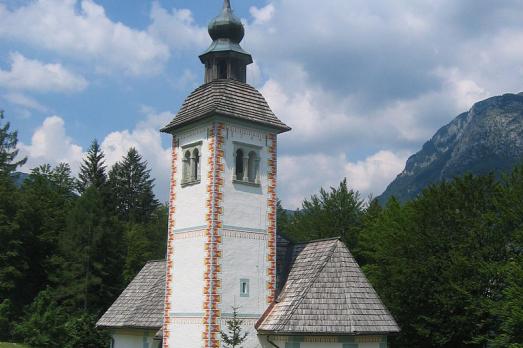
Church of St. Duha

Bohinjsko jezero, SI

The church of St. Duha stands on the southern shore of Lake Bohinj. The church and the bell tower were built in the Baroque style in 1743. The interior of the church was whitewashed during the renovation in 1981, although 12 frescoes were discovered there. On the external facade, on the east side of the presbytery, there is a large fresco of St. Christopher. The church has two bells.

Church of St. Elijah the Prophet

Solakova Kula, BA

The church of St. Elijah the Prophet dates from 1883, but its bell tower is a more recent construction, dating from 1925. In 1960, renovation work was carried out. During and after the 1992-1995 war in Bosnia and Herzegovina, the church and the parish house were damaged. Reconstruction work was carried out between 2004 and 2005 without expert supervision.

Church of St. Elijah

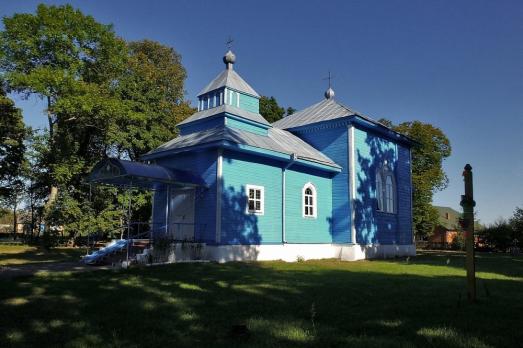
Church of St. Elijah

Nizhnii Terebezhov, BY

The Orthodox Church of St. Elijah in Nizhny Terebiazhiv was built in 1872 out of wood. At the end of the 20th century, a bell tower was built.

Church of St. Elijah

Church of St. Elijah

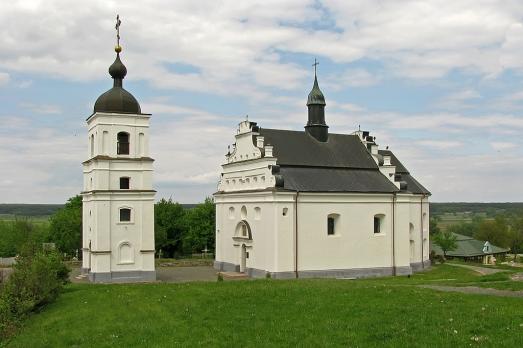
Subotiv, UA

The Church of St. Elijah was built in the 1650s in the style of early Ukrainian Baroque. After the Second World War, a museum of the national hero Bohdan Khmelnytsky (1648 - 1657), who was supposed to be buried here, was opened in the church. In 1954, a symbolic granite tombstone in his honour was erected in the church according to the design of architect I. Shmulson. Since 1990, the church has been returned to the religious community.

Church of St. Elizabeth of the House of Árpád

Church of St. Elizabeth of the House of Árpád

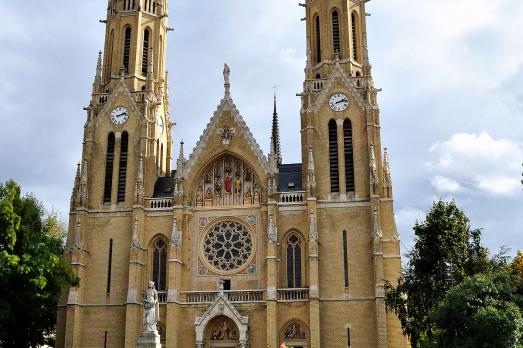
Budapest, HU

St Elizabeth's Church (1901) is a large neo-Gothic is dedicated to Saint Elizabeth of Hungary (a.k.a. Saint Elizabeth of Thuringia) was a medieval princess of the Kingdom of Hungary. As a political pawn used her dowry money to build a hospital where she tended to the sick. She became a symbol of Christian charity after her death at the age of 24 and was canonized in 1235.

Church of St. Elizabeth

Church of St. Elizabeth

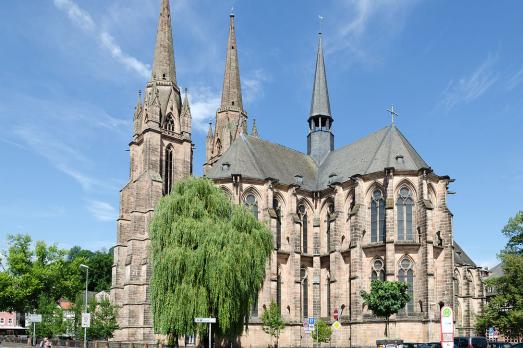
Marburg, DE

The Church of St. Elizabeth was built between 1235 and 1283 by the Teutonic Order on the tomb of St. Elizabeth, making the church an important place of pilgrimage in Western Europe in the late Middle Ages. In 1539, the landgrave Philip the Magnanimous had the bones of St. Elizabeth removed in order to send a signal against the cult of the relics. During the Seven Years' War (1756-1763), the church was damaged when it was used as a hay and flour store. Maintenance work was carried out in 1767-1770. Between 1811 and 1827, the church was a Simultaneum for a short period, so that the Catholic and Protestant services were held separately.

Church of St. Euphemia

Church of St. Euphemia

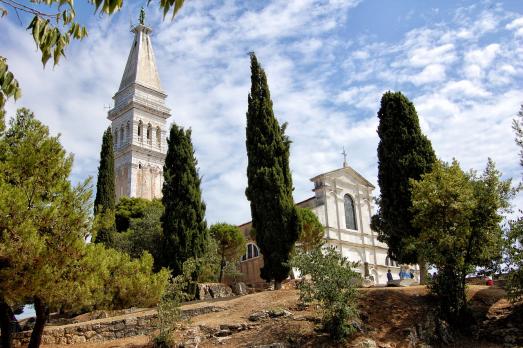
Rovinj, HR

The Church of St. Euphemia (also known as Sveta Fuma) is the most famous monument of Rovinj. The current Venetian baroque building was built between 1725 and 1736, on the site of an old medieval church.

Be inspired

Stupkalnis.lt

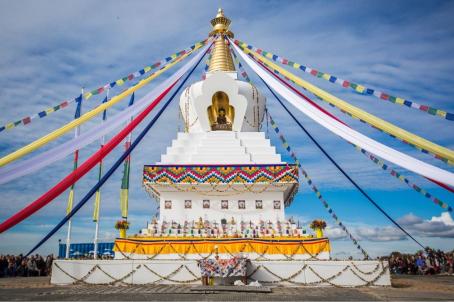
10 Buddhist stupas to discover in Europe

Stupas are symbols of enlightenment and peace that commemorate different stages of Buddha's life. Since the mid-20th century, thousands of stupas have begun to populate Europe. We have compiled some of the most impressive ones in this list.