Explore Religious Heritage Across Europe

Here you can search for a building to visit. You can use the map find destinations, or you can use the filters to search for a building based upon what different criteria.

Refine search

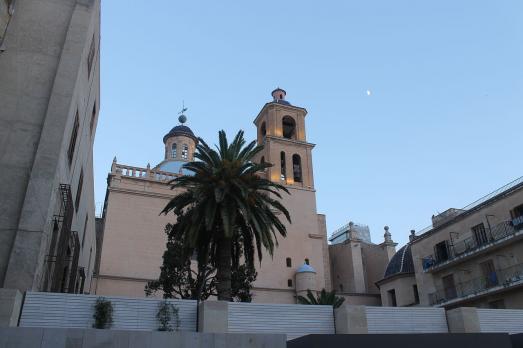
Co-cathedral of San Nicolás de Bari

Co-cathedral of San Nicolás de Bari

Alicante, ES

Built on the remains of a mosque, the cathedral was built in the Herrerian Renaissance style with the geometrical sobber façade, it was disgned by Agustín Bernardino, a disciple of Juan de Herrera. Its interior is of great proportions as well with classic casings covering the walls. The Communion chapel is worth noting for being one of the most beautiful samples of the Spanish high Baroque.
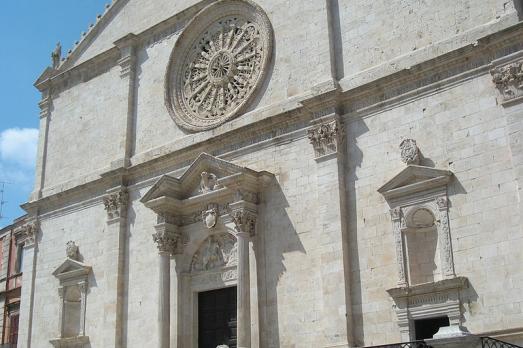
Co-cathedral of Sant'Eustachio Martire

Co-cathedral of Sant'Eustachio Martire

Acquaviva delle Fonti, IT

The co-cathedral of Sant'Eustachio Martire was built in the 16th century on an ancient Romanesque church of the 11th and 13th centuries. The main cusped façade, tripartite with pilasters and divided into two orders (the first is Corinthian, the second Doric), is overall in Renaissance style, while the rest of the façades have an architectural style reminiscent of Apulian Romanesque.

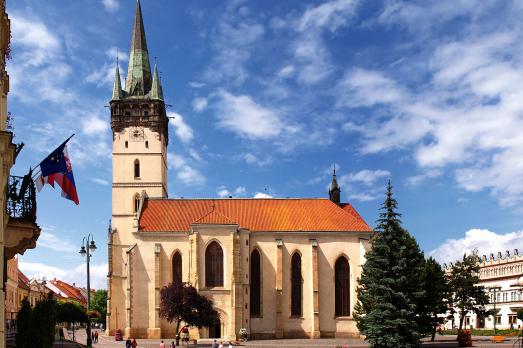
Co-cathedral of St. Nicholas, Prešov

Co-cathedral of St. Nicholas, Prešov

Prešov, SK

The co-cathedral of St. Nicholas is one of the oldest and most important churches in Slovakia. The cathedral was built in the mid-14th century as a single nave with a polygonal raised presbytery. The triple nave was completed in 1505. The entire reconstruction was completed in 1515.

Co-Cathedral of the Assumption of the Virgin and St. Stanislaus,

Co-Cathedral of the Assumption of the Virgin and St. Stanislaus,

Mahilioŭ, BY

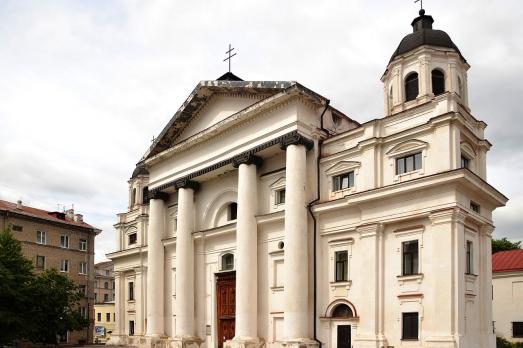
The Cathedral of the Assumption of the Virgin Mary and St. Stanislaus is the Catholic Cathedral of Mahilëŭ. The cathedral stands on the site of the former Carmelite convent. In 1636, a wooden church dedicated to the name of Santa Maria Assunta was built in the monastery. In 1708 a great fire burnt the church and in its place, in 1738-1752, a stone church was built, consecrated in 1765. From 1783, the church of the Carmelite monastery became the cathedral of the archdiocese of Mahilëŭ, taking its present name. In 1956, the cathedral was closed and converted into the State Archives. At the beginning of 1990, the cathedral was returned to the diocese.

Codlea Fortified Church

Codlea Fortified Church

Codlea, RO

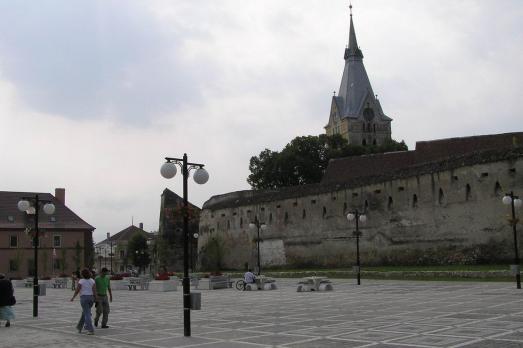
The bell tower dominates the fortified church in Codlea. Its walls reach a thickness of 5m after having undergone several construction phases. The church was built during the 13th century and was transformed into a Gothic single-nave church two centuries later. The first Ottoman invasion convinced the villagers of the necessity of a good defensive system. Thus an 8m high and 2m thick defence wall equipped with embrasure and machicolation surrounded the church. Granaries were also constructed in its interior, and so not only the lives of the residents were protected, but also their goods. The interior of the church is dominated by the painted panelled ceiling, which was constructed at the beginning of the 18th century and consists of 252 panels. Also impressive is the 1783 organ, one of the most valuable instruments in Transylvania built by the craftsman Prause of Silenzia and decorated by the artist Oelhan.

Coka Jewish Cemetery

Coka Jewish Cemetery

Čoka, RS

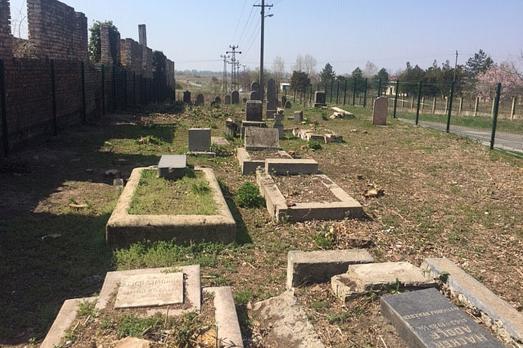
The cemetery has about 20 tombstones that have been preserved. The site was fenced by ESJF in December 2018.

Colegiata de San Isidoro de León

Colegiata de San Isidoro de León

León, ES

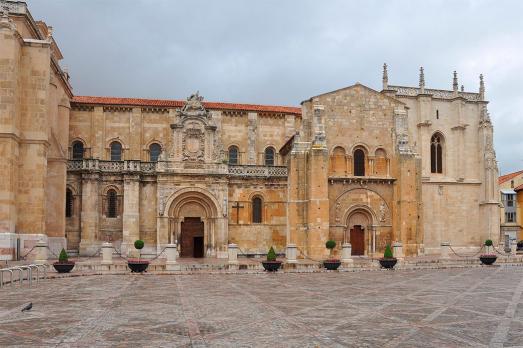
In 966, Sancho I el Craso (c. 933-966) built a church in the city of León dedicated to the martyr Saint Pelayo, whose relics he had obtained thanks to his contacts with Abd al-Rahman III. The complex preserves an important artistic heritage, both in terms of the architecture of the buildings and the furniture that remains.

Colintraive Church

Colintraive Church

Colintraive, GB

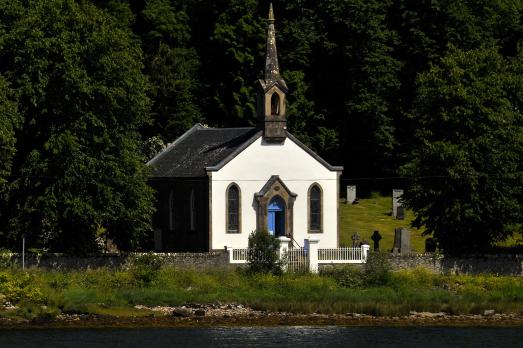
Nothing can be more peaceful to behold than the little church at Colintraive, situated by the shores of the Kyles of Bute, clearly visible from the sea against a dark background of trees.

Colle di Val d'Elsa Cathedral

Colle di Val d'Elsa Cathedral

Colle di Val d'Elsa, IT

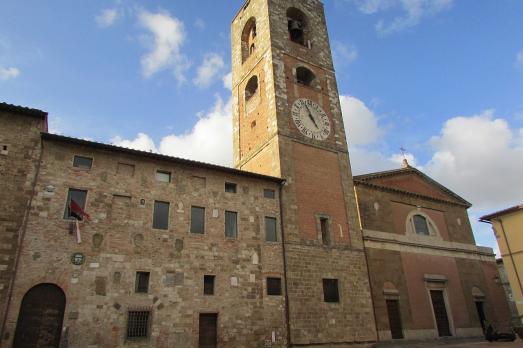
The construction of the Colle di Val d'Elsa Cathedral was started in 1603 on the site of the old parish church of San Salvatore, expanded during the 11th century by Pisan workers. The construction of the cathedral follows the creation of the Diocese of Colle di Val d'Elsa in 1592. The sober Neo-Classical façade is by Agostino Fantastici (1782–1845).

Collégiale de Villefranche-de-Rouergue

Villefranche-de-Rouergue, FR

The building dates from the 13th century, in 1252, after the medieval basilica was transferred to the other side of the bank. The revolution spared the church, which was transformed first into the Temple of the Supreme Being, then into a fodder store. The bell tower is saved from demolition by placing a statue of the goddess at its top.

Be inspired

Stupkalnis.lt

10 Buddhist stupas to discover in Europe

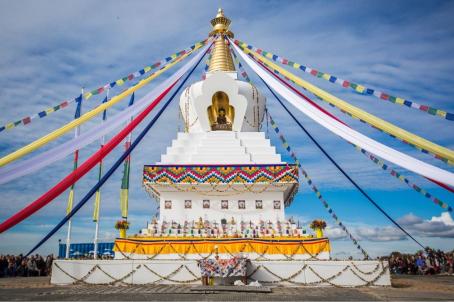
Stupas are symbols of enlightenment and peace that commemorate different stages of Buddha's life. Since the mid-20th century, thousands of stupas have begun to populate Europe. We have compiled some of the most impressive ones in this list.