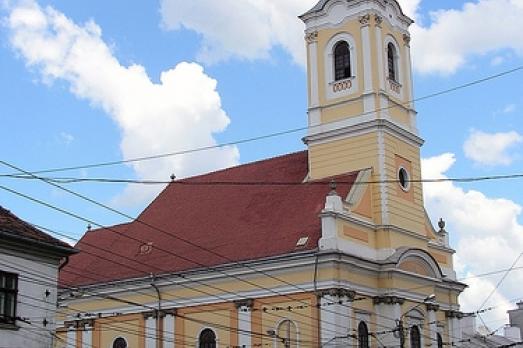
Cluj-Napoca Evangelical Church
Cluj-Napoca, RO
The Cluj-Napoca Evangelical Church was built between 1816 and 1829 and blends baroque elements with neoclassical style. In its walls were incorporated the stones of the so-called Round Bastion.

Here you can search for a building to visit. You can use the map find destinations, or you can use the filters to search for a building based upon what different criteria.
Cluj-Napoca, RO
The Cluj-Napoca Evangelical Church was built between 1816 and 1829 and blends baroque elements with neoclassical style. In its walls were incorporated the stones of the so-called Round Bastion.
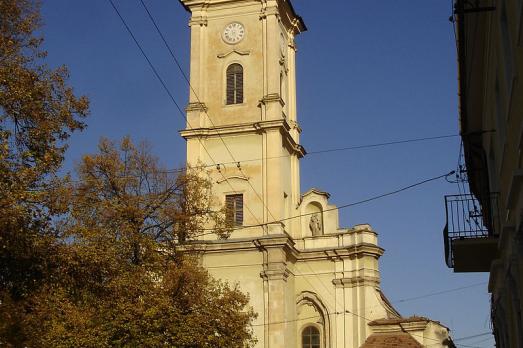
Cluj-Napoca, RO
The Franciscan Church of Cluj-Napoca is one of the oldest and most important places of worship in Cluj, dating back to the 13th century. The building is classified as a historical monument.
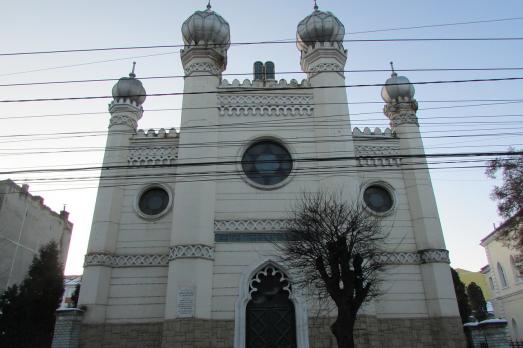
Cluj-Napoca, RO
The Neologos synagogue is a mosaic place of worship built between 1886 and 1887 in the Moorish style. It is now known as the temple of Jewish deportation. After the dictation of Vienna (1940), when Hungary occupied northern Transylvania, the synagogue was turned into a warehouse. After the Jews were deported to the Nazi camps, the synagogue was badly damaged in June 1944 due to bombing. The synagogue was later restored in the 1950s.
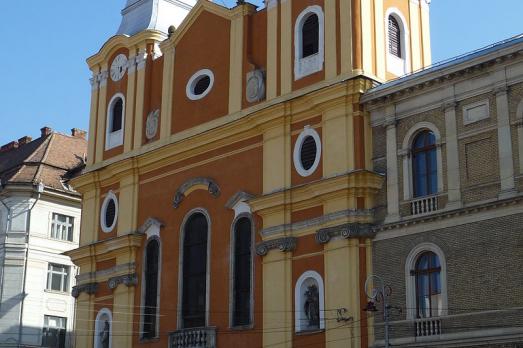
Cluj-Napoca, RO
The Piarist Church, originally known as the Cluj Jesuit Church or University Church, is the first Catholic church built in Transylvania after the Protestant Reformation (16th century). The church, built between 1718 and 1724, is a Baroque architectural ensemble where the central building of Babeş-Bolyai University is located today.
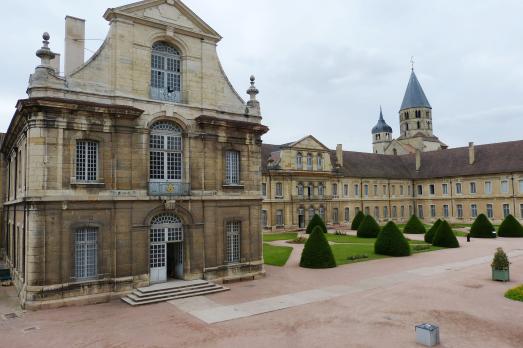
Cluny, FR
The Abbey of Cluny, founded in the 10th century, quickly became the most important Benedictine monastery in Western Europe, triggering a revival of monastic practises on the continent. Until the 12th century, the Abbey of Cluny governed monastic life in Europe and gave birth to 1800 sites throughout western Europe. Due to its rapid growth, the buildings of the abbey were modified on numerous occasions, notably during the reconstructions from 963 to 981 and from 1080 to 1220. The last reconstruction made the abbey the largest Christian building in the world until the construction of St Peter's Basilica (1506-1626). The monastery was dissolved in 1790 and was largely destroyed during the French Revolution. The large library and archives caught fire in 1793 and the church was looted. The present remains of the monastery represent about 10% of the total area of the third abbey (1080-1220). Since 1901, the former monastery has been part of the École Nationale Supérieure d'Arts et Métiers (ENSAM).
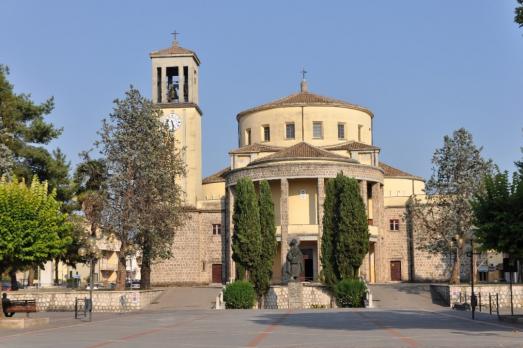
Aquino, IT
The co-cathedral of Aquino dates back to the 11th century but during the bombing of the city in 1944 the cathedral was seriously and irreparably damaged. Thus, the present building is a post-war construction. The church was the cathedral of the diocese of Aquino until 30 September 1986, when it became the co-cathedral of the diocese of Sora-Cassino-Aquino-Pontecorvo.
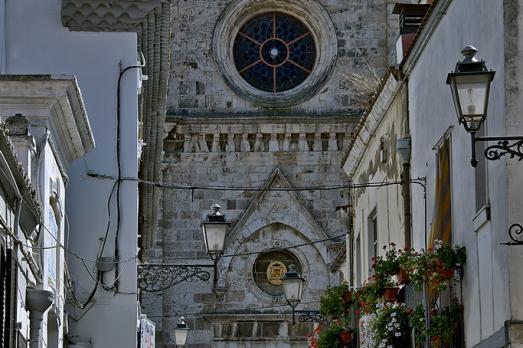
Ascoli Satriano, IT
The present cathedral of Ascoli Satriano was built in the second half of the 13th century by the Conventual Friars Minor, who dedicated it to Saint Francis, with their adjoining monastery. With a bull dated 24th September 1455, Pope Callistus III raised the Franciscan church to the rank of a new diocesan cathedral, replacing the previous one, which was destroyed by an earthquake. The new cathedral was enlarged and restored during the 17th century and was reconsecrated on June 3, 1709. It was finally completely rebuilt after the earthquake of 1871 which reduced it to ruins.
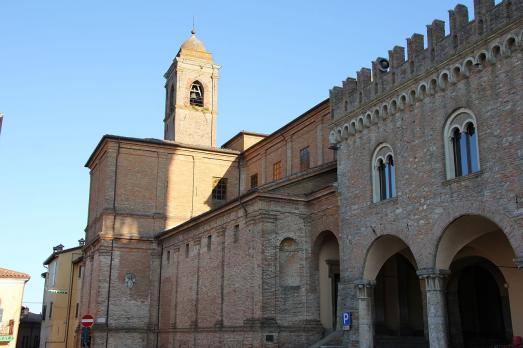
Bertinoro, IT
The co-cathedral of Bertinoro stands on the site of a small oratory, which was demolished at the end of the 16th century. It was built in the style of Bramante by order of Bishop Giovanni Andrea Caligari and was completed in the 17th century.
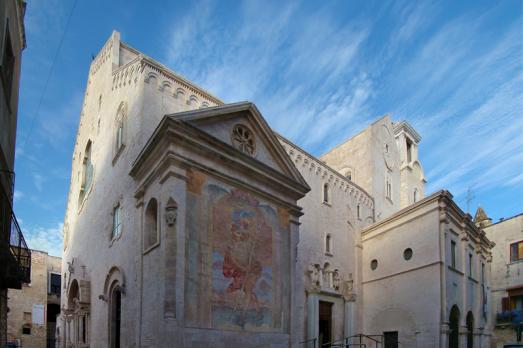
Bisceglie, IT
The Cathedral of Bisceglie was founded in 1073 by the Norman Count of Trani, Pietro II. The church was built in the Romanesque style and completed in 1295. The building is in the Pugliese Romanesque style, although its original style has been altered by later reconstructions, in particular a Baroque reconstruction in the 18th century.
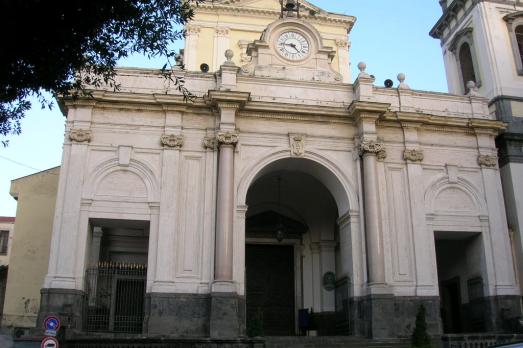
Castellammare di Stabia, IT
The co-cathedral of Castellammare was built in 1587 but was only consecrated in 1893. An earlier cathedral suffered considerable damage in the earthquake of 1436, hence the decision to build a new one in the 16th century. The building was only partially opened for worship in 1643, when some of the chapels were granted to several noble families of the city. Between 1875 and 1893, by order of Bishop Petagna, the church was completely modified: it took the shape of a Latin cross.
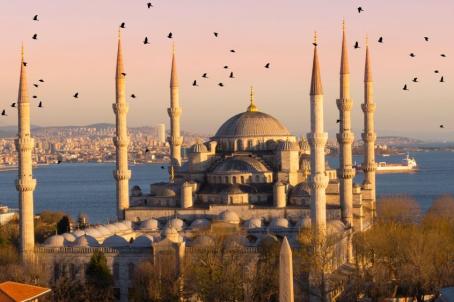
new
For a long time, Europe was ruled by powerful monarchies. Monarchy and religion have been connected since time immemorial. Here are 7 sites across Europe where royalty historically bent the knee to a higher power and received their crown.
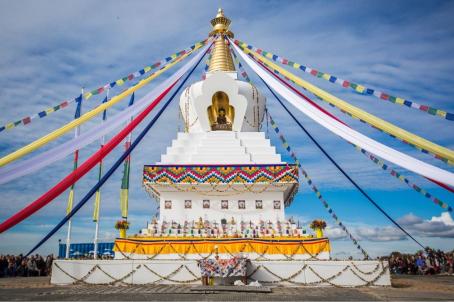
Stupas are symbols of enlightenment and peace that commemorate different stages of Buddha's life. Since the mid-20th century, thousands of stupas have begun to populate Europe. We have compiled some of the most impressive ones in this list.
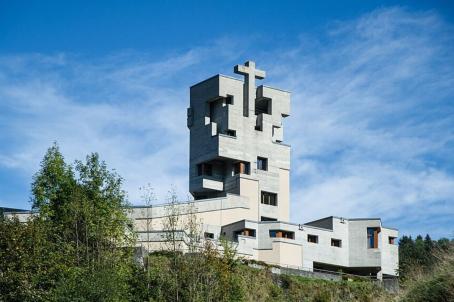
Walter Maria Förderer (1928–2006) was a Swiss architect and sculptor renowned for his neo-expressionist church designs in the 1960s. In this list we have compiled 6 of his church designs that seamlessly integrate religious and secular elements.

How is Religiana helping to conserve and promote Religious Heritage in Europe and why should you get involved?
Find out about Religiana
Are you a tourism organisation or religious heritage sites manager? Discover the advantages of becoming a partner.
See current partners
We can keep you up to date with the latest news from Religiana and religious heritage conservation across Europe.
Sign up to the FRH newsletter