Explore Religious Heritage Across Europe

Here you can search for a building to visit. You can use the map find destinations, or you can use the filters to search for a building based upon what different criteria.

Refine search

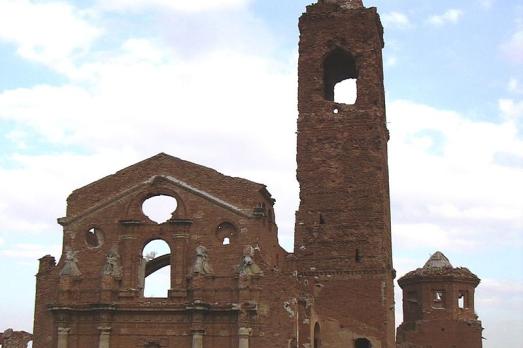
Church ruins of San Martín de Tours

Church ruins of San Martín de Tours

Belchite, ES

The church of San Martin de Tours in Belchite Viejo (province of Zaragoza, Spain) was built in the first decades of the 15th century, although it was later renovated in 1550. The new opening, included the exterior decoration of the apse. Also, in the 18th century, the nave was enlarged, and another section at its foot, altered chapels a some of the sides were made into a memorial table.
Church St John the Baptist, Arras

Church St John the Baptist, Arras

Arras, FR

Église catholique Saint-Jean-Baptiste pro-cathédrale d’Arras was built during the 16th century, under the patronage of Saint Nicolas in the Moats, replacing a church in the moats where Saint Thomas à Becket had preached, it was saved from destruction during the French Revolution because it became the ‘Temple of Reason’. It was the temporary cathedral between 1803 and 1833. In 1915 it was burnt down in the bombings of the town, causing the death of two heroic firemen.

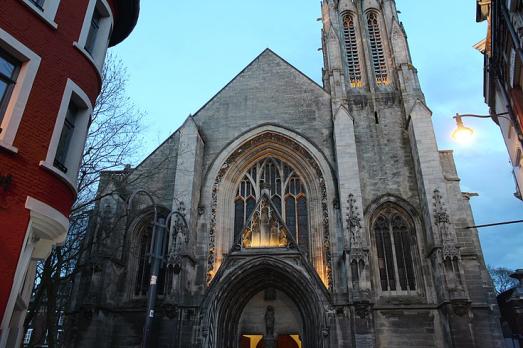
Church Street

Church Street

Dublin, IE

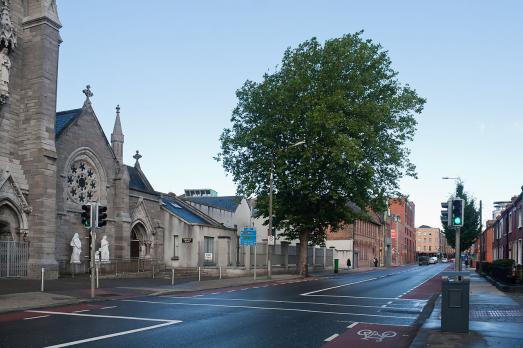
St. Mary of the Angels Church, or "Church Street", is a Capuchin church dating from the late 19th century. The Capuchin friars first arrived in Dublin in 1615, but it was not until 1624 that the first convent was established in Bridge Street. They arrived in Church Street in 1690, shortly after the Battle of the Boyne and opened a mass house on the site of the present church. The mass house was enlarged in 1796. The present church dates from 1881 and was designed by James J. McCarthy.

Church-Mosque of Shkodra

Church-Mosque of Shkodra

Shkodër, AL

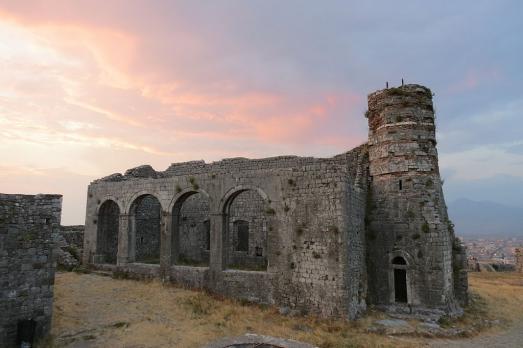
Originally built around the 1300s as a Catholic church, it was turned into a mosque after the fall of Shkodra in 1479. Until 2017, for 12 consecutive years the parish of St. Stephen's Cathedral held Mass in celebration of the patron saint of the city which was seen by the Mufti of Shkodra as infringement to the inter-religious harmony and tolerance.

Cincşor Fortified Church

Cincşor Fortified Church

Cincșor, RO

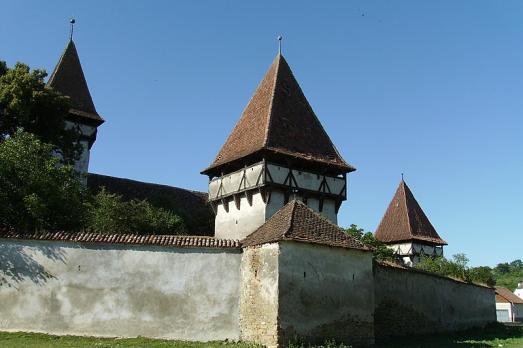
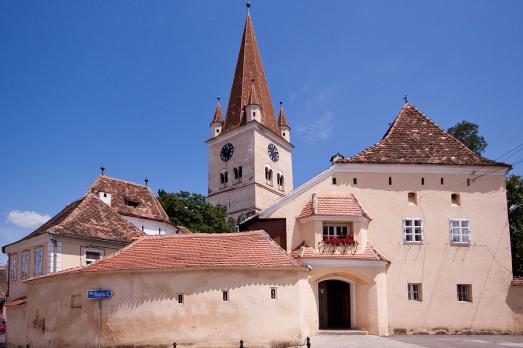
In the second half of the 13th century, a chapel erected in Cincşor was the core for building the actual church, which was completed in 1421. The church was fortified step by step in the 15th and 16th century, as testified by the timber frame structures. The chancel was reinforced with buttresses and widened along with the bell tower with a wooden parapet walk. In addition, the villagers built a fortification wall with 4 defence towers and an outer moat around the church. In the following centuries, the village faced difficult times. Among other things, it was burned down during an attack in 1599. The community flourished only after 1850, when not far away from the village a bridge was built for the first time on the river Olt.

Cincu Fortified Church

Cincu Fortified Church

Cincu, RO

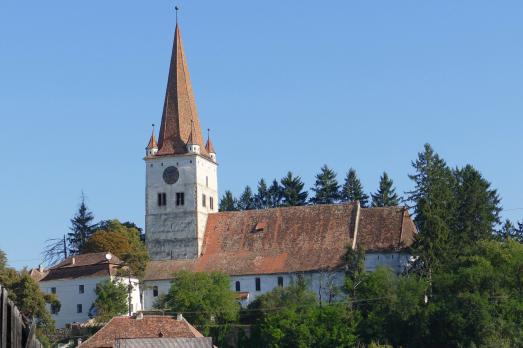
From its very beginning the destiny of the Evangelic church in Cincu was to be a bastion of faith, both metaphorically and literally: the western tower was erected at the beginning of the 13th century, it was heightened and strengthened several times, gaining its current appearance after the works in the 18th century. A large part of the two ring walls, which had bastions and defense towers, have been demolished. However, from all the fortified buildings two are still preserved: the so-called old town hall and a defensive storage building. The interior nowadays has the appearance of a hall church, due to the heightening of the aisles to make room for installing the galleries. The wrought iron balustrade was added about a hundred years later. The interior furniture of the church shows an attractive mixture of styles: next to the chancel pews in the late Gothic style there is the Renaissance pulpit, while the classicist organ dominates the Baroque font, epitaphs and pews of the guilds.

Cingoli Cathedral

Cingoli Cathedral

Cingoli, IT

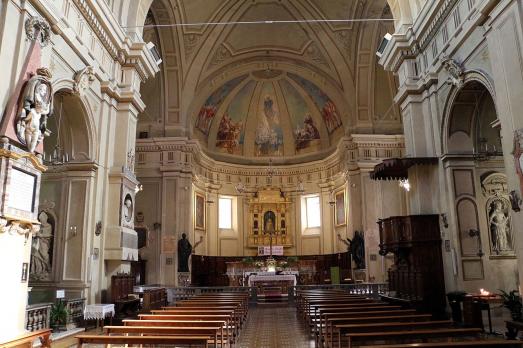
The cathedral of Cingoli was built in the middle of the 17th century. The present church, however, is built on the site of a pre-existing cult building dedicated to the Holy Saviour. This was demolished in the first half of the seventeenth century for the construction of the present church, based on the plans of the architect Ascanio Passeri from Pergola; the façade of the previous church was inserted on the left side of the present building.

Cirkev Adventistov Siedmeho Dna v SNV

Spissku Stvrtok, SK

When the church officially began to exist in 1863, there were about 3,500 members who met for common Sabbath services and prayers. Most of them came from nearby regions. By 1870, their number had grown to 16,000. Until 1880, missionary activity covered only North America (USA and Canada). At the turn of the century, in 1901, the church had 75,000 members, operated two universities, a medical school, 27 hospitals and 13 publishing houses. After the end of II. World War II, the church had 360 thousand members, in 1961 their number reached one million. At the turn of the millennium, there were approximately 10 million Adventists in the world.

Cisnădie Fortified Church

Cisnădie Fortified Church

Cisnădie, RO

Today the church still exhibits the basic characteristics of the three-aisle Romanesque basilica that originally had a six-level western tower. The ensemble was surrounded by a ring wall, which was fortified starting in 1430, when the Ottoman attacks occurred. A second fortification wall was built, as well as several defence towers and a moat. The church itself was also strengthened: defence towers were built above the chancel and its apse and above the two side entrances. The western Romanesque portal is ornamented with typical interlace. The spire roof with corner towers was built as early as 1591. Especially valuable are the altars from other village churches, which are displayed inside. These were brought to Cisnădie for safety reasons.

Be inspired

Stupkalnis.lt

10 Buddhist stupas to discover in Europe

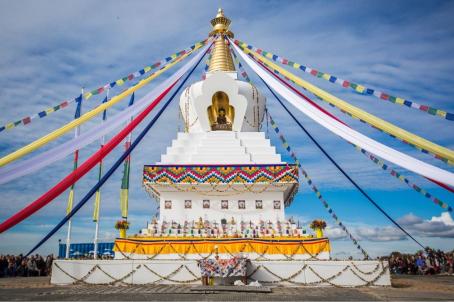
Stupas are symbols of enlightenment and peace that commemorate different stages of Buddha's life. Since the mid-20th century, thousands of stupas have begun to populate Europe. We have compiled some of the most impressive ones in this list.