Explore Religious Heritage Across Europe

Here you can search for a building to visit. You can use the map find destinations, or you can use the filters to search for a building based upon what different criteria.

Refine search

Clemenskerk

Havelte, NL

Dutch Reformed Church with nave created by raising the previous Romanesque stone vaults in the 15th century. Choir from the 15th century. Inventory: pulpit XVII, pews XVIIc. Originally a single-manual organ, made in 1819 by P. van Oeckelen for the Reformed Church in Assen. Extended in 1855 with an upper work. Van Oeckelen used older pipework and case parts. Placed in Havelte in 1897. In the immediate vicinity of the church two so-called devil's grilles, one on the southwest side of the tower and one on the northeast side of the choir. These gave access to the churchyard and were located in the now disappeared fence or wall.

Clemenskerk

Rotterdam, NL

The current nave was built in 1868 in neo-Gothic style with references to the English Tudor style, based on a design by J. Visser, an architect in Rotterdam. The current three-aisled nave replaced the seventeenth century cruciform church situated here, of which the low square tower, with a constricted spire from 1660, was retained. When the old church was replaced by the current church building, the organ was moved here. The church is situated in a garden that is separated from the road by a new iron fence on a red brick foot wall.
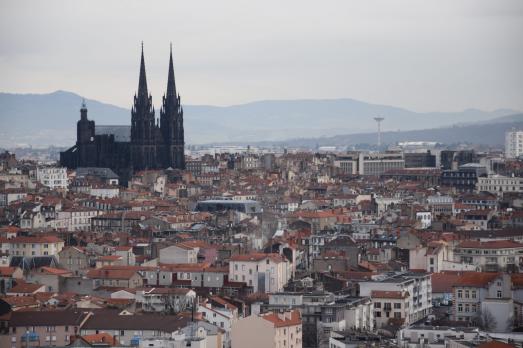
Clermont-Ferrand Cathedral

Clermont-Ferrand Cathedral

Clermont-Ferrand, FR

A primitive cathedral was built in the 5th century, then a Romanesque cathedral. In 1248, Hugues de la Tour, then bishop, began work on a new Gothic cathedral under the direction of architect Jean Deschamps. The church also underwent changes, particularly in the middle of the 14th century with the architect Pierre Juglar de Cébazat. On the projects of Viollet-le-Duc, the Romanesque façade was demolished and rebuilt with arrows in a neo-Gothic style in 1884.

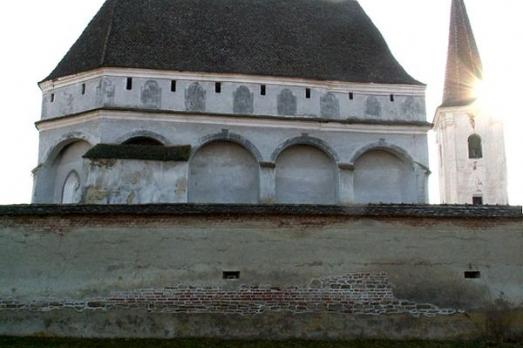
Cloaşterf Fortified Church

Cloaşterf Fortified Church

Cloașterf, RO

After the old church was destroyed, a new construction was erected between 1521 and 1524 and finds itself in a well-preserved state today, as well as the polygonal ring wall strengthened by towers in each corner. The southern tower was replaced in 1819 with today’s bell tower. The aisle-less church with polygonal chancel was provided with defence level and machicolation between the buttresses from this construction phase. The parapets of the 18th century three-side gallery inside the church are decorated with floral motives and paintings illustrating different fortified churches. The organ above the altar was installed in 1832 on the substructure of the original 1716 altar. One of the oldest inscriptions from Transylvania can be found behind this altar: 1524 is the year when the construction works of the church were completed.

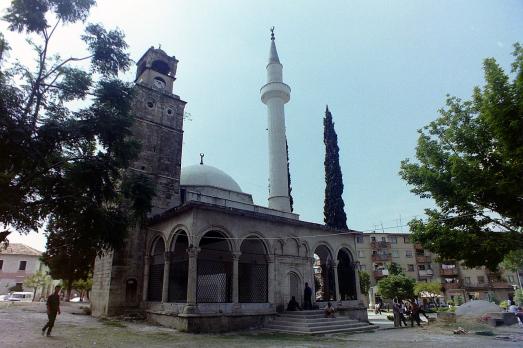
Clock Mosque

Clock Mosque

Peqin, AL

The Clock Mosque, or Mosque of Abdurrahman Pasha, dates from 1656 but was rebuilt in 1822-23 after a fire. It was also rebuilt in 1992 after its minaret and dome were destroyed by the communist regime in Hoxha.

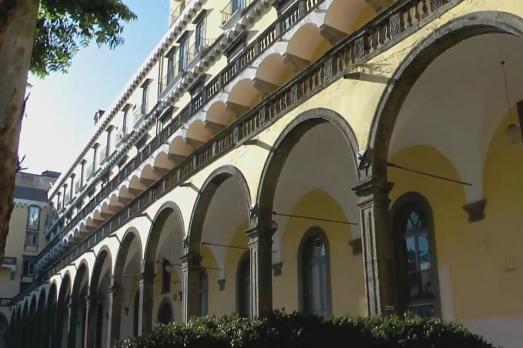
Cloister of Saints Marcellinus and Festus, Naples

Cloister of Saints Marcellinus and Festus, Naples

, IT

The cloister of Saints Marcellinus and Festus belonged was part of a medieval monastic complex. The cloister serves nowadays as the headquarters Museum of Paleontology of Naples operated by the University of Naples Federico II and some other academic premises.

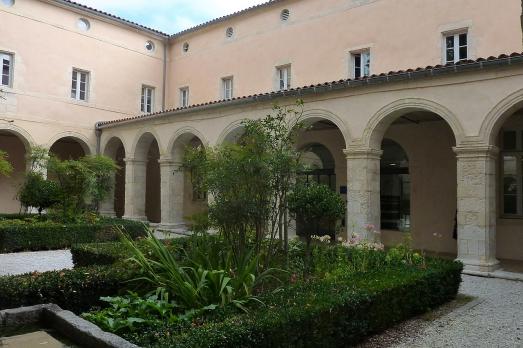
Cloître des Dames Blanches

Cloître des Dames Blanches

La Rochelle, FR

The Récollets, Franciscan monks who settled in La Rochelle in 1629, built a vast convent from the Maubec canal to the present rue Amelot. Their church, burnt down in 1705 and rebuilt the following year, was bought by the Protestants after the Revolution to establish their temple. The cloister and the rest of the monastery became the convent of the Dames Blanches.

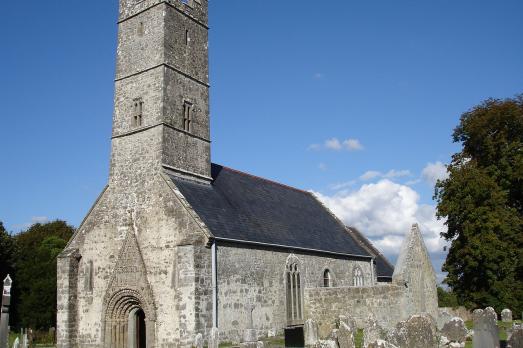
Clonfert Cathedral

Clonfert Cathedral

Clonfert, IE

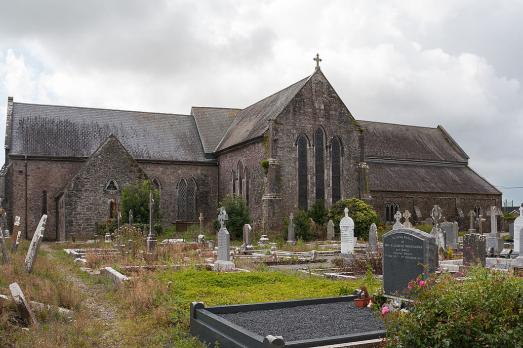
Clonfert Monastery and Cathedral is a religious building founded by St Brendan in the 6th century. Its abbey church became St Brendan's Cathedral. The oldest part of the present church dates from about 1180. It is Romanesque in style, with carved motifs of human and animal heads and foliage. Its southern transept, which has fallen into ruin, dates from this period; a later northern transept, in the Gothic style, has been removed.

Clonmacnoise Monastery

Clonmacnoise Monastery

, IE

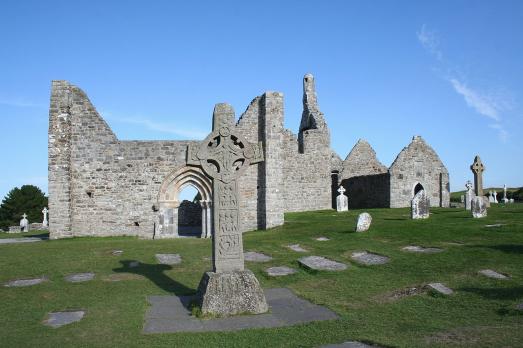
The Monastery of Clonmacnoise, also known as the "Seven Churches", was founded around 544 by the one who would later be known as one of the twelve apostles of Ireland, Saint Ciarán. The wealth of the monastery attracted the lust of Irish kings, Anglo-Normans and Vikings who plundered and burned it many times between 841 and 1204. The decline of the road bordering Clonmacnoise in favour of the one passing through Athlone around the 11th century marked the beginning of the decline of the site. In 1552, the English garrison of Athlone sacked the monastery. Three high crosses still stand on the site of the monastery, the "Cross of the North", the "Cross of the South" and the "Cross of the Scriptures", dating from the 9th to the 10th century.

Cloyne Cathedral

Cloyne Cathedral

Cloyne, IE

St Colman's Cathedral, dating from the 13th century, is the historic cathedral of the diocese of Cloyne, founded in 887. At the Reformation, the church became Protestant and the Catholics moved the seat of the diocese to Cobh Cathedral.

Be inspired

Stupkalnis.lt

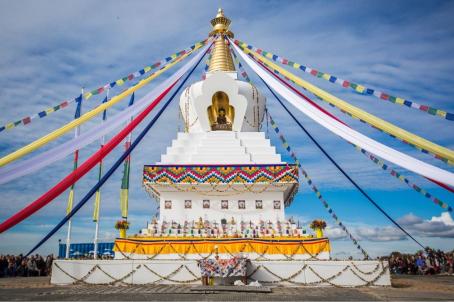
10 Buddhist stupas to discover in Europe

Stupas are symbols of enlightenment and peace that commemorate different stages of Buddha's life. Since the mid-20th century, thousands of stupas have begun to populate Europe. We have compiled some of the most impressive ones in this list.