Concatedral de Santa Maria de la Redonda
Logrono, ES
This cathedral features two ornate towers, a clock with three faces, and an alcove adorned with sculptures. The church also houses panels painted by the Flemish painter, Gillis Coignet.

Here you can search for a building to visit. You can use the map find destinations, or you can use the filters to search for a building based upon what different criteria.
Logrono, ES
This cathedral features two ornate towers, a clock with three faces, and an alcove adorned with sculptures. The church also houses panels painted by the Flemish painter, Gillis Coignet.

Senj, HR
The Concathedral of Senj was built in 1169 in the style of a Romanesque basilica with a single nave. The building rests on the foundations of a pagan temple from the 4th and 5th centuries, the remains of which are still visible at the back of the sanctuary. The façade and the south side of the cathedral, in the mid-18th century, were decorated with Romanesque arches and brick niches. During the Second World War, the cathedral was severely damaged. The present appearance of the building is the result of the restoration carried out between 1949 and 1950.

Križevci, HR
The Concathedral of St. Križa is one of the oldest churches in mainland Croatia, mentioned as early as 1232. Modified over the centuries, the present appearance of the church mainly dates back to the end of the 15th century. Some parts have elements of late Gothic, Renaissance and Baroque. It was completely restored in 1913 according to the plans of the architect Stjepan Podhorski.

Sanremo, IT
The co-cathedral of San Siro, which dates back to the 12th century, is one of the main examples of Romanesque architecture in western Liguria. From 1619 onwards, a series of modifications were undertaken, mainly on the Romanesque apses and the presbytery, which transformed the original Romanesque structure into a Baroque one in 1668. The church suffered extensive damage on 30 September 1745 when a British naval formation under the command of Admiral Rowley bombed it, causing part of the roof and façade to collapse. In 1901, extensive work was undertaken to restore the Romanesque appearance by demolishing all the Baroque cladding inside and outside the church, and after a long hiatus, the work was officially completed in 1948. In 1947, the church became a co-cathedral in 1975.

Taranto, IT
Concattedrale Gran Madre di Dio was built between 1967 and 1970 following the design of the architect Gio Ponti. The structure refers to the maritime tradition of the city, representing a "sail" that is reflected in the water of the three pools in front of the entrance, symbolizing the sea.

London, GB
The Congregation of Jacob Synagogue in London is a synagogue built in 1920-21 by architect Digby Lewi Solomon. This brick building in the Historicist style still serves as a synagogue.
Elim, NL
Modern church without tower.
Coninsgby, GB
More information about this church coming soon.

Conoplja, RS
The cemetery has 24 gravestones, the oldest one from 1856 and the latest one from 1931. The site was fenced by ESJF in June 2017.

Redondo, PT
The Monastery of Santo António was founded in the 17th century. It belongs to the order of the Capuchins.The church is dedicated to St Sebastian.
new
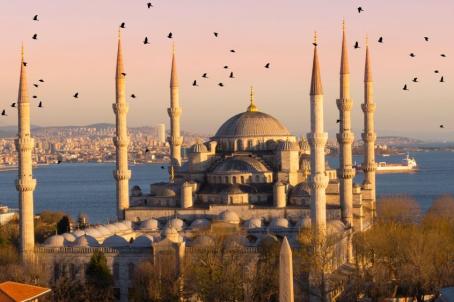
For a long time, Europe was ruled by powerful monarchies. Monarchy and religion have been connected since time immemorial. Here are 7 sites across Europe where royalty historically bent the knee to a higher power and received their crown.
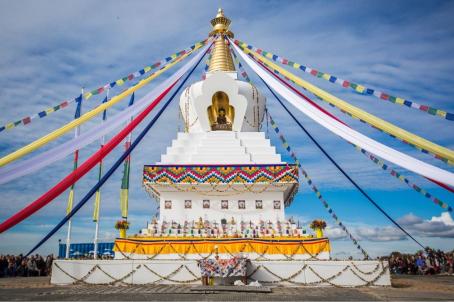
Stupas are symbols of enlightenment and peace that commemorate different stages of Buddha's life. Since the mid-20th century, thousands of stupas have begun to populate Europe. We have compiled some of the most impressive ones in this list.
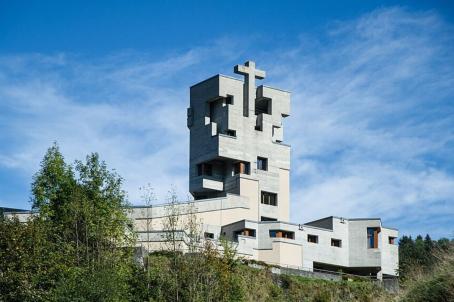
Walter Maria Förderer (1928–2006) was a Swiss architect and sculptor renowned for his neo-expressionist church designs in the 1960s. In this list we have compiled 6 of his church designs that seamlessly integrate religious and secular elements.

How is Religiana helping to conserve and promote Religious Heritage in Europe and why should you get involved?
Find out about Religiana
Are you a tourism organisation or religious heritage sites manager? Discover the advantages of becoming a partner.
See current partners
We can keep you up to date with the latest news from Religiana and religious heritage conservation across Europe.
Sign up to the FRH newsletter