Explore Religious Heritage Across Europe

Here you can search for a building to visit. You can use the map find destinations, or you can use the filters to search for a building based upon what different criteria.

Refine search

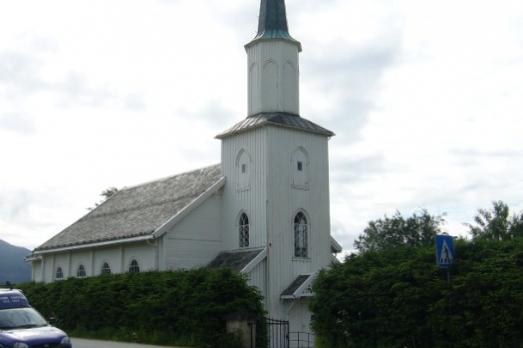
Grong Church

Grong Church

Grong, NO

Grong Church is a long church dating from 1877. It replaces an earlier medieval one, from which the wooden sculpture of the "Grong Virgin", transferred to the NTNU University Museum in 1878, originated. The sculpture dates from around 1250 and shows a joyful Mary sitting with her son on her left knee. The painting of the sculpture is in remarkably good condition.
Grorud Church

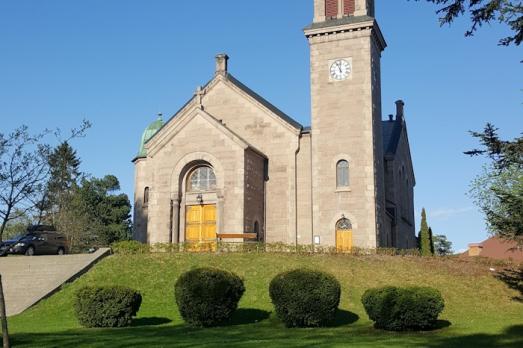
Grorud Church

Oslo, NO

Grorud Church is a cruciform church built in 1902 by the architects Harald Bødtker and H. Berle. The building is made of grorud granite (grefsensyenite) and regular ashlars are centred around the corners and windows.

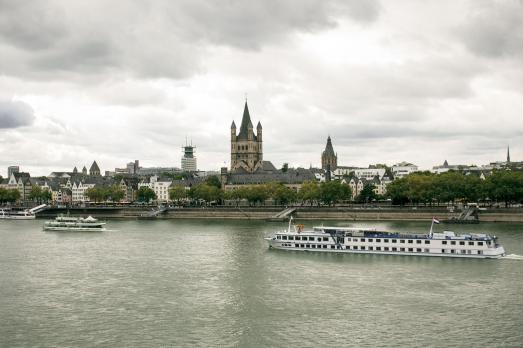
Groß St. Martin

Groß St. Martin

Cologne, DE

Groß St. Martin is an imposing Romanesque church in the old town of Cologne. Founded as early as 960 AD, the current building dates from 1150-1250. Partly destroyed during World War II, the building was completely rebuilt in 1985.

Grossmünster

Grossmünster

Zurich, CH

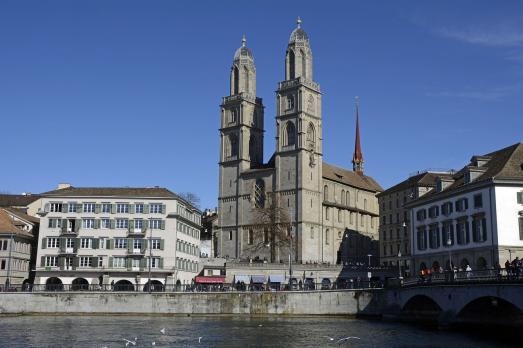
The Grossmünster, built between 1100 and 1220, is a protestant reformed church in Zurich's old town. The first part of the Grossmünster is believed to have been built by Charlemagne, who discovered the tombs of Saints Felix and Regula, two martyrs of Christianity, around the 7th century. The Protestant Reformation in Switzerland led by Ulrich Zwingli began in the Grossmünster, where he preached from 1519 onwards as a priest. The twin towers of the church, with their neo-Gothic domes, are the symbol of the town.

Grote Kerk

Leerdam, NL

The Grote Kerk in the centre of the South Holland town of Leerdam is a late Gothic pseudo-basilica cruciform church. The church consists of a three-aisled nave, a five-sided closed choir, a 15th-century transept and a built-in Romanesque tower from the 13th century. The choir and the sacristy date from the second half of the 15th century and both have bacon layers. During the restoration in the period 1862-1863, the church was rebuilt in neo-Gothic style. During the restoration of 1957-1960 (and also the last restoration), the church was returned to the situation before 1862.

Grote kerk

s-Hertogenbosch, NL

Reformed Church. Single-nave cruciform church in strict neo-classical brick architecture with semicircular upper windows, built in 1819-1820 to a design by the Amsterdam city architect Jan de Greef. At the crossing a roof turret with Doric columns and frontals. Internally a cove ceiling. Pulpit (out of use) from the construction period. Organ (National Monument) with Hoofdwerk and Bovenwerk, made in 1831 by the brothers J. and JMW Bätz (Utrecht).

Grote Kerk

Grote Kerk

Allingawier, NL

The church of Allingawier dates from the 17th century. The building is sober, both outside and inside. The church is part of the tourist route "Aldfaers Erf" and houses a special sound representation.

Grote Kerk

Grote Kerk

Almelo, NL

The Grote Kerk in Almelo is a historic church which dates from 1493.The church was originally founded in 1236 by the Lord of Almelo as a castle chapel. The choir was rebuilt in 1493, and the transept and the nave in 1738. It has been in use by Protestant worship since 1619. In 1873, the church was largely renovated and immediately enlarged. It currently belongs to the Protestant Church in the Netherlands (PKN). It is listed as a National Monument of the Netherlands.

Grote Kerk

Hoogeveen, NL

Built as a Reformed Church. Expansions 1766, 1801 and 1804. The Grote Kerk is closely linked to the history of the place Hoogeveen. At the beginning of the dyeing in 1631, by the General Company of the 5000 Tomorrow, it was determined that an area of 100 tomorrow had to be kept separate from peat including ground. The proceeds were for church, school and the poor.

Grote Kerk

Hindeloopen, NL

Church building located behind the IJsselmeerdijk, built in 1632 on the foundations of a late 16th-century predecessor and consisting of a two-aisled hall church until 1892. In 1658 the church was expanded with a south aisle, which was demolished again in 1892. Since then it has been a single-aisled building again.

Be inspired

Stupkalnis.lt

10 Buddhist stupas to discover in Europe

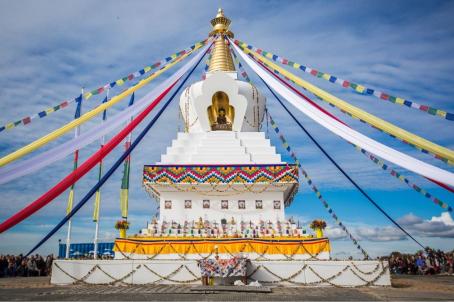
Stupas are symbols of enlightenment and peace that commemorate different stages of Buddha's life. Since the mid-20th century, thousands of stupas have begun to populate Europe. We have compiled some of the most impressive ones in this list.