Explore Religious Heritage Across Europe

Here you can search for a building to visit. You can use the map find destinations, or you can use the filters to search for a building based upon what different criteria.

Refine search

Grote Kerk

Driebergen-Rijsenburg, NL

The current reformed church stands on the site where a chapel was built in the fourteenth century. The first mention of the chapel dates from 1381. The then lord of Driebergen is considered the founder of the chapel: Willem van Abcoude.
Grote Kerk

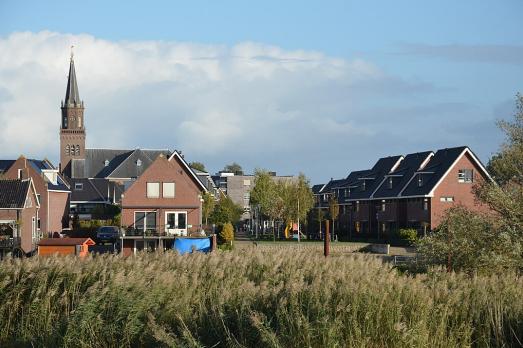
De Rijp, NL

In the night of 6 to 7 January 1654, De Rijp was shocked by a raging fire, which would eventually reduce a very large part of the village to ashes; 660 buildings went up in flames. The tower and the roof of the Grote Kerk were also lost. The restoration of the church was tackled with great vigour and the following year it could be put back into use.

Grote Kerk

Grote Kerk

Alblasserdam, NL

The Grote Kerk in Alblasserdam is a historic church erected in 1899 in a Neo-Gothic style. The last restoration took place in 2004. It is listed as a National Monument of the Netherlands.

Grote Kerk

Halle, NL

Interesting reconstruction church in traditionalist style, built under the influence of the sober Protestant church architecture of the eighteenth century and classicism. The crowning of the tower dates from 1976.

Grote Kerk

Hengelo, NL

Designed and built in 1848 in neo-classical style by Rijkswaterstaat. During the restoration and modernization in 1990-1991, new construction was carried out at the rear that was not protected and the entrance was moved from the front to the rear. The church is currently used as an auditorium and concert hall of the Music School.

Grote Kerk

Neede, NL

In May 1929, the restoration of the Reformed Church in Neede was started. In order to install the central heating, the wooden floor was broken open. In the process, fragments of a sculpture were found in the middle of the building.

Grote Kerk

Leerdam, NL

The Grote Kerk in the centre of the South Holland town of Leerdam is a late Gothic pseudo-basilica cruciform church. The church consists of a three-aisled nave, a five-sided closed choir, a 15th-century transept and a built-in Romanesque tower from the 13th century. The choir and the sacristy date from the second half of the 15th century and both have bacon layers. During the restoration in the period 1862-1863, the church was rebuilt in neo-Gothic style. During the restoration of 1957-1960 (and also the last restoration), the church was returned to the situation before 1862.

Grote Kerk

Nieuwleusen, NL

On 21 March 1829 it was decided to demolish the old church, which dated from 1662, and to build a new church. The tender for the construction took place on 2 May 1829 and the construction was awarded to Gebr. A. Brouwer, contractors in Meppel. The contract price was 7,500 guilders. On 9 June 1829 the demolition of the old church was started. The then mayor Van der Gronden laid the first stone. The church was completed on 1 July 1829.

Grote Kerk

Gorinchem, NL

Built in 1849-51 to a design by I. Warnsinck on the site of the Gothic hall church that had been demolished in 1844 and in connection with the - separately protected - medieval Sint Janstoren. The church building, built in red brick, alternating with yellow ornamental bricks, on a natural stone plinth under slate-covered saddle and lean-to roofs, is straight-ended and contains an extended entrance portal on the east side, with the main entrance fitted with double panelled doors, a semi-circular and subdivided fanlight, a wooden pilaster frame and two lanterns with a wrought-iron volute arm, as well as a rose window in the pointed top and narrow side entrances on either side of the portal.

Grote kerk

Marken, NL

Three-aisled pseudo-basilica with a three-sided choir under a slate-covered saddle roof and with a tower at the entrance, built in 1903 -1904 and designed by AHLKups.

Be inspired

Stupkalnis.lt

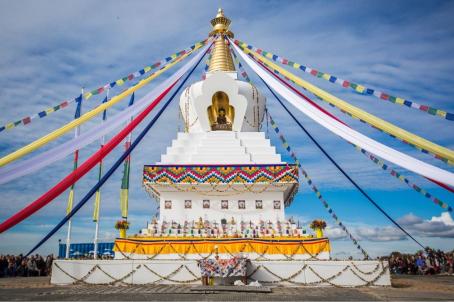
10 Buddhist stupas to discover in Europe

Stupas are symbols of enlightenment and peace that commemorate different stages of Buddha's life. Since the mid-20th century, thousands of stupas have begun to populate Europe. We have compiled some of the most impressive ones in this list.