Heilige Trudo
Eindhoven, NL
Extremely important, large, monumental, main church, with tower and large roof turret, in Eindhoven-Strijp.

Here you can search for a building to visit. You can use the map find destinations, or you can use the filters to search for a building based upon what different criteria.
Eindhoven, NL
Extremely important, large, monumental, main church, with tower and large roof turret, in Eindhoven-Strijp.
Ouderkerk aan de Amstel, NL
Three-aisled cruciform basilica with northwest tower, built in 1865-1867 to a design by Pierre Cuypers (1827 - 1921). Characteristic work from the first period of Cuypers' oeuvre, inspired by early French Gothic. Internal wooden barrel vaults in the central nave. Stone cross-rib vaults in the lower choir closure and in the side aisles. High altar from the construction period.
Nes aan de Amstel, NL
The Sint-Urbanuskerk is a Roman Catholic church in Nes aan de Amstel . It is a neo-Gothic cruciform basilica , with a square tower at the crossing. It is the first independent design by the architect Joseph Cuypers , the son of Pierre Cuypers , who is also responsible for many churches in the Amstelland .
Bovenkerk, NL
The Sint-Urbanus was designed by the architect Pierre Cuypers . Construction began in 1875 and the church was consecrated in 1888. It is a three-aisled neo-Gothic hall church with transept. The church has a 65-metre-high hexagonal tower . This shows the genius of Cuypers, who was known for being able to fit churches into the craziest (often leftover) spaces. The hexagonal tower made it possible to place the entrance parallel to the Noorddammerlaan, while the nave of the church follows the axis of the Legmeerdijk.
Duivendrecht, NL
Charming, exceptionally important, neo-Romanesque village church: single-nave cruciform church with double tower front. Atmospheric interior.
Belfeld, NL
In 1950, the fourth Roman Catholic St. Urbanus church was built. The question was where the previous three churches of Belfeld stood. Thanks to the help of fellow collectors, the answer was found. The first church, which stood until 1839, as well as the second church from 1839 and the third church from 1912, all three stood on the Markt on the corner of the Urbanusstraat. The new church from after 1945 is at Irenelaan 23. (50-03)
Enschede, NL
In Roman Catholic Centre De Schalm. Also Samen Op Weg Centre De Schalm. The church was built in 1967 by architect ir. J.H.S.luijmer and ir. A. Middelhoek. The Reformed first used a farm De Wesseler that had been converted into a church community centre and later a boiler house that had been converted into a church hall. The Reformed discovered that building their own church would be very expensive. It was decided to rent the Roman Catholic Church Verrijzenis des Heer and to add a conference centre De Schalm for the Reformed. After the formation of the SoW community, all Reformed and Protestant activities were combined in De Schalm and the Roman Catholic church was also used for Protestant services. (51-04)
Maarssen, NL
Modern church without a tower in the large western expansion district of Maarssenbroek.
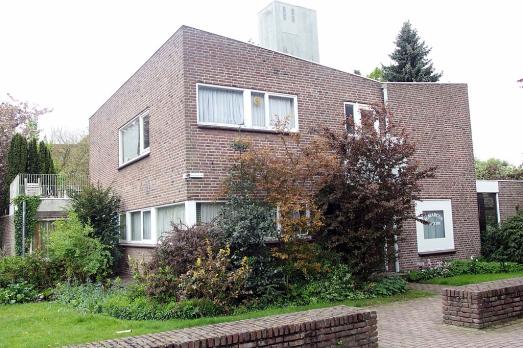
Amsterdam, NL
The modernist church was built in 1959-1961 in the Slotervaart district , designed by architect Gerard Holt .
Noordwijkerhout, NL
Early neo-Gothic church with a newer tower, in the south of Noordwijkerhout. The Roman Catholic St. Victor Church was built in 1852 to a design by Th. Molkenboer. Tower 1938, B. Stevens. This tower, with entrance gate, strongly resembles tower designs by architect Kropholler. Renovations took place in 1926, in 1938 (tower) and in 1945. The interior was renovated around 1960. This church is listed as a Municipal Monument of the Netherlands.
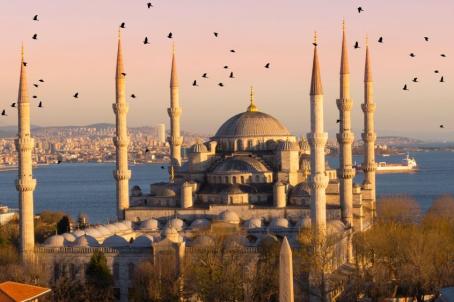
new
For a long time, Europe was ruled by powerful monarchies. Monarchy and religion have been connected since time immemorial. Here are 7 sites across Europe where royalty historically bent the knee to a higher power and received their crown.
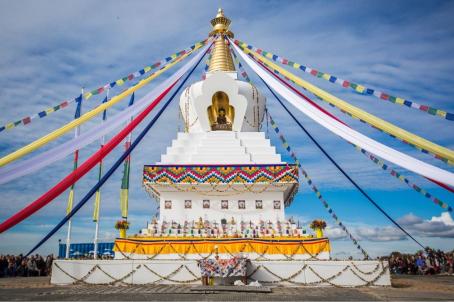
Stupas are symbols of enlightenment and peace that commemorate different stages of Buddha's life. Since the mid-20th century, thousands of stupas have begun to populate Europe. We have compiled some of the most impressive ones in this list.
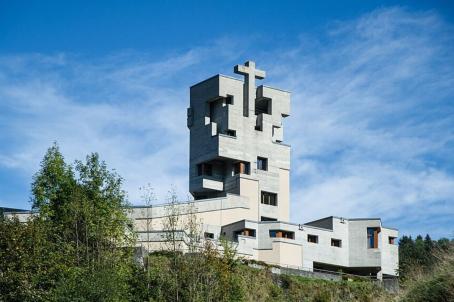
Walter Maria Förderer (1928–2006) was a Swiss architect and sculptor renowned for his neo-expressionist church designs in the 1960s. In this list we have compiled 6 of his church designs that seamlessly integrate religious and secular elements.

How is Religiana helping to conserve and promote Religious Heritage in Europe and why should you get involved?
Find out about Religiana
Are you a tourism organisation or religious heritage sites manager? Discover the advantages of becoming a partner.
See current partners
We can keep you up to date with the latest news from Religiana and religious heritage conservation across Europe.
Sign up to the FRH newsletter