Explore Religious Heritage Across Europe

Here you can search for a building to visit. You can use the map find destinations, or you can use the filters to search for a building based upon what different criteria.

Refine search

Heilige Vitus

Hilversum, NL

Neo-Gothic church with cathedral allure, and with a high tower. The Sint-Vitus was consecrated in 1892. This neo-Gothic cruciform basilica was designed by PJH Cuypers. The tower is 98 metres high and is one of the 4 highest church towers in the Netherlands *. The church stands on the site of the former clandestine church from 1786. Important elements in the interior are the wooden vault, the stained glass windows and the colourful brick patterns in the masonry. The Van den Brink organ from 1859 and the painted Stations of the Cross are also valuable.
Heilige Vitus

Naarden, NL

Large and very important historical city church with a tower of 71 metres. This church is listed as a National Monument of the Netherlands.

Heilige Walburga

Maastricht, NL

The Sint-Walburgakerk was built between 1864 - 1867 as a Roman Catholic parish in the former village of Amby. The neo-Gothic church is listed a municipal monument of the Netherlands.

Heilige Walburgis

Netterden, NL

This church is listed as a Municipal Monument of the Netherlands.

Heilige Werenfridus

Elst, NL

Reconstruction church in traditional forms, with a small bell tower.

Heilige Willehadus

Emmer-Compascuum, NL

The current church replaced the older, neo-Gothic church from 1889. Consecrated in 1924. In the years 1989 to 2004 the church was restored; the roof surfaces, except for the tower, were provided with a new slate covering. The stained glass windows of the church, except for the tower, were completely restored. At the beginning of June 2004 the church was reopened with many festivities. (52-04) This church building, in terms of exterior, looks a lot like the (demolished in 1982) Roman Catholic Church St. Gerardus Majella in The Hague, designed by J. Stuyt,

Heilige Willibrordus

Bodegraven, NL

The Sint-Willibrorduskerk in Bodegraven was designed around 1859 by Pierre Cuypers (1827 - 1921). It was consecrated in 1865. The building is a three-aisled cruciform basilica in brick, in a sober early Gothic style with pointed wooden barrel vaults. The nave is four bays deep and has a cross-shaped building that connects to the choir. The choir is one bay deep and is connected to rectangular radiating chapels. It is closed on five sides and is covered by brick vaults. The brickwork is made of grey-red brick and has braids and bands of yellow and black stone in the interior. The church was consecrated on 10 July 1865 by Mgr. Wilmer.

Heilige Willibrordus

Casteren, NL

Three-aisled neo-Romanesque cruciform basilica with west tower. Typical of C. Franssen's oeuvre, in this case built under slight influence of late Romanesque architecture in the German Rhineland. The interior has plastered rib vaults. Some stained glass windows in the left wall of the nave are (presumably) from the previous church. The church was expanded in 1935 with two side aisles by J. Franssen.

Heilige Willibrordus

Deurne, NL

The Saint Willibrordus Church in Deurne is a Gothic church with a tower, with elements from the neo-Gothic style.

Heilige Willibrordus

Ruurlo, NL

During the Reformation, the Catholics of Ruurlo attended church in Zwillbrock, just across the German border. From 1801, they had a barn church in their own municipality. In 1828, a new, larger church was completed. In its place, the current parish church, dedicated to St. Willibrordus, was built in 1869-1870, based on a design by Dr. Pierre Cuypers (1827 - 1921). The church, like that of Cuypers in neighbouring Kranenburg, was built thanks to a legacy from Baron Van Dorth tot Medler. The church was originally built as a single-nave hall church with a narrowed and straight-closed choir, side-mounted gables, and a front tower. The interior is covered by a wooden barrel vault.

Be inspired

Stupkalnis.lt

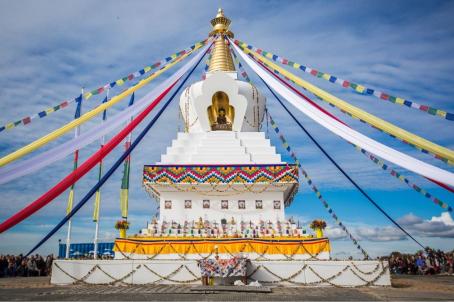
10 Buddhist stupas to discover in Europe

Stupas are symbols of enlightenment and peace that commemorate different stages of Buddha's life. Since the mid-20th century, thousands of stupas have begun to populate Europe. We have compiled some of the most impressive ones in this list.