Explore Religious Heritage Across Europe

Here you can search for a building to visit. You can use the map find destinations, or you can use the filters to search for a building based upon what different criteria.

Refine search

Heilige Willibrordus

Sint Willibrord, NL

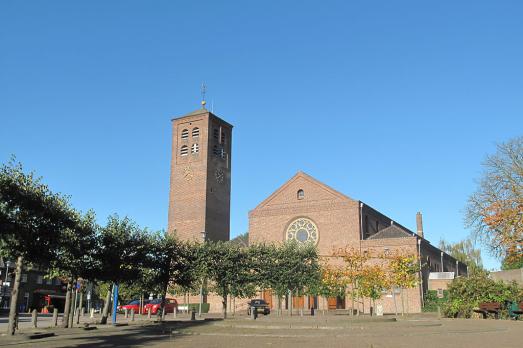
In 1841 a parish was founded and a church built. Since 1885 Sint Willebrord has been a place of pilgrimage. In that year a first Lourdes grotto was built. In 1925 a new church was built. The original design by pastor Bastiaansen, a representation of the Basilica of Lourdes, was elaborated by the architect Jacques (NJH) van Groenendael from Breda. In front of the church is a procession park.
Heilige Willibrordus

Mill, NL

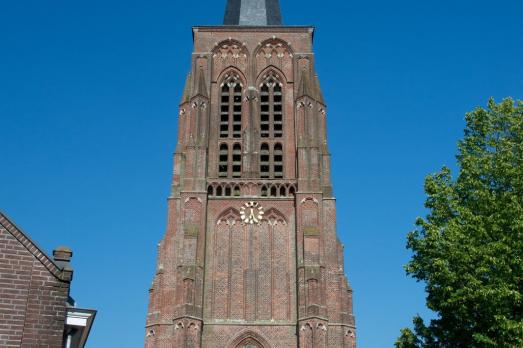
Monumental neo-Gothic church with tower. Replaced a dilapidated medieval church. The richly decorated interior was redecorated around 1960 and drastically simplified. This church is listed as a National Monument of the Netherlands.

Heilige Willibrordus

Heilige Willibrordus

Alphen, NL

1500 Construction of a new choir and the current tower begins, 1542 Construction of the tower interrupted by the raid of Maarten van Rossum., 1648 Church taken into use by Protestants (Catholics use a barn church), 1820 Church returned to Catholics and restored, 1909 Church demolished except for the old tower

Heilige Willibrordus

Beilen, NL

Church without tower. Built as Reformed Church . As such out of use in 1957. After renovation and extension with transept and choir in 1958 in use as Roman Catholic St. Willibrordus Church.

Heilige Willibrordus

Heilige Willibrordus

Ammerzoden, NL

Replaced the church destroyed during World War II . Three-aisled basilica with a tower to the side in traditionalist forms, influenced by Romanesque and early Christian church architecture in Italy.

Heilige Willibrordus

Middelbeers, NL

This church is listed as a National Monument of the Netherlands.

Heilige Willibrordus

Klein Zundert, NL

Originally, Klein Zundert had a medieval church. This building was restored somewhat around 1610, after severe damage in the Eighty Years' War, and made usable, and partly provided with a new interior. In 1645, further renovation and restoration followed, during which armorial glasses were also installed, made by the 'glass writer' Jean de la Habarre. Again, new altars were installed, including two side altars with lecterns, by Alph. Jordaens, and a pulpit by Hendrik van Velmen, modelled on the one in Minderhout.

Heilige Willibrordus

Sappemeer, NL

St. Willibrordus, 1866-1873, Pierre Cuypers (1827 - 1921) . Three-aisled neo-Gothic hall church without transept. Pointed gables on the side aisle bays. Tower with two niches in each facade, frontals and four-sided spire. Articulated brick pillars with moulded capitals, cross-ribbed vaults. Polychrome interior with painted brick; furnishings and glazing from the construction period, from the Cuypers & Stolzenberg studio in Roermond. The windows in the nave partly come from the St. Martinus church in Foxham-Martenshoek, which closed in 1990. Early work from Cuypers' second period, influenced by the Westphalian hall church Gothic. Mechanical tower clock.

Heilige Willibrordus

Heiloo, NL

Interbellum church, characteristic work by J. Stuyt. Three-aisled basilica with a far projecting transept on either side. Tower to the right of the front facade. The exterior was plastered white until about the mid-1980s.

Heilige Willibrordus

Liessel, NL

The Roman Catholic Church, built on the western side of the Hoofdstraat in the centre of Liessel and dedicated to St. Willibrordus, was built between 1899 and 1901 and was designed by C. Franssen. It is a non-oriented Neo-Gothic cross basilica with an eastern tower. The church was consecrated on 30 April 1901. In 1944 the church was severely damaged by war. Shortly after the war, as a result of this damage, part of the masonry, vaults and roof, as well as the spire, were renewed under the architecture of SJP van der Sluijs (Eindhoven). The repairs were generally carried out in a neo-Gothic style.

Be inspired

Stupkalnis.lt

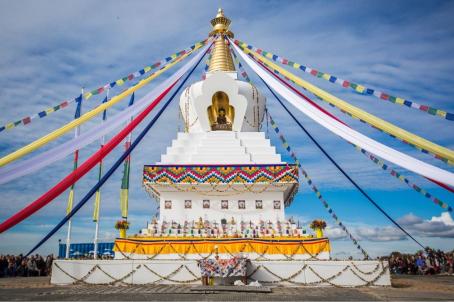
10 Buddhist stupas to discover in Europe

Stupas are symbols of enlightenment and peace that commemorate different stages of Buddha's life. Since the mid-20th century, thousands of stupas have begun to populate Europe. We have compiled some of the most impressive ones in this list.