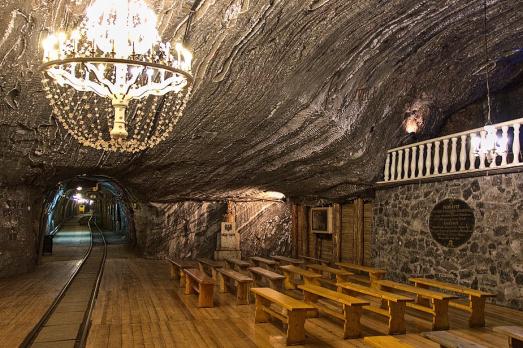
St. Kinga's Chapel
Wieliczka, PL
St. Kinga's Chapel is located 101 metres underground and is one of the biggest attractions of the Wieliczka Salt Mine, a UNESCO World Heritage Site.

Here you can search for a building to visit. You can use the map find destinations, or you can use the filters to search for a building based upon what different criteria.
Wieliczka, PL
St. Kinga's Chapel is located 101 metres underground and is one of the biggest attractions of the Wieliczka Salt Mine, a UNESCO World Heritage Site.
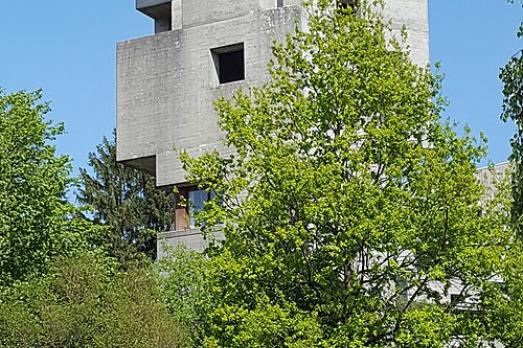
Bettlach, CH
St. Klemenz Church is a landmark of modernist architecture in . It was built between 1965 and 1969 according to design of architect Walter Maria Förderer.
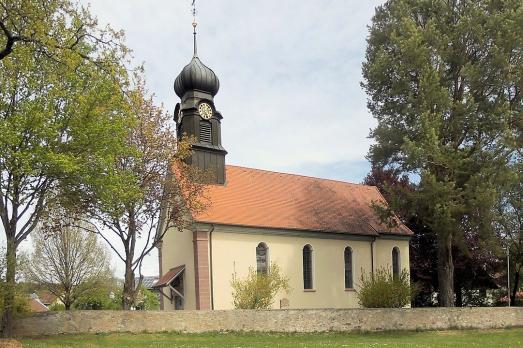
Villingen-Schwenningen, DE
The parish of St. Konrad was first mentioned in a document in 1487. After the Thirty Years' War, the clergy of Villingen helped to restore pastoral care in Rietheim and donated liturgical material from the small church, which had been burnt down by Württemberg soldiers on 6th July 1633. In 1671 the church was renovated. In 1719, the Kirchdorf priest Jakob Diem had the present baroque choir built. In 1809-10 the sacristy was added. The church was extensively renovated in 1830-1833 and again in 1861-62. In 1873-74, the interior was renovated and the church received a high altar and pulpit in neo-Gothic style, as well as new pews.
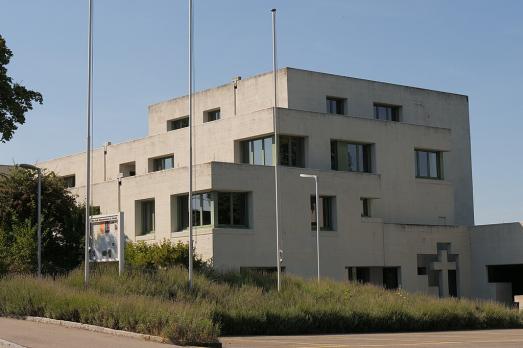
Schaffhausen, CH
St. Konrad Church in Schaffhausen is a Catholic church in the Brutalist style designed by Swiss architect Walter Maria Förderer.
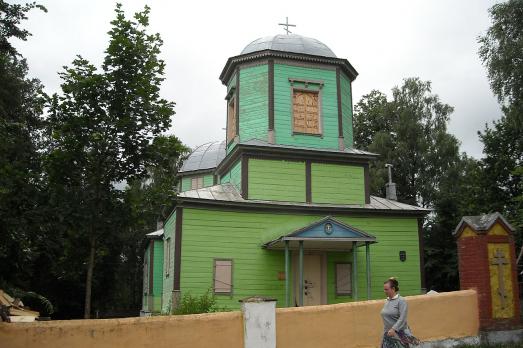
Gorodok, BY
St. Kozma-Demyanov Church is an Orthodox church which is said to have existed since the middle of the 17th century. The graves of priests belonging to the 17th and 18th centuries have been preserved in the cemetery. In 1860, the church was in a dilapidated state and was in need of major repairs. In 1866 the church was rebuilt; the bell tower was completed. The domes were then rebuilt in 1905; the building was restored in the 1970s and in 1992.
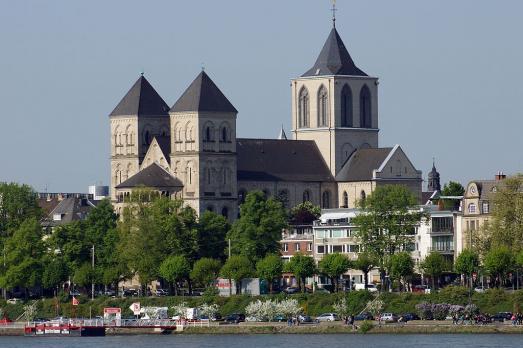
Cologne, DE
Saint-Kunibert is the most recent of the twelve Romanesque churches of Cologne. Consecrated in 1247, the church was part of a monastery until 1802. After the Second World War, the church was rebuilt until 1985.
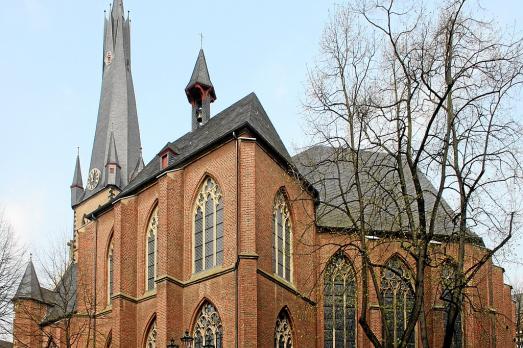
Düsseldorf, DE
Sankt Lambertus is one of the four Roman Catholic churches of Düsseldorf and is probably the oldest building and a monument of the historic city center. Before the construction of the Gothic part of the building in the fourteenth century, a Romanesque church had stood there for centuries, established even before Düsseldorf became a city in 1288.
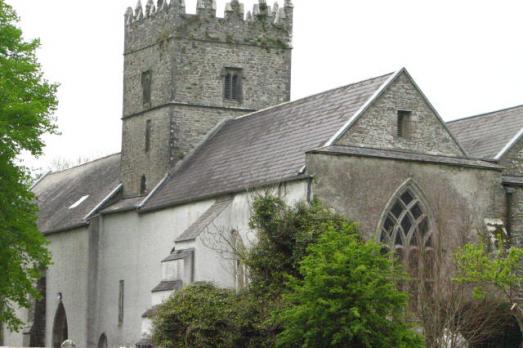
Leighlin, IE
St. Laserian's Cathedral is the Anglican cathedral of Leighlin. The cathedral was built in the Middle Ages in place of the abbey church (dated 632). It is one of the smallest of its time. It is Gothic in style - the size of its windows is no larger than a Romanesque window - and has a low square crenellated tower. The northern arm of its transept is in ruins.
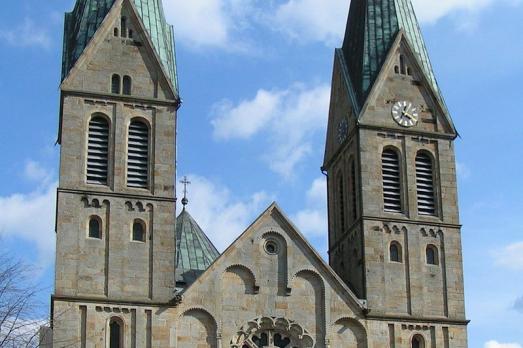
Vechta, DE
In 1011, the construction of a first church started. The furnishings of this pre-Romanesque building were adapted during the 18th and 19th century to match the tastes of the time, but hardly any structural changes were made. At the beginning of the 20th century, the church became too small and the parish decided to build a new and spacious church. Only the thousand year old bell tower has been preserved as a symbol of historical continuity.
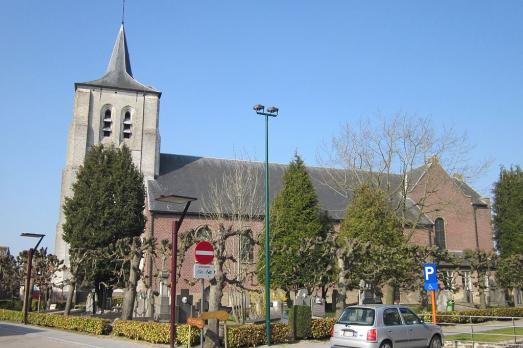
Zedelgem, BE
The west tower of the Saint Laurentius Church is the only remaining original part of a previous 14th-century Gothic cross church. In 1786, the brick spire was replaced by a slate spire. A three-aisled neoclassical church was designed by Pierre Buyck in 1845, after several proposals to expand the church. The works were carried out in 1846 and 1847.
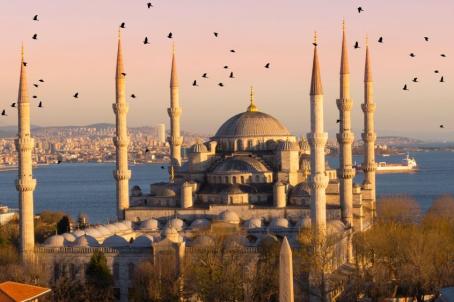
new
For a long time, Europe was ruled by powerful monarchies. Monarchy and religion have been connected since time immemorial. Here are 7 sites across Europe where royalty historically bent the knee to a higher power and received their crown.
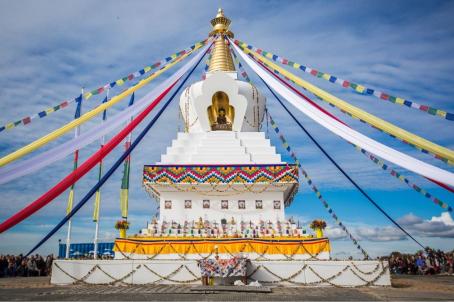
Stupas are symbols of enlightenment and peace that commemorate different stages of Buddha's life. Since the mid-20th century, thousands of stupas have begun to populate Europe. We have compiled some of the most impressive ones in this list.
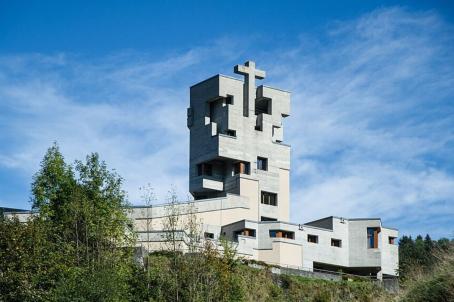
Walter Maria Förderer (1928–2006) was a Swiss architect and sculptor renowned for his neo-expressionist church designs in the 1960s. In this list we have compiled 6 of his church designs that seamlessly integrate religious and secular elements.

How is Religiana helping to conserve and promote Religious Heritage in Europe and why should you get involved?
Find out about Religiana
Are you a tourism organisation or religious heritage sites manager? Discover the advantages of becoming a partner.
See current partners
We can keep you up to date with the latest news from Religiana and religious heritage conservation across Europe.
Sign up to the FRH newsletter