Hervormde Kerk
Een, NL
Originally a reformed evangelism, founded in 1912.

Here you can search for a building to visit. You can use the map find destinations, or you can use the filters to search for a building based upon what different criteria.
Een, NL
Originally a reformed evangelism, founded in 1912.
Nieuw-Beijerland, NL
This church is listed as a National Monument of the Netherlands.
Gameren, NL
Important small reconstruction church. Replaced the historic Reformed Church destroyed on 22 April 1945.
It Heidenskip, NL
In 1886 built a straight-closed hall church with one transept and a facade tower, crowned by a constricted spire. The consistory built on to the rear was built in 1913. Simple traditional interior with pulpit and baptismal garden opposite the transept.
Oosterwijk, NL
Reformed Church from 1872. It has a pulpit from the last quarter of the 17th century and two 18th-century copper crowns. This church is listed as a National Monument of the Netherlands.
Gellicum, NL
The previous church was destroyed by fire in 1928.
Stavenisse, NL
NH Church from 1910, placed on the list of monuments because of interior components: Tomb monument of Tuyl van Serooskerken (approx. 1670) made by Rombout Verhulst. Tomb with reclining figure, the back wall decorated with quarters and putti. Pulpit with Ionic pilasters on the corners of the bowl. XVIId. Reader's pew and regent's bench from the same period.
Herbaijum, NL
Reformed Church with roof turret on churchyard. In 1872 largely renovated church, which has retained the medieval north wall. Bell frame with bell of anonymous founder from the 14th century, diam. 72 cm. The bell has a crack in the lip and has been taken out of use. In the churchyard some 17th century gravestones.
Didam, NL
The Reformed Church in Didam worshipped in the old Mariakerk until 1951. Because this building was much too large, it was sold to the Roman Catholic parish in that year, and a small new church was built. In 1956, Van Vulpen delivered a new organ for this church. The instrument is almost identical to the organ that Van Vulpen placed at the World Exhibition "Expo 1958" in Brussels two years later. E. Verschueren from Tongeren (B) carried out revision work in 1974. Various changes were made: the pedal was placed in its own case against the back of the church on a larger new wind chest. The Vox Humana 4' of the pedal was replaced by a Fagot 16'. Verschueren adjusted the intonation of the organ and remedied the 'spucking'. Finally, the composition of the Scherp was adjusted. Hans Kriek was the advisor for the work. In the years that followed, Hans Kriek made several changes: the Scherp was changed into a Mixtuur, placed on a raised bench, in order to improve accessibility during tuning. The Quint 1 1/3' was moved up to 2 2/3'. Instead of the Cimbel, a Terts 1 3/5' from c.° was introduced. The Fagot 16', which contributed little to the total sound, was replaced by a stronger register. Since 1 May 2004, the church has been in use by the Protestant Community of Didam.
Hoge Hexel, NL
Reformed church from 1947.
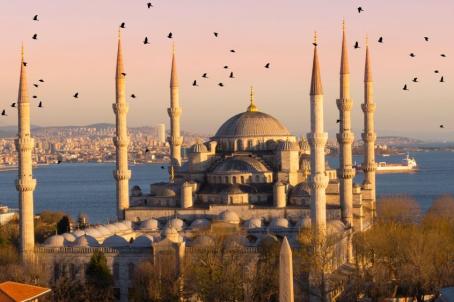
new
For a long time, Europe was ruled by powerful monarchies. Monarchy and religion have been connected since time immemorial. Here are 7 sites across Europe where royalty historically bent the knee to a higher power and received their crown.
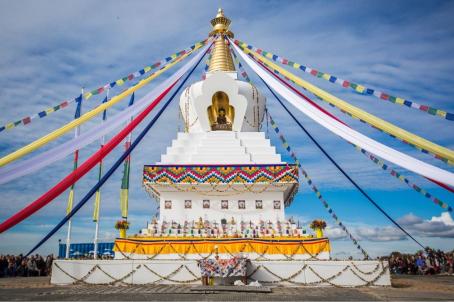
Stupas are symbols of enlightenment and peace that commemorate different stages of Buddha's life. Since the mid-20th century, thousands of stupas have begun to populate Europe. We have compiled some of the most impressive ones in this list.
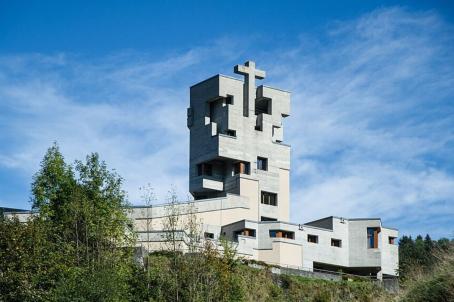
Walter Maria Förderer (1928–2006) was a Swiss architect and sculptor renowned for his neo-expressionist church designs in the 1960s. In this list we have compiled 6 of his church designs that seamlessly integrate religious and secular elements.

How is Religiana helping to conserve and promote Religious Heritage in Europe and why should you get involved?
Find out about Religiana
Are you a tourism organisation or religious heritage sites manager? Discover the advantages of becoming a partner.
See current partners
We can keep you up to date with the latest news from Religiana and religious heritage conservation across Europe.
Sign up to the FRH newsletter