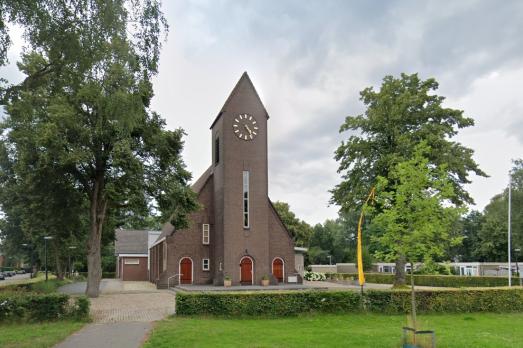
Hervormde Kerk
Appelscha, NL
Monumental neo-church with tower. Built as Dutch Reformed Church.

Here you can search for a building to visit. You can use the map find destinations, or you can use the filters to search for a building based upon what different criteria.
Appelscha, NL
Monumental neo-church with tower. Built as Dutch Reformed Church.
Beusichem, NL
Three-aisled pseudo-basilica with five-sided closed choir from the 15th century with a tower of which the lower four sections are still 12th century. Internal wooden barrel vaults. Replaced an older church. Beautiful tuff stone tower (ca. 1200) of the Reformed Church, raised with a brick floor in the Gothic period.
Belt-Schutsloot, NL
The reformed church of Belt-Schutsloot is nearing completion of a thorough renovation. Anyone who comes to view the church during the new opening on 2 February will see that the church building dating from 1925 in the reed village of Belt-Schutsloot has undergone a complete metamorphosis over the past six months. The old pews are gone, the pulpit disappeared into the container, a new consistory and an extension were built. The Beltigers, religious and non-religious, have worked together to make it happen. Marinus Lok, a retired shipwright, made a new pulpit and chairs replaced the old pews. On Sunday 2 February, churchgoers will once again face their Creator in a brand new church. The house of worship has undergone a renovation costing over 300,000 euros. The paving work began last April and in June construction workers and volunteers entered the building. The dated colours and old-fashioned furnishings made way for a fresh complexion. The churchgoers could follow the church services in the neighbouring village hall.
De Waal, NL
In 1952 this church was built under the architecture of JWHC Pot. At that time still without a tower due to a ban on towers immediately after the war. In 1961 the current tower was built to a design by the same architect. Given the coherence of the original interior it is very likely that this was also designed by Pot. This is a special reconstruction church: wherever possible the architect applied the principle of (anthroposophical) polygonality. This also occurs in the architecture of churches of the Christian Community. (Architect Pot also collaborated on the design of the Poldertoren in Emmeloord).
Burgh, NL
Dutch Reformed Church. Brick building from 1678 in the shape of a Greek cross with lower side arms. After fire in 1924 and war destruction, details were changed (gutter moldings). Original furniture lost. Consistory behind a partition in the southern arm of the church. Fire-damaged remains of the marble epitaphs preserved. Inventory: remains are present of the following epitaphs: Monument Pieter de Huybert 1697 by J. Blommendaal; idem for David de Huybert approx. 1719; idem for Barbara van Willigen approx. 1719 by JP van Baurscheidt. Single-manual organ, made in 1794 by A. van Gruizen for the Reformed Church in Ee (Fr.). Placed in Burgh in 1951. The baroque organ case has carved praise with angel figures on the sides.
Oude-Tonge, NL
The church building is a late Gothic church, built in the 15th century. In a deed of approval dated 8 November 1499, the Bishop of Utrecht, Frederik van Baden, confirmed the foundation of the church by the Ambachtsheren. The oldest part of the current church is the choir with the sacristy, the current consistory or church council room. There must have been a cruciform church dedicated to Mary here as early as around 1468. In the choir there is still a gravestone from 1492 of one of the dike builders of Grijsoord, the polder in which the village of Oude Tonge is located. The main nave therefore dates from 1499. Shortly afterwards, in the first half of the 16th century, a major renovation took place: the choir and the sacristy remained unchanged, but the existing nave was enlarged in a westerly direction, with a tower being partially built in and extended with a north nave. In 1742, a portal was built on the south side of the main nave, with a facade stone above the entrance stating the year of construction. By order of the French occupiers, the tower was robbed of its crowning (an onion-shaped spire) in 1812. The resulting tower slab was used as a telegraph facility. Later, the municipality placed a small bell tower on top, with another “onion” with a spire on top. Various 'modernisations' of the church building resulted in little remaining of the original condition. In 1831, the 'church interior was attractively embellished', and the floor was also restored. Church services were then temporarily held in the choir. Later, the floor of the choir was also 'renewed with blue bricks'. Another very drastic renovation took place in 1854, when a church council floor was constructed in the choir. (Source: Website church community )
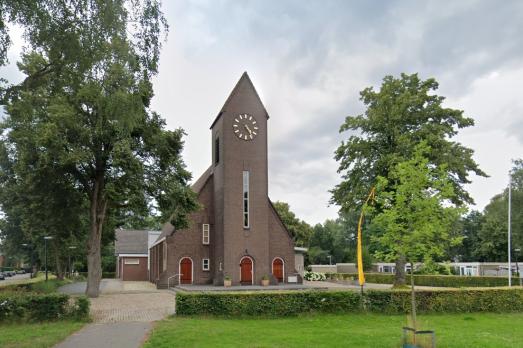
Apeldoorn, NL
Due to the strong growth, especially on the western side of Apeldoorn and the associated increase in the number of inhabitants, the Reformed Church built a new church on the Asselsestraat in 1934.
Glanerbrug, NL
Nice neo-romanesque church with saddle roof tower in Glanerbrug. Restoration second half 2000s.
Herwijnen, NL
Reformed Church with Reformed Federation signature, Replaced a historic church that was destroyed by a dike breach in 1820.
Beerzerveld, NL
Expansion in 1998 with an extension at the front.
new
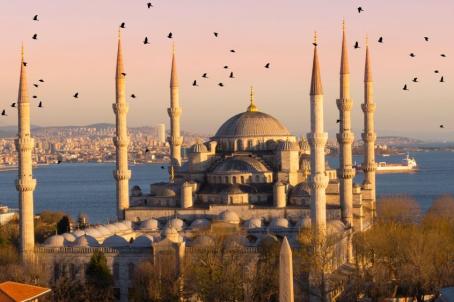
For a long time, Europe was ruled by powerful monarchies. Monarchy and religion have been connected since time immemorial. Here are 7 sites across Europe where royalty historically bent the knee to a higher power and received their crown.
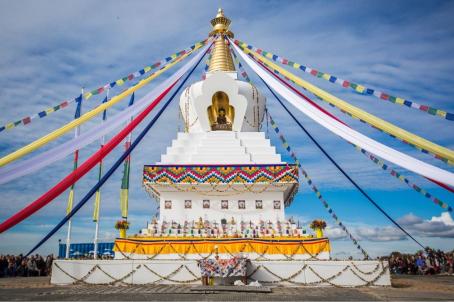
Stupas are symbols of enlightenment and peace that commemorate different stages of Buddha's life. Since the mid-20th century, thousands of stupas have begun to populate Europe. We have compiled some of the most impressive ones in this list.
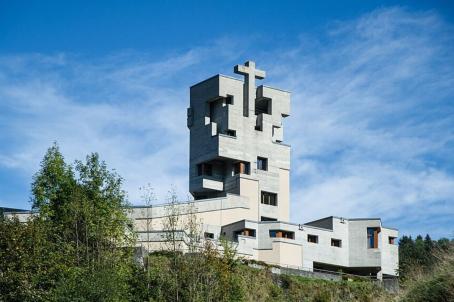
Walter Maria Förderer (1928–2006) was a Swiss architect and sculptor renowned for his neo-expressionist church designs in the 1960s. In this list we have compiled 6 of his church designs that seamlessly integrate religious and secular elements.

How is Religiana helping to conserve and promote Religious Heritage in Europe and why should you get involved?
Find out about Religiana
Are you a tourism organisation or religious heritage sites manager? Discover the advantages of becoming a partner.
See current partners
We can keep you up to date with the latest news from Religiana and religious heritage conservation across Europe.
Sign up to the FRH newsletter