Hervormde Kerk
Piaam, NL
Dutch Reformed Church. Simple late Gothic brick church with wooden roof turret above the west facade.

Here you can search for a building to visit. You can use the map find destinations, or you can use the filters to search for a building based upon what different criteria.
Piaam, NL
Dutch Reformed Church. Simple late Gothic brick church with wooden roof turret above the west facade.
Renkum, NL
The foundation stone for this church building was laid on 16 February 1949. This stone was laid by the then minister ds. W. Deur. The architect was Mr. Roodenburg from Amsterdam, the work was awarded to the Van Aggelen brothers, contractors in Renkum. On Wednesday 18 January 1950, more than 11 months after construction began, the church was put into use. Three bells are installed in the tower. This happened on 16 December 1949. These bells do not have a motto. The only inscription is the name of the bell founder "Van Bergen" and the year 1949 NHK Renkum. The largest bell weighs 175 kg and the other two weigh 110 and 70 kg respectively. The clock in the tower is a gift from the Municipal Council of Renkum.
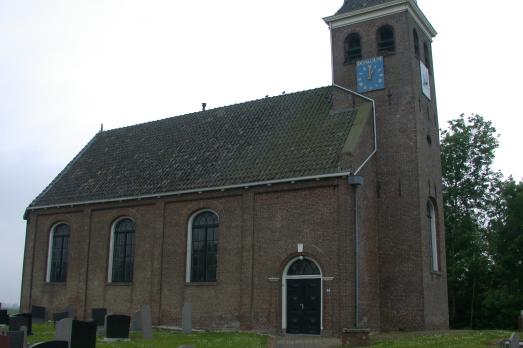
Dongjum, NL
Reformed Church and tower on churchyard. In 1777 rebuilt brick church with tower.
Lutjegast, NL
Reformed Church. In the church from 1877, a 17th century pulpit with Prott coat of arms on the tub; sounding board; a covered pew from the 18th century. Initially, this church housed the organ from the previous church, made in 1842 by GP Dik. The current organ from 1911, made by the Gebr. Van Oeckelen, is a gift from Udo Bronseman and Annie Hogeveen. Under the pulpit large tombstone of the Prott family. Mechanical tower clock, equipped with electric winding.
Herbaijum, NL
Reformed Church with roof turret on churchyard. In 1872 largely renovated church, which has retained the medieval north wall. Bell frame with bell of anonymous founder from the 14th century, diam. 72 cm. The bell has a crack in the lip and has been taken out of use. In the churchyard some 17th century gravestones.
Hoge Hexel, NL
Reformed church from 1947.
Colijnsplaat, NL
Hall church with tower. Built as a Reformed church. Enlarged 1615, rebuilt 1769.
Noordhorn, NL
Single-nave in construction from the 13th century with a straight choir closure, in which two round-arched windows and parts of recessed panels of the top. In the side walls, there are traces of round-arched windows, entrances and a hagioscope. Strong uncut tower with high spire. In the church pulpit from 1718 with screwed columns and a sounding board. Communion table. Five gentlemen's pews, one with spindle friezes three others with knobs and richly carved rear panels, an 18th-century pew. Three 17th-century tombstones. In the tower bell from 1774. This church is listed as a National Monument of the Netherlands. On 8 November 2002, the restoration of the Dutch Reformed Church began. On Friday 16 January 2004, the church, which dates from 1280, was put back into use. It is striking that the vaults, reminiscent of the Catholic era, have been reinstalled. The gentlemen's pews, which were moved back during the 1978 restoration, are also back in their old place. Furthermore, moisture-resistant measures have been taken. The last service before the restoration was on 17 November 2002. During the restoration, church services were held in the De Wegwijzer community centre.
Randwijk, NL
Reformed church. Of the medieval church, only the late Gothic, single-nave, three-sided closed choir remains. The west side of the nave was irreparably damaged when the tower was blown up in 1944-1945. Under the leadership of ir WJG van Mourik, the choir was restored and a completely new nave was built, more or less in keeping with the style of the choir. Against the west side, a large square tower with a pointed roof and bell spire. The work was completed in 1953, during which the nave, which had been badly damaged in 1944, was subsequently rebuilt in quasi-Gothic forms.
Lioessens, NL
Reformed Church. Fairly wide church, the north facade of which dates back to the 13th century, and the west facade, which was bricked up in the 20th century (1924), consists of even older tuff stone masonry. South facade Gothic, choir closure 1909. Pew, tombstones and memorial stone 1829. Bell tower with bell by Johan, 1498, diam. 90 cm. Mechanical wrought iron tower clock, 17th century?, has been decommissioned.
new
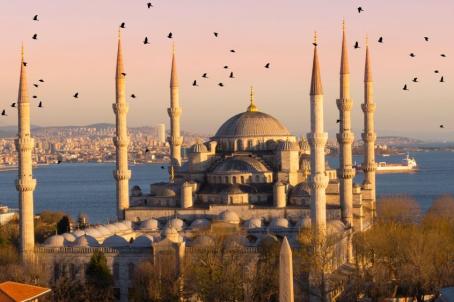
For a long time, Europe was ruled by powerful monarchies. Monarchy and religion have been connected since time immemorial. Here are 7 sites across Europe where royalty historically bent the knee to a higher power and received their crown.
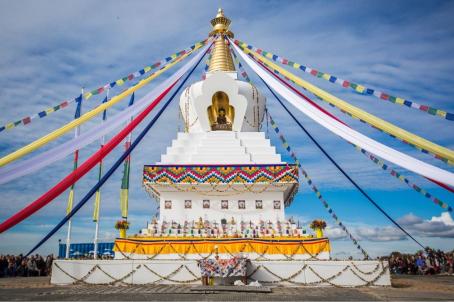
Stupas are symbols of enlightenment and peace that commemorate different stages of Buddha's life. Since the mid-20th century, thousands of stupas have begun to populate Europe. We have compiled some of the most impressive ones in this list.
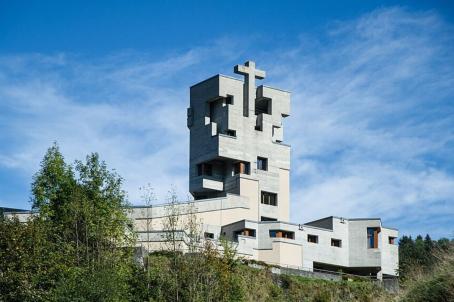
Walter Maria Förderer (1928–2006) was a Swiss architect and sculptor renowned for his neo-expressionist church designs in the 1960s. In this list we have compiled 6 of his church designs that seamlessly integrate religious and secular elements.

How is Religiana helping to conserve and promote Religious Heritage in Europe and why should you get involved?
Find out about Religiana
Are you a tourism organisation or religious heritage sites manager? Discover the advantages of becoming a partner.
See current partners
We can keep you up to date with the latest news from Religiana and religious heritage conservation across Europe.
Sign up to the FRH newsletter