Hervormde Kerk
Kollumerzwaag, NL
Reformed church.

Here you can search for a building to visit. You can use the map find destinations, or you can use the filters to search for a building based upon what different criteria.
Kollumerzwaag, NL
Reformed church.
Oldemarkt, NL
In 1448 a chapel was built on this site. In 1850 it was expanded with a side aisle on the south side. This side aisle was demolished again in 1970-1973, during the restoration. As a result, the church regained its original form. For the construction of the chapel at that time, a certain Jacob Muerling, who had many possessions in Oldemarkt, made a considerable effort by donating lands to the church. The parish church was at that time in Paaslo. In 1489, the parish church was transferred to Oldemarkt. This church is listed as a National Monument of the Netherlands.
Randwijk, NL
Reformed church. Of the medieval church, only the late Gothic, single-nave, three-sided closed choir remains. The west side of the nave was irreparably damaged when the tower was blown up in 1944-1945. Under the leadership of ir WJG van Mourik, the choir was restored and a completely new nave was built, more or less in keeping with the style of the choir. Against the west side, a large square tower with a pointed roof and bell spire. The work was completed in 1953, during which the nave, which had been badly damaged in 1944, was subsequently rebuilt in quasi-Gothic forms.
Hieslum, NL
The church stands on the site of a medieval church that was probably built around 1300. The spire is made of wood. Under the wooden floor are four gravestones of the pastors from the time before the reformation.
Piershil, NL
Reformed church. Rectangular hall church, after 1524, in late Gothic forms with barrel vaults and tie beams. North wing from 1643. Late Gothic tower with a decoration of arched niches, restored around 1964. The inventory includes a pulpit with lectern, baptismal font holder and baptismal fence, all second quarter 17th century. A precentor's lectern, 18th century. A lord's pew with carved coats of arms and arch panels, second quarter 17th century. A lord's pew with attachment in Louis XIV forms. Five mourning boards in carved frames, 1775, 1757, 1760, 1762 and 1794. Bell tower with chime consisting of a bell by C. and DJ Ouderogge, 1642, diam. 49 cm and a bell by J. Specht, 1753, diam. 48 cm.
Nieuw-Beijerland, NL
This church is listed as a National Monument of the Netherlands.
Made, NL
The Reformed Church of Made is a late Gothic building. The church was founded in 1511 although the building has suffered several alterations in different periods.
Haskerhorne, NL
In 1691 the old building was demolished, in that year a new building was put out to tender by grietman Hessel Vegelin of Claerbergen. The current pulpit probably also dates from that time, because according to experts it is from the 17th century. The appearance of the church was distinguished, so that a travelling artist Cornelis Pronk immortalized the church in 1732. The church and tower were covered with blue tiles. The building remained standing until 1915. It was demolished and a new building was built on the foundations. Money was collected for the renovation by means of subscription lists among the parishioners. After the demolition a new church was built
Maasdam, NL
Charming, eclectic village church with tower. Built to replace its demolished predecessor .

2e Exloërmond, NL
The Hervormde Kerk is a Protestant place of worship dating from 1939. Since 2002, after the Reformed Church was decommissioned in each location, it has been used as the central church of the Protestant Church in the Netherlands (PKN) in Exloërmond. The church organ was built in 1976 by the firm Gebr. Reil (Heerde).
new
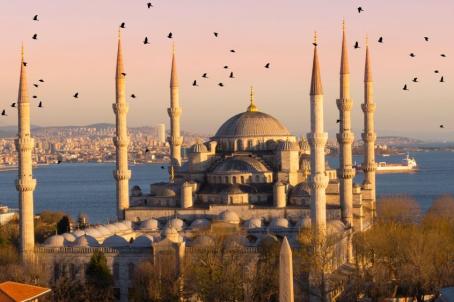
For a long time, Europe was ruled by powerful monarchies. Monarchy and religion have been connected since time immemorial. Here are 7 sites across Europe where royalty historically bent the knee to a higher power and received their crown.
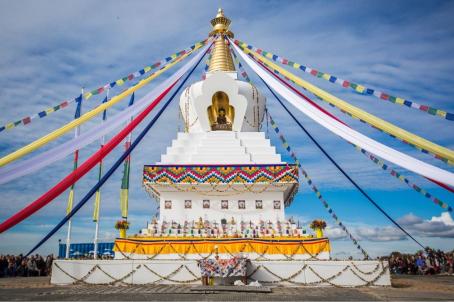
Stupas are symbols of enlightenment and peace that commemorate different stages of Buddha's life. Since the mid-20th century, thousands of stupas have begun to populate Europe. We have compiled some of the most impressive ones in this list.
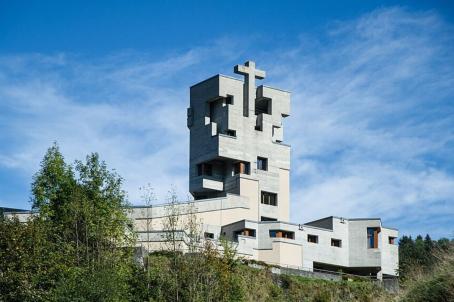
Walter Maria Förderer (1928–2006) was a Swiss architect and sculptor renowned for his neo-expressionist church designs in the 1960s. In this list we have compiled 6 of his church designs that seamlessly integrate religious and secular elements.

How is Religiana helping to conserve and promote Religious Heritage in Europe and why should you get involved?
Find out about Religiana
Are you a tourism organisation or religious heritage sites manager? Discover the advantages of becoming a partner.
See current partners
We can keep you up to date with the latest news from Religiana and religious heritage conservation across Europe.
Sign up to the FRH newsletter