Protestantse Kerk
Schelluinen, NL
Charming little neo-Gothic church with tower.

Here you can search for a building to visit. You can use the map find destinations, or you can use the filters to search for a building based upon what different criteria.
Schelluinen, NL
Charming little neo-Gothic church with tower.
Kûbaard, NL
The church was restored between early 2000 and spring 2007. The restoration plan was drawn up by the architectural firm Jelle de Jong in Lemmer. That does not mean that there were no churchgoers in the church for seven years. First, the tower was restored. Then the exterior and interior of the church followed. And church services continued as much as possible. 18 gravestones were removed from under the floor. Two of these were very old. The squat (gallery) has disappeared. It was needed at the time when a liberal minister came to Wommels and many churchgoers from Wommels came to Kubaard. After an open house on 21 April 2007, the restored church was officially put back into use. (53-05/58-07)
Barchem, NL
The church was built in 1860 (see the facade stone in the left side wall). Since then, the front facade has not been changed, but the windows in the side walls, which illuminate the service rooms, have. These were renewed in the 1930s, but the old situation can still be recognized. The two diagonally placed closing sides also have renewed windows that were probably installed in the 1930s. The interior will have been renovated in the same period. The current wooden vault shows the characteristics of that period (1930s character). What the original vault looked like can no longer be determined.
Ochten, NL
The older Reformed Church of Ochten was destroyed in the fall of 1944 during the Battle of the Betuwe. The current church building dates from the 1950s, and is a typical example of Protestant church building from the reconstruction period, influenced by traditionalism, and as such a very important reconstruction church. In the tower hangs a bell by Peter van Johan van Trier, 1643. At the end of 2017, the Cuypersgenootschap submitted a request for recognition as a Municipal Monument.
Noorden, NL
Hall church from around 1825 with pointed arch windows and an octagonal wooden bell tower. It has a neo-classical entrance. This church is listed as a National Monument of the Netherlands.
Kerkdriel, NL
There used to be a church building here . There was already a small church in the 11th century. The church building from the 15th and 16th centuries, which was known for its leaning tower, was only partly used by the Reformed community. At that time, there were still remains of old frescoes in the building. On April 23, 1945, the church was destroyed by the Germans.
Rossum, NL
In 1860, built against the old, already protected tower in beautiful brickwork, a five-bay long church hall under a slate-covered saddle roof and with a lower, flat-roofed, three-sided closed consistory room against the five-sided closure. The facades are divided by once-intersected, chevron-shaped covered buttresses, are closed off with (ascending) round-arched friezes and have a round-arched window per bay with beautiful wooden traceries dating from the construction period. Internally, the bays are separated by columns resting on consoles - incorporated in a wide, all-round, profiled window sill list - on which the ribs of the stucco net vault - segmental arch vault with insert vaults above the windows - come down. Original, sober bench plan with gentlemen's benches along the side facades; pulpit dating from the construction period with neo-Gothic and neo-Lod.XIV carvings; organ from 1899 (restored in the 1960s). Simple, but good example of a mid-19th century village church.
s-Hertogenbosch (Engelen), NL
Dutch Reformed Church. Consisting of the choir of the late 15th century Lambertus Church, destroyed in 1587. Closed on three sides, provided with buttresses, pointed arch windows, slate saddle roof with roof turret, in which bell from 1668 by P. Hemony. The church restored in 1963. Double copper eight-light crown, cast by Borghart in Den Bosch in 1794; tombstone from 1561 for "frater Thomas de Berhey". Bell frame with bell by Pieter Hemony, 1668, diam. 56.5 cm.
Maarsbergen, NL
Reformed church in Maarsbergen, built in 1883-1884 by order of Geertruida Adriana du Bois, widow of CJ Blok. The church is said to have been built in response to the wishes of her brother, Aalt du Bois. The Du Bois family lived in Maarsbergen Castle and had the church built on their own land. The hall church, built in eclectic style, was designed by architects FW van Gendt and AR Freem. The Renaissance features that can also be seen in the Amsterdam Zuider- and Westerkerk can be seen, particularly in the tower and the buttresses. In 1934, the tower was built on the initiative of the Commission for the commemoration of the 50th anniversary, based on plans by architect J. Pothoven. This tower with an open imperial crown replaced a small facade crowning. This original crowning is indicated on the design drawings of the Maarsbergen church. The front and rear facades originally had a simple articulated crowning. On the front facade a bell was placed under a canopy, on the back facade a spherical crowning. The interior has been preserved intact. The organ is protected by the state. A meeting room was built against the back facade of the church, which is not protected. The north facade of this building dates from the 19th century. Originally the building served as a school building.
Garrelsweer, NL
Neo-Romanesque church with a small tower.
new
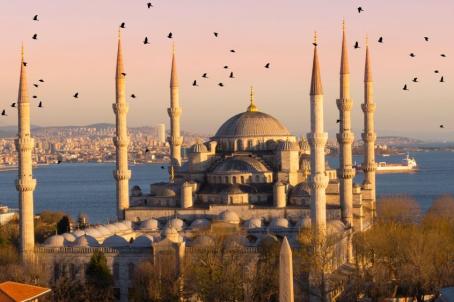
For a long time, Europe was ruled by powerful monarchies. Monarchy and religion have been connected since time immemorial. Here are 7 sites across Europe where royalty historically bent the knee to a higher power and received their crown.
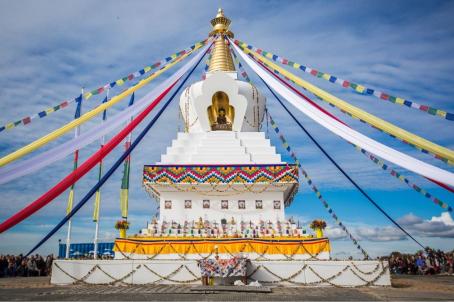
Stupas are symbols of enlightenment and peace that commemorate different stages of Buddha's life. Since the mid-20th century, thousands of stupas have begun to populate Europe. We have compiled some of the most impressive ones in this list.
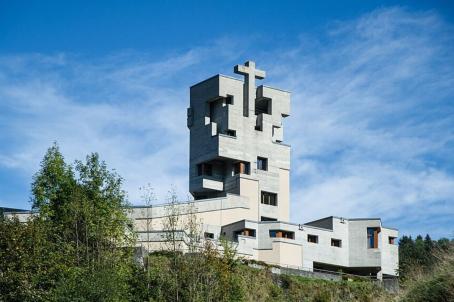
Walter Maria Förderer (1928–2006) was a Swiss architect and sculptor renowned for his neo-expressionist church designs in the 1960s. In this list we have compiled 6 of his church designs that seamlessly integrate religious and secular elements.

How is Religiana helping to conserve and promote Religious Heritage in Europe and why should you get involved?
Find out about Religiana
Are you a tourism organisation or religious heritage sites manager? Discover the advantages of becoming a partner.
See current partners
We can keep you up to date with the latest news from Religiana and religious heritage conservation across Europe.
Sign up to the FRH newsletter