Protestantse Kerk
Dussen, NL
Characteristic reconstruction church with tower. Built as Dutch Reformed Church.

Here you can search for a building to visit. You can use the map find destinations, or you can use the filters to search for a building based upon what different criteria.
Dussen, NL
Characteristic reconstruction church with tower. Built as Dutch Reformed Church.
Scherpenzeel, NL
Dutch Reformed Church. Simple hall church from around 1800. Enlarged in 1860 with north arm and tower. In the windows four stained glass windows by Ype Staak, 1788. Single manual organ, made in 1881 by L. van Dam and Sons. Bell tower with clock by J. Noteman, 1638, diam. 66.5 cm. Mechanical tower clock by JV de Vries, Drogeham, 1913.
Gorssel, NL
Extension with annex. Restoration and renovation after war damage, with old tower.
Nijega, NL
The Dutch Reformed Church of Nijega is originally a medieval hall church, dedicated to St. Agatha. After a major renovation in 1893 by municipal architect DD Duursma, the church was given its current appearance. The bell tower was also built in that year. The two bells in it came from the belfry, which stood in the churchyard. The year 1381 is mentioned on the oldest preserved bell. A bell from 1793 was removed by the Germans during WWII and replaced in 1957. The entrance gates decorated with cast iron death symbols also date from 1893.
Schore, NL
Reformed church with front tower and attached consistory, built in 1942 to replace its predecessor that was destroyed by war.
Noordscheschut, NL
Characteristic hall church without tower. Renovated and extended.
Egmond aan Zee, NL
Built as a Dutch Reformed Church. Replaced an older church, which was dedicated to St. Agnes.
Halfweg, NL
This architecturally very interesting, special church (architect JA Smits), with a small tower, was called the "Small Church" since the local SOW / PKN process, opposite the Reformed "Large Church" of Tj. Kuipers. In the long term, the PKN Halfweg-Zwanenburg only wanted to maintain this "Small Church", which was being restored and redesigned for this purpose from around the end of 2009 to spring 2011. Delays in the implementation of these plans arose due to the fact that all of this had to be financed from the proceeds of the (eventually to be demolished) Reformed "Large Church". In terms of architecture and layout, this Small Church is somewhat similar to Anglican churches and cathedrals in Great Britain, especially the elongated and straight-ended choir.
Limmen, NL
Reformed Church. Single-nave building, 15th? with built-in late Romanesque tower. Against the east wall an extension with burial vault of the Du Peyrou family; alliance coat of arms in the facade, 18th. Baptismal fence 17th, copper baptismal arch 1729. Pew, 18th, Epitaph, 1785. Gravestones, 16-17th. Copper chandelier and three copper candle arms, 18th. Organ with main work and secondary work, made in 1876 by P. Flaes. Bell frame with clock by François and Pieter Hemony, 1650, diam. 107.5 cm. Mechanical tower clock by Eijsbouts, 1934, with electric winding.
Steenbergen (NB), NL
Classical building from 1832, consisting of a three-aisled hall church covered by a saddleback roof with a facade divided by Doric half-columns and a pediment with triglyph list, behind which rises the built-in tower, with double Ionic pilasters and crowned by a dome on which an obelisk. Interior: Doric columns with segmental arches, barrel vault in stucco over the central nave, rib vaults over the side aisles. Oak pulpit from the second half of the 18th century, to which is a copper lectern with the crowned initials W. and M. from 1693; carved organ case. Oak bell frame with bell by JP Huaert, 1794, diam. 105 cm. Iron entrance gate between bluestone pillars with vase crowning. Originally a two-manual organ from the second half of the 17th century. In the previous century the Positive was removed. Restored in 1963.
new
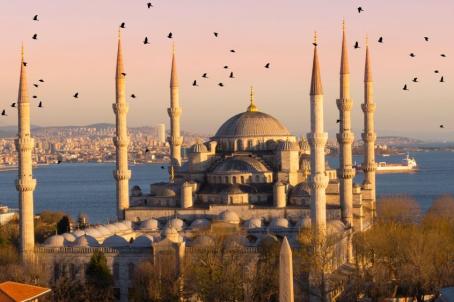
For a long time, Europe was ruled by powerful monarchies. Monarchy and religion have been connected since time immemorial. Here are 7 sites across Europe where royalty historically bent the knee to a higher power and received their crown.
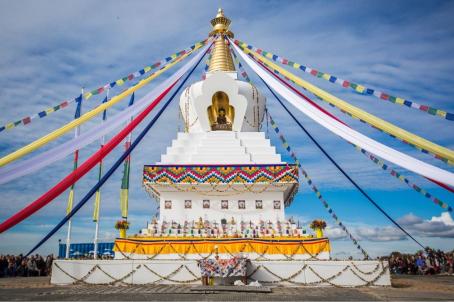
Stupas are symbols of enlightenment and peace that commemorate different stages of Buddha's life. Since the mid-20th century, thousands of stupas have begun to populate Europe. We have compiled some of the most impressive ones in this list.
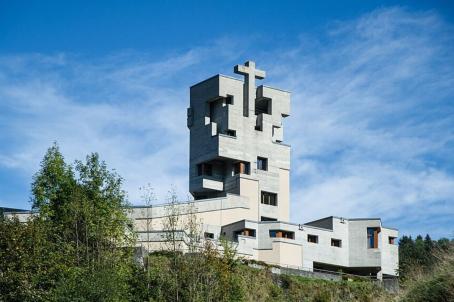
Walter Maria Förderer (1928–2006) was a Swiss architect and sculptor renowned for his neo-expressionist church designs in the 1960s. In this list we have compiled 6 of his church designs that seamlessly integrate religious and secular elements.

How is Religiana helping to conserve and promote Religious Heritage in Europe and why should you get involved?
Find out about Religiana
Are you a tourism organisation or religious heritage sites manager? Discover the advantages of becoming a partner.
See current partners
We can keep you up to date with the latest news from Religiana and religious heritage conservation across Europe.
Sign up to the FRH newsletter