Explore Religious Heritage Across Europe

Here you can search for a building to visit. You can use the map find destinations, or you can use the filters to search for a building based upon what different criteria.

Refine search

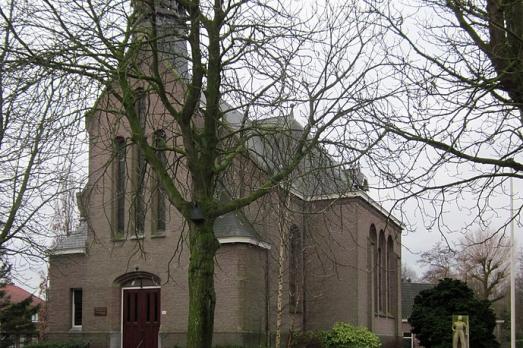
Reformed church

Lexmond, NL

Dutch Reformed cruciform church, Gothic building with tower from the first half of the 14th century and nave and choir from the second half of the 14th century. The interior contains a Strumpfler organ from the 18th century. The church also contains the coat of arms of the shooting guild and a funeral board of the Lords of Brederode. The church contains gravestones from the 17th and 18th centuries.
Reformed Church

Kattendijke, NL

This church stands on a mound. The current church originally dates from the beginning of the 15th century, but a lot was demolished and added. For example, the tower was added in 1630, and the choir was demolished in 1768.

Reformed church

Sint Maartensbrug, NL

Building from 1696, later plastered with wooden tower on the west facade. Internally two rows of Ionic columns, wooden mirror vault. Oak pulpit, oak baptismal fence, two pews with canopy. Two copper lecterns, copper baptismal font holder, all last quarter 17th century; 17th century copper crown; tombstones. Small mechanical tower clock, 1872 (probably a Batstra clock), hook escapement with striking mechanism, electric winding. Three dials, each with one beautifully shaped hand.

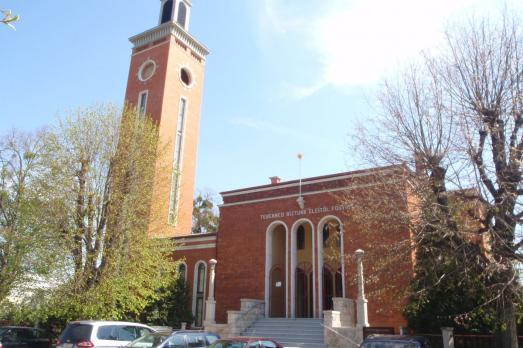
Reformed Church, Szombathely

Reformed Church, Szombathely

Szombathely, HU

The Reformed Church was completed in 1939 and consecrated the same year by Bishop Vince Medgyasszay. The interior paintings of the church were made by Ilona Biczó and her husband. They contain biblical motifs, mixed with elements of Hungarian folk painting. The church survived the bombings of World War II unscathed, but underwent a major renovation in 1988. Its two-manual electric organ was built by Albert Péter.

Reformed Church

Hoornaar, NL

Single-nave, 15th century village church with a five-sided closed choir, which was extensively modified in 1842, and a monumental tower, 1555 by Cornelis Frederiks van der Goude, consisting of three brick sections with natural stone bands and slender, Ionic pilasters on the corners (the capitals of the upper pilasters were not executed).

Reformed church

Heesbeen, NL

Single-nave, straight-closed church with round-arched windows, 18th century, with remains of a medieval church in tufa stone in the western half; flat tower from the 14th century in brick. Oak pulpit and pew from the 18th century; funeral board from 1764 for Sophia Amalia Maria van Gent, lady of Heesbeen sculpted gravestone for Willem Torck, lord of Heesbeen (died 1557) and his wife Bartha Pieck. The front of an organ by C. van Oeckelen from 1823. The instrument is no longer present. Around the churchyard a brick wall with a gatehouse on the north side, with a saddle roof between gables. Bell frame with chime consisting of a bell by J. van Haer, 1393, diam. 90 cm. and a bell by an anonymous founder, 1393, diam. 85 cm.

Reformed Church

IJzendoorn, NL

Historic village church with tower. The Reformed Church in IJzendoorn is one of the oldest buildings in the village. Construction began shortly after 1384 and the church has been renovated and restored several times over the centuries. The church has a single nave and a Gothic appearance. The nave and choir are covered with wooden barrel vaults. The tower is a late Gothic building, the sections of which are decorated with pointed arch niches. The church has a number of special elements, including a pulpit from the second quarter of the 17th century and a pew with a canopy and a carved alliance coat of arms from the 18th century.

Reformed church

Stad aan 't Haringvliet, NL

Dutch Reformed Church. Single-nave, late Gothic village church with a three-sided closed choir, probably second quarter 16th century. Restored after a fire in 1898, when the original roof turret was omitted and a tower was built on the west side. Restored again in 1925-1926 and in 1980. The inventory includes: two copper crowns, 18th century, several tombstones from the 17th and 18th centuries and a copper baptismal font holder on the pulpit, 17th century. Organ case from 1901 by J. Proper.

Reformed church

Giessen-Oudekerk, NL

The church is a Gothic building of brick on a tuff base. The single-nave nave dates from the end of the fifteenth century or the beginning of the sixteenth century with a heavy, brick west tower. The wooden barrel vault was restored in 1657, according to the inscription on one of the tie beams. In 1838 the choir was demolished and the consistory was built in its place. During a restoration in 1952-1953 the floor was renewed and the window tracery in the windows changed. On this occasion the pulpit was moved. The ceiling was replaced in 1995.

Reformed Church Aarlanderveen

Reformed Church Aarlanderveen

Aarlanderveen, NL

The Hervormde Kerk (Reformed Church) in Aarlanderveen was built in 1905. It replaced an earlier church, which was demolished. Several artefacts were transferred from the older church to the new one including a pulpit with baptismal fence from the second half of the 17th century; a stone late Gothic baptismal font, used as a base for the pulpit; fronts of pews from the 18th century and two copper lecterns from the 17th century.

Be inspired

Stupkalnis.lt

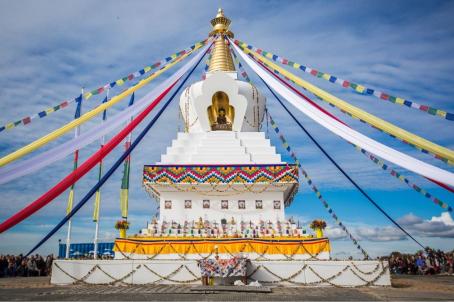
10 Buddhist stupas to discover in Europe

Stupas are symbols of enlightenment and peace that commemorate different stages of Buddha's life. Since the mid-20th century, thousands of stupas have begun to populate Europe. We have compiled some of the most impressive ones in this list.