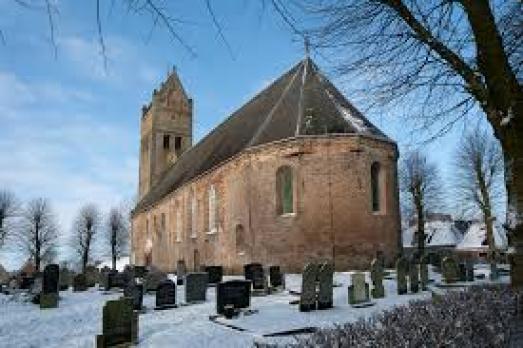
Redbadtsjerke
Jorwert, NL
With a beautiful tower and sober interior, the Redbadcherke in Jorwert is a fine example of a Romanesque church. The front church has recently been renovated. The church is also used as a base for Stifting Nijkleaster.

Here you can search for a building to visit. You can use the map find destinations, or you can use the filters to search for a building based upon what different criteria.
Jorwert, NL
With a beautiful tower and sober interior, the Redbadcherke in Jorwert is a fine example of a Romanesque church. The front church has recently been renovated. The church is also used as a base for Stifting Nijkleaster.
Balkbrug, NL
In the facade stone dated 1852 building on T-shaped foundation; roof turret above the front facade, round arch windows and simple entrance frame. Originally a single manual organ made in 1866 by J. van Loo. In 1903 extended with a top work by J. Proper. Bell tower with clock probably by P. Vermaten?, 1698, diam. 77.8 cm. A new wooden sundial was placed on the wall of the church in 1981. Made by GJ Sasbrink. To replace one that disappeared during the war.
Groningen, NL
In the Corpus den Hoorn district, in the south-west of the city of Groningen. Inaugurated in 1964 as the Reformed Church (liberated), after the merger in 2023 as the NGK
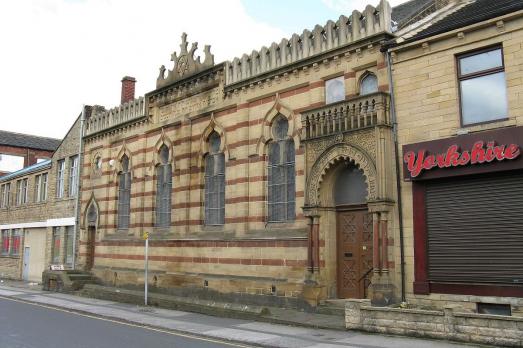
Bradford, GB
The Reform Synagogue in Bradford is an Ashkenazi synagogue built in 1880-81 by architects T.H. and F. Healey. The synagogue was rebuilt in 1956 and 2013. This stone building in the Neo-Moorish and Victorian style still serves as a synagogue.
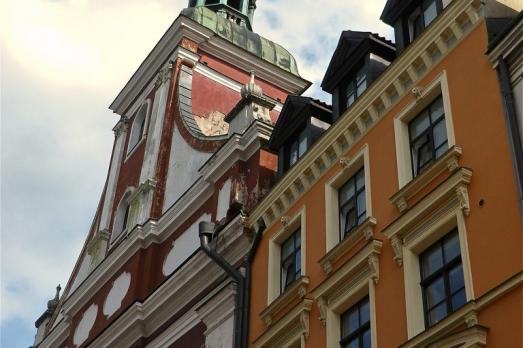
Rīga, LV
The Church of the Reformation, which dates back to 1721-1733, is one of the few Calvinist churches in Latvia. The church is richly decorated with pilasters and surmounted by a small tower. After a fire, it was rebuilt in 1805 and the ground floor was converted into a warehouse. During the Soviet occupation, the building was converted into a recording studio.
Sebaldeburen, NL
The Reformation also drove out the priests in Sebaldeburen. It is not known how the service was performed at that time. In the year 1602 Nicolaus Petri took charge of the service here. At that time there was a combination with Grijpskerk. This probably lasted until 1606. Then there is mention of a joint minister for Grootegast and Sebaldeburen: Thomas Joannis. The stamp above the entrance was left by Rev. Nicolaus Westendorp on the reformed congregation when the new church was put into use in 1807. Because it was this Rev. Westendorp who, when he became minister of Sebaldeburen in 1797, was very annoyed by the dilapidated church he found there. He says it like this: "When I came to the Community (in 1797) I had considered the pitiful condition of the Church with the saddest emotions. This feeling became tormenting, as often as I imagined the approaching moment when the care for our lives would force us to avoid it. There was no repairing it: it was not possible to establish a new one from the church goods and income, because they were not even sufficient to maintain the Parsonage and Sacristan. There was also no expectation of the Community; because it was small, burdened by other institutions and consisted mainly of peat and laborers."
Loenen, NL
Built in 1861 to replace the old village church. Three copper chandeliers, Louis XVI. Tombstone, 17th century. Single manual organ of Westphalian origin. Made around 1700. Placed in the Herv. Church in Loenen in 1870. On that occasion, the lower case was removed and the keyboard moved to the side. During the restoration in 1978, the case was reconstructed in its original form (with lower case and backside playing). The maker of the organ is unknown.
Kattendijke, NL
This church stands on a mound. The current church originally dates from the beginning of the 15th century, but a lot was demolished and added. For example, the tower was added in 1630, and the choir was demolished in 1768.
Lieren, NL
Extension at the rear and modification of the roof turret.
Grolloo, NL
Dutch Reformed CHURCH built in 1853 in neoclassical style. Foundation stone in the front facade: 'Founded 1853. Churchwardens Roelof Hagting, Remmelt Haange, Lens Beyring'. The church was restored in 1975 by order of the church council by the Bureau Monumentenzorg of the province of Drenthe. Among other things, the (half-) columns in the Doric order and a new chandelier were installed. Worth mentioning is the cemetery behind the church; however, this is of local importance.
new
For a long time, Europe was ruled by powerful monarchies. Monarchy and religion have been connected since time immemorial. Here are 7 sites across Europe where royalty historically bent the knee to a higher power and received their crown.
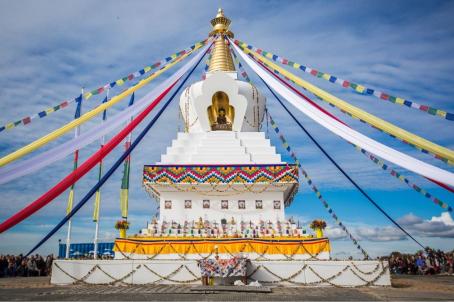
Stupas are symbols of enlightenment and peace that commemorate different stages of Buddha's life. Since the mid-20th century, thousands of stupas have begun to populate Europe. We have compiled some of the most impressive ones in this list.
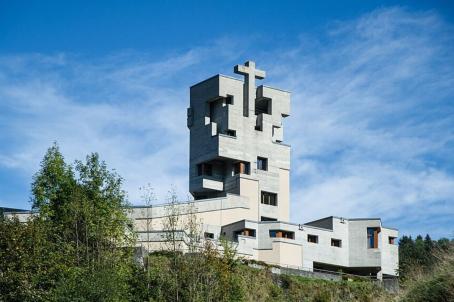
Walter Maria Förderer (1928–2006) was a Swiss architect and sculptor renowned for his neo-expressionist church designs in the 1960s. In this list we have compiled 6 of his church designs that seamlessly integrate religious and secular elements.

How is Religiana helping to conserve and promote Religious Heritage in Europe and why should you get involved?
Find out about Religiana
Are you a tourism organisation or religious heritage sites manager? Discover the advantages of becoming a partner.
See current partners
We can keep you up to date with the latest news from Religiana and religious heritage conservation across Europe.
Sign up to the FRH newsletter