Sygkrasi Panagia Afentrika Church
Sygkrasi, CY
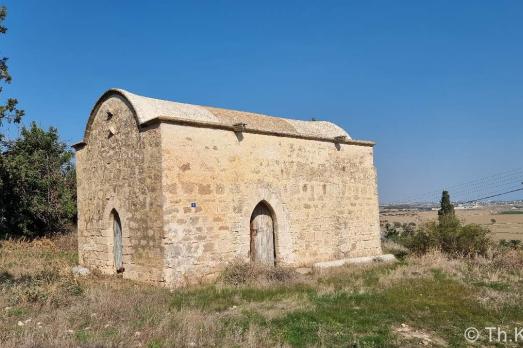
The Panagia Afentrika Church is located west of the village centre on a small hill. The condition of the building itself is fair, while the interior condition is poor.

Here you can search for a building to visit. You can use the map find destinations, or you can use the filters to search for a building based upon what different criteria.
Sygkrasi, CY
The Panagia Afentrika Church is located west of the village centre on a small hill. The condition of the building itself is fair, while the interior condition is poor.
Sykkylven, NO
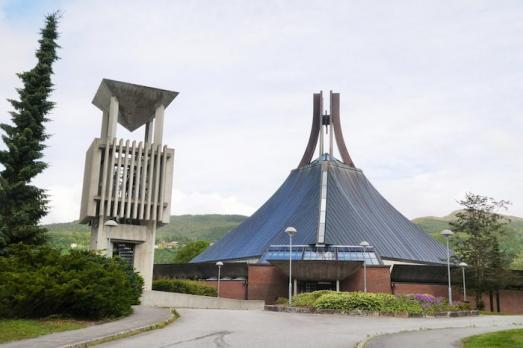
The church in Sykkylven was built in brick in 1990 and designed by the architect Oscar F. Norderval. The church of Sykkylven is a modern "working church": in addition to the church, the complex includes an office, its own chapel, a complete basement with an activity room and a large kitchen.
Lier, NO
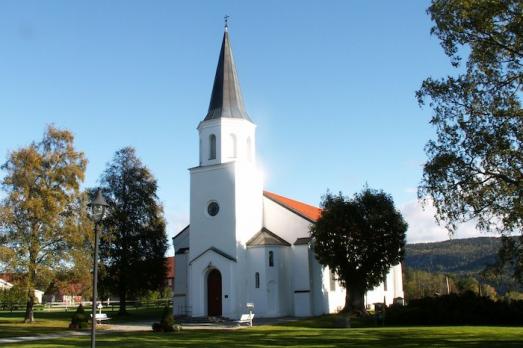
In Sylling there was a stone church from the Middle Ages, which was demolished in 1851 because it had become too small. The new church, which was completed in 1852, was partly built with stones from the old church. The walls were plastered on the outside and inside. The carpenter Chr. H. Malling prepared the plan of the new church. It has a rectangular nave with a narrow choir and a west tower with a high tower helmet. The west tower was built in 1877 according to the drawings of the architect J. H. Nissen. The interior underwent major changes in the years 1947-52.
Fjord, NO
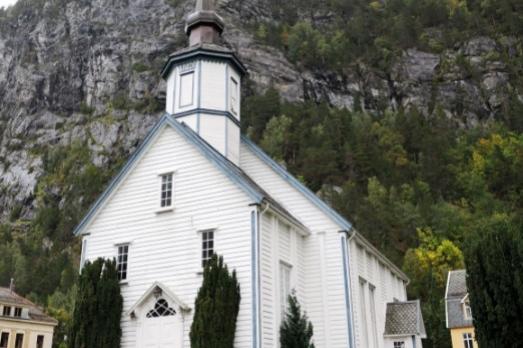
The church in Sylte is a church from 1863. It is not clear who the architect was, but the shipbuilder Nils A. Liaaen seems to have been the original designer of the church and the architect Jacob Wilhelm Nordan made some changes to the original design. The church in Sylte is very similar to the one in Sunnylven, and Liaan (who was originally from Ljøen by Hellesylt) was probably inspired by the new church in Hellesylt.
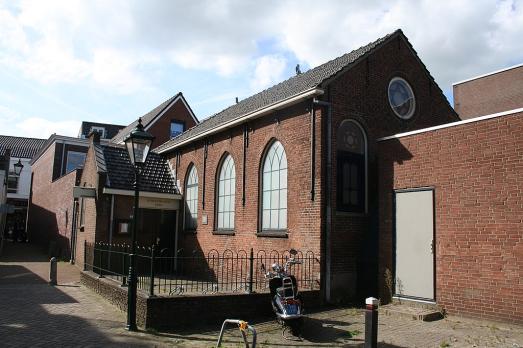
Culemborg, NL
Neo-Gothic synagogue. From 1950 to 1983 Reformed Church (Liberated), then Dutch Reformed Church. The building of the Dutch Reformed Church was built as a synagogue and dates from 1868. The Jewish community in Culemborg grew to around 200 members at the end of the 19th century. This made the construction of a house of prayer necessary. The synagogue was built in neo-Gothic style. Characteristic are the 3 pinnacles on the front facade and the pointed arch windows. The old synagogue, housed in an abbey right next to the new synagogue, was converted into a mikveh (bathhouse) and religious school. All these Jewish institutions ensured that the street on which they were located soon became known as Jodenkerkstraat, a name it still has today.
Alphen aan den Rijn, NL
In the second half of the eighteenth century, the first Jews settled in Alphen. The oldest cemetery dates from that time.
Rotterdam, NL
The very first Jewish community in Rotterdam was founded by Portuguese Jews from Antwerp. In 1610, the Vroedschap allowed the "Portuguese Jews" to settle in Rotterdam "to promote traffic and negotiations within this city" and to establish a synagogue there. In the first half of the 17th century, we already find a synagogue of the Portuguese Jewish community. Among them was the highly respected De Pinto family, of which Abraham Gillez Lopez de Pinto in particular left nothing to make the Jewish community a worthy community. He was a wealthy man who lived in the double upper house on the south side of Wijnhaven No. 62, corner of Bierstraat. After renovation, this became a meeting place and school for Jews who felt the need to increase their knowledge of the Talmud and the Bible. The Jews from the east - called "High German Jews" - came later. Their first synagogue was the one at Glashaven (1674). For a while, the Portuguese and High German Jews each had their own synagogue, but when the number of Portuguese Jews decreased significantly, both communities decided in 1682 to unite and use the synagogue at Glashaven WZ. This synagogue soon became too small and an adjacent building was purchased to enlarge the existing church. When in 1723 Parnassijns requested permission to enlarge the synagogue, the mayors believed that "those of the Jewish nation would do better to look elsewhere at the public church (meaning the Zuiderkerk) in a more elegant way".
Oss, NL
At the beginning of the nineteenth century, a synagogue was established in a rented space on the Varkensmarkt in Oss. Before that, religious services had been held in private homes since 1764. The dilapidated synagogue on the Varkensmarkt was replaced in 1831 by a new building on the Koornstraat . Half a century later, this building was expanded with a school and an official residence and formed the centre of Jewish life in Oss until the Second World War. After the liberation, it became clear that the synagogue could no longer be restored. The front facade has been preserved and is now a municipal monument. This building is listed as a Municipal Monument of the Netherlands.
Leiden, NL
Initially, religious services were held in a private house on the Vismarkt, but in 1723 a building on the Levendaal was occupied, which was furnished as a synagogue. In the same year, the statutes of the Jewish community were approved by the city council. The facade of the synagogue on the Levendaal was adapted to the use of the building with the permission of the government almost ten years later. Despite the restrictive provisions and the economic malaise in which Leiden found itself in the second half of the eighteenth century, the number of Jews in the city increased, certainly after the Jews officially obtained equal civil rights in 1796. The explosion of a gunpowder ship in 1807 not only destroyed the archives of the Jewish community, the synagogue was also badly damaged and the Jewish school was completely destroyed. After some provisional restorations, it proved necessary to completely renovate the synagogue building halfway through the nineteenth century. In 1858, the building on the Levendaal was reconsecrated and at the same time a new school building was put into use. Most of Leiden's Jews lived near the synagogue.
s-Gravenhage, NL
This Synagogue was founded in 1707 in the house of Jacob Pereira. Around 1725, the famous architect Daniel Marot designed the Synagogue that still exists today and is still used by the Liberal Jewish Community of The Hague. It should be noted that the clients wanted a synagogue that would resemble the Portuguese Jewish Synagogue of Amsterdam. This had been built 50 years earlier. The foundation stone of the complex in The Hague was laid on 16 April 1725. It is an impressive building. At the top is the year 5486 (1726). Below that is written in Hebrew "How lovely are your Dwellings". The complex has 12 windows, one for each tribe of Israel. The intention was that the Synagogue would also have a tower (with a clock), just like the Synagogue in Rotterdam that was built around the same time. In 1725, the administrators of The Hague agreed to its construction by a vote of 15 to 1, but several preachers from The Hague subsequently campaigned against the tower and it was never built.
new
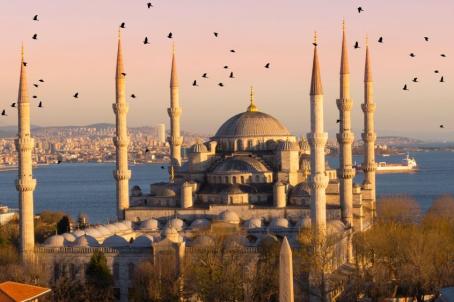
For a long time, Europe was ruled by powerful monarchies. Monarchy and religion have been connected since time immemorial. Here are 7 sites across Europe where royalty historically bent the knee to a higher power and received their crown.
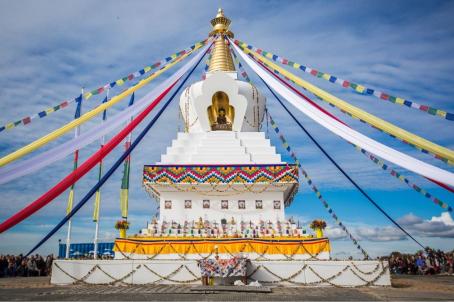
Stupas are symbols of enlightenment and peace that commemorate different stages of Buddha's life. Since the mid-20th century, thousands of stupas have begun to populate Europe. We have compiled some of the most impressive ones in this list.
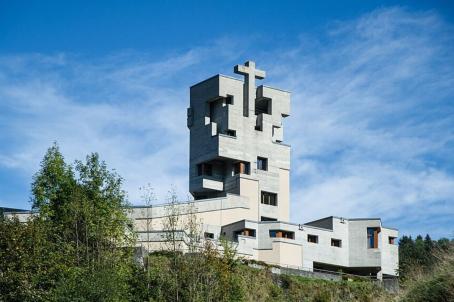
Walter Maria Förderer (1928–2006) was a Swiss architect and sculptor renowned for his neo-expressionist church designs in the 1960s. In this list we have compiled 6 of his church designs that seamlessly integrate religious and secular elements.

How is Religiana helping to conserve and promote Religious Heritage in Europe and why should you get involved?
Find out about Religiana
Are you a tourism organisation or religious heritage sites manager? Discover the advantages of becoming a partner.
See current partners
We can keep you up to date with the latest news from Religiana and religious heritage conservation across Europe.
Sign up to the FRH newsletter