Explore Religious Heritage Across Europe

Here you can search for a building to visit. You can use the map find destinations, or you can use the filters to search for a building based upon what different criteria.

Refine search

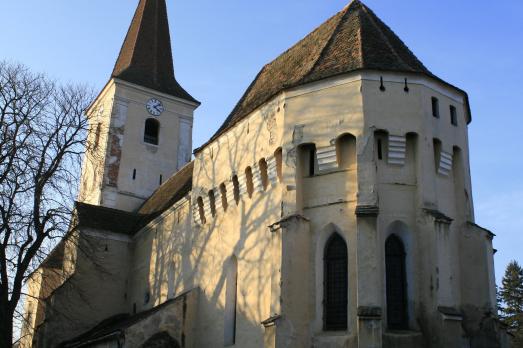
Șura Mică Fortified Church

Șura Mică Fortified Church

Șura Mică, RO

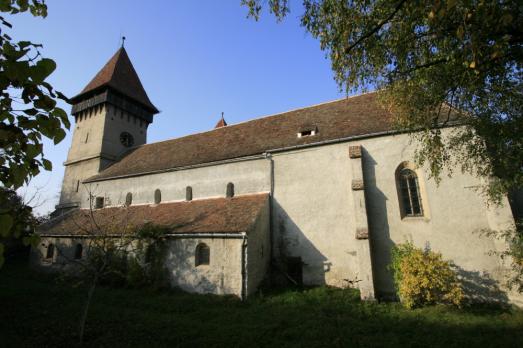
The church in Șura Mică remained almost unchanged after the construction phases between the 13th and 15th century. It was built as a Romanesque three-aisles basilica, destroyed in 1493 during the Ottoman raids and erected again before 1506. The chancel with mullioned windows and ribbed vault originate from that time. The central nave was covered with a barrel vault with a ribbing net and the western tower was equipped with a defence level. The western and northern portals date back to the same period, as well as the small defence tower above the northern entrance securing the church from the side of the valley. Only some ruins of the defence wall built in the same time are still preserved. The interior was only slightly changed as time went by. At the beginning of the 17th century, the church received its Baroque altar and the galleries. The pulpit and the organ however were only built later on, in 191kleinscheuern3_turm13.

Surp Karapet

Maastricht, NL

The Surp Karapet Church is an Armenian Apostolic church, the first one of this denomination in the Dutch Limburg province. It was built between 1964 and 1966. It was originally a Roman Catholic parish. However, since 2012, it has served the Armenian Apostolic Church community of Maastricht.

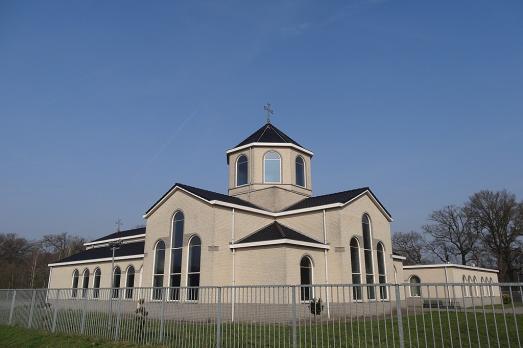
Surp Krikor Lousaworitch

Surp Krikor Lousaworitch

Almelo, NL

The Surp Krikor Lousaworitch is an Armenian Apostolic Church in Almelo built in 2003. It has been built in the style of historical Armenian church buildings.

Surp Sargis

s-Hertogenbosch, NL

St. Catherine or Kruiskerk. Built in 1917-1918 by Jan Stuyt, retaining the choir closure with northern sacristy of the monastery church of the Kruisheren, built from 1533 onwards. This remnant of the choir is built of brick with natural stone bands and ornamental parts, diagonally cut buttresses and profiled, largely closed windows. Sacristy with eight-part ribbed vault on corbels. Original nave was started in 1601; replaced in 1841 by the Waterstaatskerk by J. de Kroon, demolished in 1917 for the current church. The pulpit and organ gallery with statues from 1841 were transferred there; a number of 17th century tombstones were preserved, as well as an important series of 17th and 18th century paintings, including a cycle of nine by PJ Verhaghen from 1768-81, originating from the abbey of Averbode. Furthermore, cast copper crowns (17th century). In the hood of the southern side tower clock by Jan Moer, 1562, diam. 55 cm. Mechanical tower clock, 1917? has been decommissioned. In the sacristy clock by M.de Haze, diam. 35 cm. Organ with main work, upper work, breastwork and free pedal, made in 1851 by JJ Vollebregt and Son. In 1915 moved and modified by Maarschalkerweerd, in 1956 restored by Verschueren.

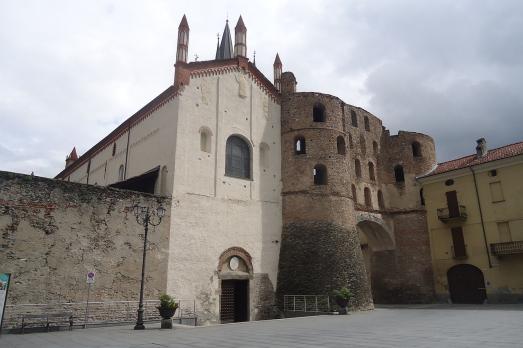
Susa Cathedral

Susa Cathedral

Susa, IT

Susa Cathedral, founded in the 11th century, was a Benedictine abbey until the 17th century. In 1027 Olderico Manfredi II, Marquis of Turin and Susa, founded a Benedictine abbey in Susa. During the Middle Ages, the cathedral was enlarged in two campaigns: the first took place in the 12th century and concerned the façade, which was extended to the walls; the second took place between the 14th and 15th centuries and concerned the apse: in fact, the three apses were rebuilt, as well as the sacristy. In the 17th and 18th centuries, the church was restored with the addition of Baroque decorations. In 1772, when Susa became the seat of the bishop, the church, now deprived of its monastic functions due to the closure of the adjacent Benedictine monastery, was raised to the rank of cathedral. Most of the Baroque additions were removed during the 19th-century renovations, giving the interior of the church a neo-Romanesque appearance.

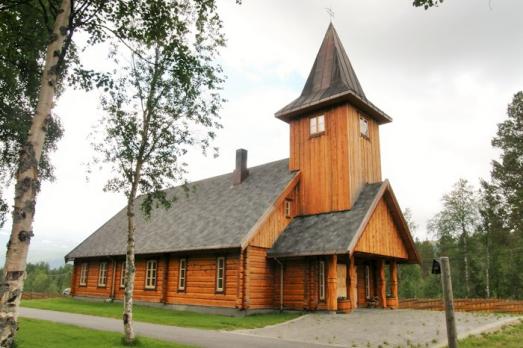
Susendal Church

Susendal Church

Hattfjelldal, NO

The church of Susendal is a long wooden church dating from 2001. There was an old chapel from 1916 in Susendal, but in the 1990s the chapel was in an advanced state of disrepair.

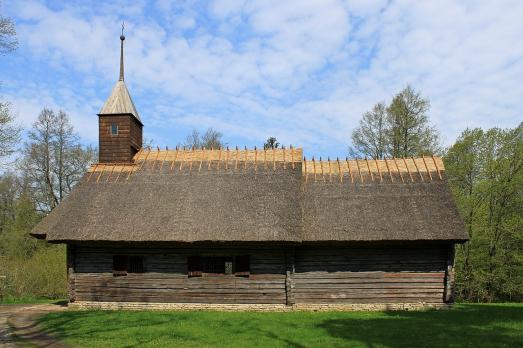
Sutlepa Chapel

Sutlepa Chapel

Tallinn, EE

The Sutlepa Chapel is a 17th-century chapel, which has been in the Estonian Open Air Museum since 1970. The chapel was consecrated again in 1989 and currently functions as an auxiliary church of the St. John's congregation in Tallinn. The Sutlepa Chapel is one of the oldest wooden buildings in Estonia. The chapel was built in the village of Sutlepa perhaps as early as 1627. However, the year "1699", engraved above the church door, probably marks the time of construction of the building, which has survived until today.

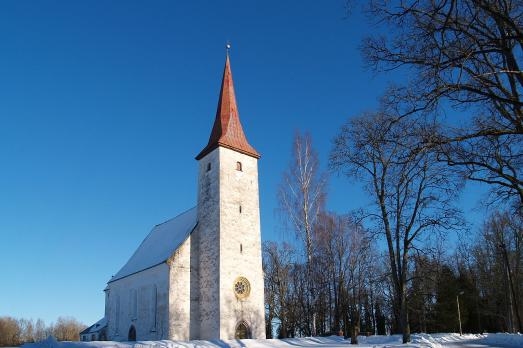
Suure-Jaani Church

Suure-Jaani Church

Suure-Jaani, EE

The Suure-Jaani Church, dedicated to St. John the Evangelist, is a fortified church which was certainly built before 1300 and is, therefore, one of the oldest stone churches in Viljandi County. During the Livonian War and the Great Northern War the church of St. John was severely damaged, so the church was extensively renovated in 1767. Probably in the last quarter of the 19th century, the church of St. John the Baptist was decorated in the neo-gothic style.

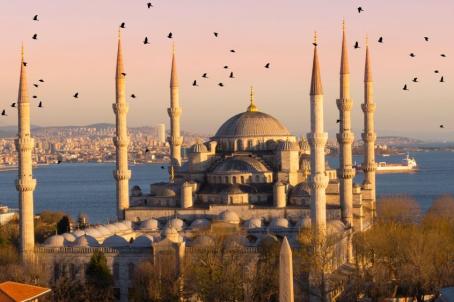
Suzi Çelebi Mosque, Prizren

Suzi Çelebi Mosque, Prizren

Prizren, RS

Suzi Çelebi Mosque is a historic Ottoman mosque, built in 1523 in Prizren. It is named after Ottoman poet and historian Suzi Çelebiu, who is known for his epic poem about the Ottoman conquest of the Balkans.

Svalbard Church

Svalbard Church

Svalbard & Jan Mayen, NO

The Svalbard church is the northernmost church in the world. It is a wooden 'long church' built in 1957, consecrated on 24 August 1958 by Bishop Alf Wiig, and rebuilt in 2004. The architect of the church was Hans Magnus. Built in 1921, the former Svalbard Church burned down during the Second World War.

Be inspired

Stupkalnis.lt

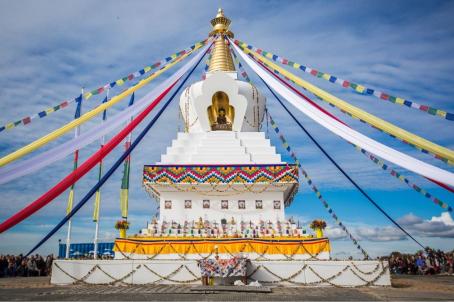
10 Buddhist stupas to discover in Europe

Stupas are symbols of enlightenment and peace that commemorate different stages of Buddha's life. Since the mid-20th century, thousands of stupas have begun to populate Europe. We have compiled some of the most impressive ones in this list.