Explore Religious Heritage Across Europe

Here you can search for a building to visit. You can use the map find destinations, or you can use the filters to search for a building based upon what different criteria.

Refine search

Synagoge

Enschede, NL

Extremely important and beautiful building. One of the most beautiful synagogues in the Netherlands, both in terms of exterior (domes) and well-preserved interior. Still actively in use as a synagogue. The synagogue of Enschede is located on Prinsestraat. It consists of two houses, a large prayer room, a small prayer room, two classrooms, a party room and a ritual bath. On Wednesdays and Sundays (except for Jewish holidays) the synagogue is open to the public. Synagogue of NIG Twente, functions as a 'House that Connects' a place for discussion and debate (Stichting Synagoge Enschede)
Synagoge

Culemborg, NL

Neo-Gothic synagogue. From 1950 to 1983 Reformed Church (Liberated), then Dutch Reformed Church. The building of the Dutch Reformed Church was built as a synagogue and dates from 1868. The Jewish community in Culemborg grew to around 200 members at the end of the 19th century. This made the construction of a house of prayer necessary. The synagogue was built in neo-Gothic style. Characteristic are the 3 pinnacles on the front facade and the pointed arch windows. The old synagogue, housed in an abbey right next to the new synagogue, was converted into a mikveh (bathhouse) and religious school. All these Jewish institutions ensured that the street on which they were located soon became known as Jodenkerkstraat, a name it still has today.

Synagoge

Haaksbergen, NL

Initially, religious services were held in home synagogues, until a piece of land was purchased in 1825 at the Morsinkhofsteeg to build a synagogue. The new building was put into use in 1828, although objections were raised by Catholics. At almost the same time, the Jewish community of Haaksbergen separated from that of Goor and became independent. In 1908, the mikveh adjacent to the synagogue was demolished and the classroom next to it was converted into a mikveh. From that moment on, the children received Jewish lessons in the public school. Although Jews still lived in Haaksbergen after the war, it was no longer possible to hold synagogue services in 1967. The community was dissolved in 1972 and merged with that of Hengelo. The ritual bath was demolished in 1978. The synagogue was preserved on the initiative of a local committee and restored in 1982. The building is now in use as a synagogue by the Liberal Jewish Community of Twente. The Jewish cemetery is listed as a monument and has been maintained by the local authorities since 1991. (Source: [1]

Synagoge

Rotterdam, NL

The very first Jewish community in Rotterdam was founded by Portuguese Jews from Antwerp. In 1610, the Vroedschap allowed the "Portuguese Jews" to settle in Rotterdam "to promote traffic and negotiations within this city" and to establish a synagogue there. In the first half of the 17th century, we already find a synagogue of the Portuguese Jewish community. Among them was the highly respected De Pinto family, of which Abraham Gillez Lopez de Pinto in particular left nothing to make the Jewish community a worthy community. He was a wealthy man who lived in the double upper house on the south side of Wijnhaven No. 62, corner of Bierstraat. After renovation, this became a meeting place and school for Jews who felt the need to increase their knowledge of the Talmud and the Bible. The Jews from the east - called "High German Jews" - came later. Their first synagogue was the one at Glashaven (1674). For a while, the Portuguese and High German Jews each had their own synagogue, but when the number of Portuguese Jews decreased significantly, both communities decided in 1682 to unite and use the synagogue at Glashaven WZ. This synagogue soon became too small and an adjacent building was purchased to enlarge the existing church. When in 1723 Parnassijns requested permission to enlarge the synagogue, the mayors believed that "those of the Jewish nation would do better to look elsewhere at the public church (meaning the Zuiderkerk) in a more elegant way".

Synagoge of Apeldoorn

Synagoge of Apeldoorn

Apeldoorn, NL

In 1909, the Central Israelite Lunatic Asylum Het Apeldoornse Bosch was opened. This institution had its own synagogue. In the course of 1942, many Jewish residents of Apeldoorn were deported. In early January 1943, the remaining ones were arrested and transferred to Het Apeldoornsche Bosch. On 23 January 1943, all those who were staying in the institution at that time were deported, together with the children and their carers. Almost without exception, they were killed in Auschwitz and Sobibor.

Synagogue

s-Gravenhage, NL

Former Christian Reformed Church Eben Haëzer, Synagogue since 2003.

Synagogue

s-Gravenhage, NL

Neoclassical synagogue building in courtyard. The building was designed in 1842 as a High German synagogue by architect Roodenburg on behalf of the board of the Ashkenazi Jewish community in The Hague. It was partly financed by King William II. The synagogue was put into use in 1844. The synagogue was located in the middle of the then Jewish quarter of The Hague. After the deportation of the Jews of The Hague in 1942 and 1943, the synagogue stood empty. After the Second World War, the synagogue was restored to its former glory together with two other synagogues. However, the Jewish community had declined sharply in number after the war, from 17,000 to 2,000.

Synagogue and community center in Dresden

Synagogue and community center in Dresden

Dresden, DE

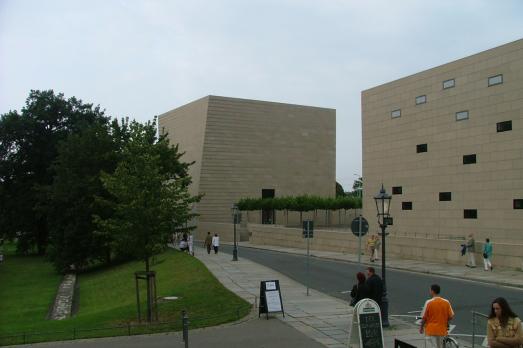
The Synagogue and community centre in Dresden are part of a modernist complex from 2001. The architects of the synagogue are Rena Wandel-Hoefer and Wolfgang Lorch. The main material of the building is concrete.

Synagogue at Dikuna St. in Shklov

Synagogue at Dikuna St. in Shklov

Shklov, BY

The Synagogue at Dikuna St. in Shklov is an Ashkenazi synagogue probably built in 17th century. Restored after WWII, this Baroque brick synagogue is now used as an educational institution.

Be inspired

Stupkalnis.lt

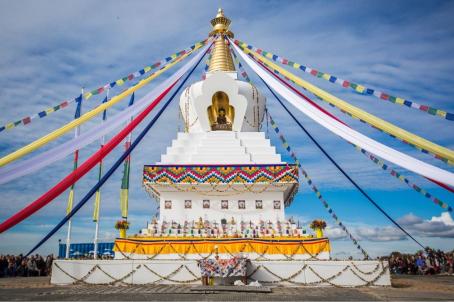
10 Buddhist stupas to discover in Europe

Stupas are symbols of enlightenment and peace that commemorate different stages of Buddha's life. Since the mid-20th century, thousands of stupas have begun to populate Europe. We have compiled some of the most impressive ones in this list.