Explore Religious Heritage Across Europe

Here you can search for a building to visit. You can use the map find destinations, or you can use the filters to search for a building based upon what different criteria.

Refine search

Church of São Miguel Arcanjo (Lajes)

Church of São Miguel Arcanjo (Lajes)

Lajes, PT

The original temple was erected in 1564. Throughout its history it was demolished by several successive earthquakes, being rebuilt and expanded until it acquired its current appearance. According to a list published by the Diocese of Angra do Heroísmo, this church was badly damaged as a result of the 1980 earthquake.
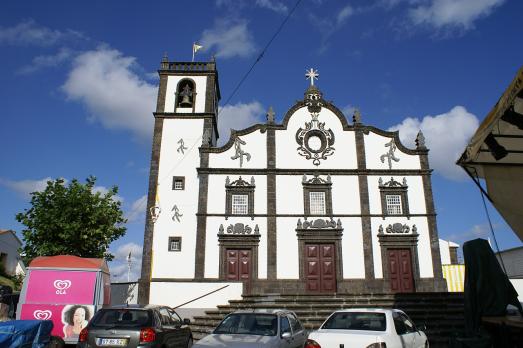
Church of São Miguel Arcanjo (Vila Franca do Campo)

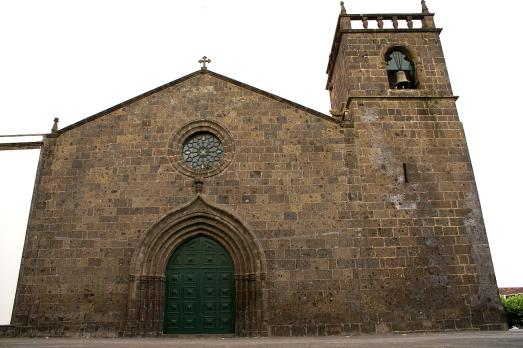
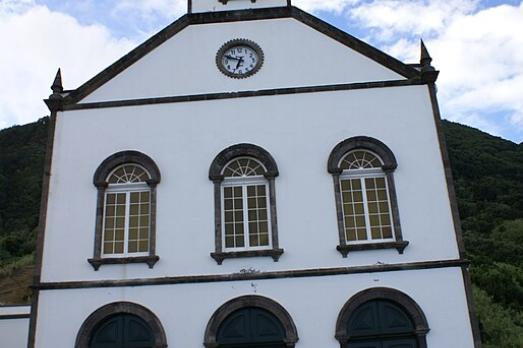
Church of São Miguel Arcanjo (Vila Franca do Campo)

Vila Franca Do Campo, PT

The primitive Mother Church of Vila Franca was established by Infante D. Henrique himself, who ordered its construction, with Rui Gonçalves da Câmara being the third captain of the island's grantee, and its first resident, who built it. It was partially buried by the 1522 earthquake and, according to Gaspar Frutuoso's narrative, it was soon rebuilt, for which construction materials from the original church were reused, as well as support from the monarch. The work maintained the same architectural type as the temple, in Gothic style.

Church of São Paulo (Ribeira Quente)

Church of São Paulo (Ribeira Quente)

Ribeira Quente, PT

The current church of São Paulo in the parish of Ribeira Quente is the third temple that was built in that region with such evocation. The first was a hermitage built in 1665 and the second was also a hermitage built shortly before 1799.

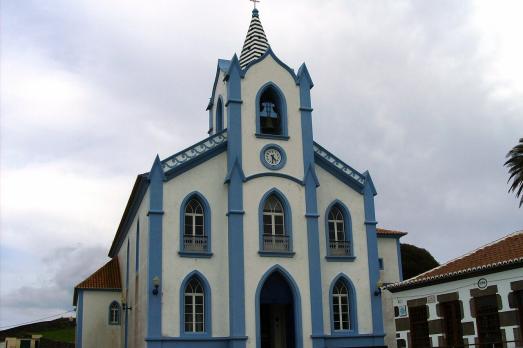
Church of São Pedro (Angra do Heroísmo)

Church of São Pedro (Angra do Heroísmo)

Angra do Heroísmo, PT

Before 1572 it must have constituted the seat of a small curate, as in that year it was elevated to the category of parish, with the place of São Bento, as can be deduced from reading the "Anais da Ilha Terceira" by Francisco Ferreira Drummond regarding the church from this last place. Under the invocation of Saint Peter the Apostle, its style is similar to that of many other churches in Terceira.

Church of São Pedro (São Pedro)

Church of São Pedro (São Pedro)

São Pedro, PT

It dates back to a small temple invoking Saint Peter, erected in the 16th century in the place of Pedras de São Pedro, and which the chronicler Gaspar Frutuoso refers to as one of the four hermitages existing "above the town", located "further along the path" of the Church of Santo Antão.

Church of São Pedro Gonçalves Telmo

Church of São Pedro Gonçalves Telmo

Vila do Porto, PT

COSTA (1955-56) understands that the primitive hermitage in this place dates back to the 16th century due to its similarity with the similar ones under the invocation of the same patron, on the island of São Miguel and Terceira, which date back to that century.

Church of São Roque (Altares)

Church of São Roque (Altares)

Altares, PT

Its original construction dates back to the 15th century, before 1480, as it already had a parish priest in that year. This temple was later destroyed by an earthquake. The current temple is the result of several reconstructions and remodelings to which the original was subjected, particularly from the end of the 15th century when it was completed.

Church of São Roque (São Roque)

Church of São Roque (São Roque)

São Roque, PT

It originally served as the parish church of the old parish of Rosto de Cão, later divided into the parishes of São Roque and Livramento. The first information known about him is found in a letter dated July 30, 1568, which shows that it was added from the congrue of the respective vicar. The first vicar of this parish was, according to Gaspar Frutuoso, Father Pêro Cão, who served there for more than forty years, it is believed that the toponym Rosto de Cão, given to this place, has some connection with the name of that priest.

Be inspired

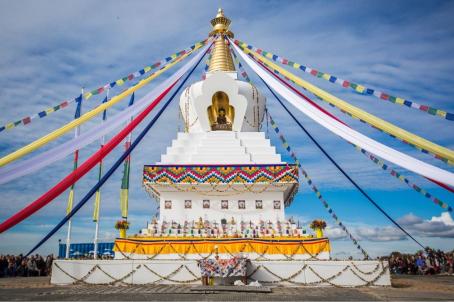
Stupkalnis.lt

10 Buddhist stupas to discover in Europe

Stupas are symbols of enlightenment and peace that commemorate different stages of Buddha's life. Since the mid-20th century, thousands of stupas have begun to populate Europe. We have compiled some of the most impressive ones in this list.