Explore Religious Heritage Across Europe

Here you can search for a building to visit. You can use the map find destinations, or you can use the filters to search for a building based upon what different criteria.

Refine search

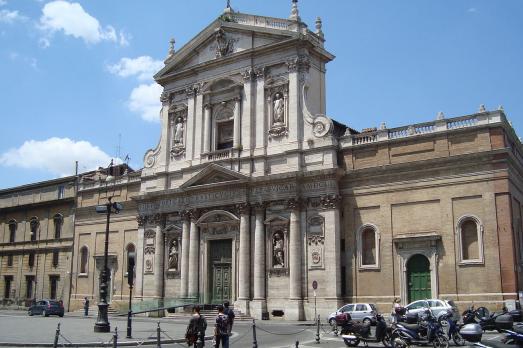
Church of Santa Susanna

Church of Santa Susanna

Roma, IT

The Church of Santa Susanna was founded in the 9th century but its construction lasted until 1603, when the Baroque façade was completed by Carlo Maderno. From 1587 Pope Sixtus V made the church the seat of the female Cistercian monastic community of St. Bernard. As the Cistercian community was expropriated after 1870, the church was assigned to American cardinals in 1937 and served as the national church of American Catholics until 2017. It has now returned to its original use as a Cistercian monastery.
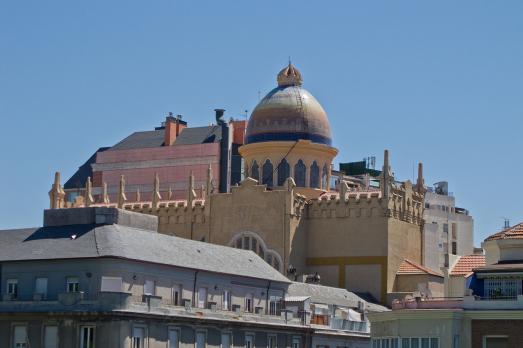
Church of Santa Teresa and San José

Church of Santa Teresa and San José

Madrid, ES

The Church of Santa Teresa and San José is an eclectic church built between 1916 and 1928. When the convents burned down in 1931, it suffered serious damage. Finally, at the end of the Civil War, the building had to be completely restored following the fire that destroyed a large part of the church during the conflict. Today, the convent and the church belong to the order of the Barefoot Carmelites.

Church of Santana

Church of Santana

Santana, PT

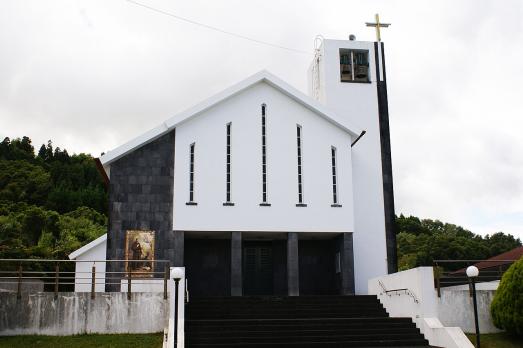
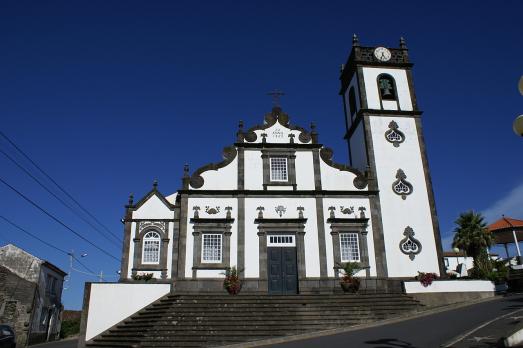
This temple of considerable size is located at the top of a staircase, in an elevated location, which makes it stand out compared to the rest of the town's houses. It has excellent work in dark basalt stonework, especially around the windows, the entrance door and the bell tower that is topped by a clock. On the facade of this temple, over the last window, you can read the inscription: S.S. ANNA 1869.

Church of Santas Justa y Rufina

Church of Santas Justa y Rufina

Malhuenda, ES

Initially dedicated to San Salvador, in 1595, the dedication changed to the current one of Saints Justa and Rufina, at the same time that they became patron saints of the town.

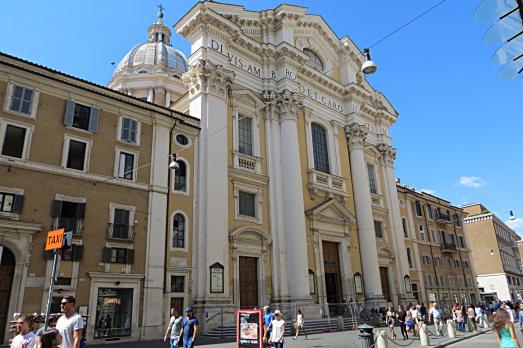
Church of Santi Ambrogio e Carlo al Corso

Church of Santi Ambrogio e Carlo al Corso

Roma, IT

Santi Ambrogio e Carlo al Corso was built between 1612 and 1669 on a former 10th-century church. The church was originally designed by Onorio Longhi in a project inspired by the architecture of Milan Cathedral. Since 1906, the maintenance of the basilica has been entrusted to the priests of the Institute of Charity (Rosminians).

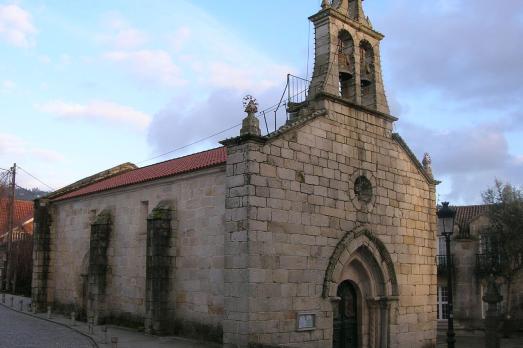
Church of Santiago (Bembrive)

Church of Santiago (Bembrive)

Bembrive, ES

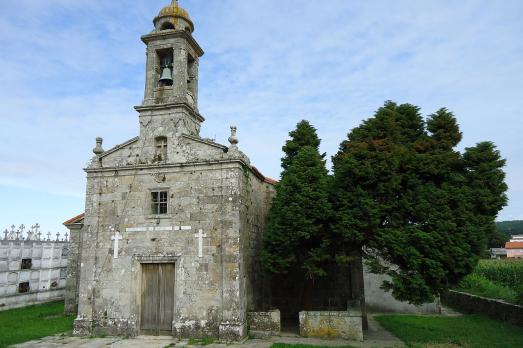
It was built at the end of the 12th century and the beginning of the 13th century. It can be attributed to Maestro Rodrigo according to an inscription dated around 1185, although another from 1223 is also preserved. The church underwent several modifications throughout history.

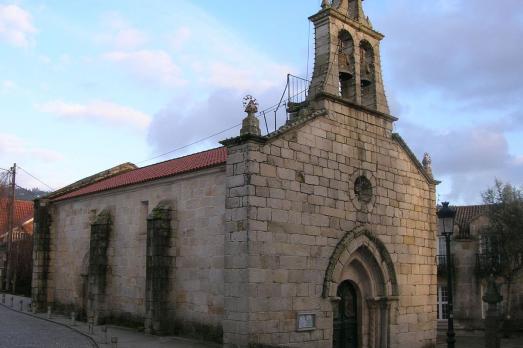
Church of Santiago de Bembrive

Church of Santiago de Bembrive

Vigo, ES

The church of Santiago de Bembrive is one of the three Romanesque churches in Vigo, the other two being the church of Santa María de Castrelos and the church of San Salvador de Corujo. It was built at the end of the 12th and beginning of the 13th century. It consists of a single nave and apse, semicircular on the inside and pentagonal on the outside. The nave is divided into sections with two transverse arches supported by half-columns. The triumphal arch is pointed like the secondary arch and both are supported by semi-columns. The presbytery is covered with a barrel vault while the polygon in which the apse ends is covered with a shell vault.

Church of Santiago de Mens

Church of Santiago de Mens

Malpica de Bergantiños, ES

Its construction dates back to the 12th century and was carried out in three stages. From the first pre-Romanesque stage, the three naves are still preserved, which are divided by pillars that support semicircular arches. The apses were built in a second Romanesque phase and the main façade was remodeled in the third phase.

Church of Santo Antão (Vila do Porto)

Church of Santo Antão (Vila do Porto)

Vila do Porto, PT

It dates back to a primitive hermitage, mentioned by Gaspar Frutuoso, especially when describing the events that took place during the incursion of French corsairs in 1576. Although the precise date of its construction is unknown, its facade faced west, and this temple did not have any tower. It was only surrounded by a main wall that bordered a grassy churchyard. It constituted the end of the outskirts of the original village.

Church of Santo António (Espalhafatos)

Church of Santo António (Espalhafatos)

Santo António, PT

This church, which despite not being a parish, was built due to the distance that the population found it from its parish headquarters, its construction began in 1965. The inauguration of the temple took place in 1970.

Be inspired

Stupkalnis.lt

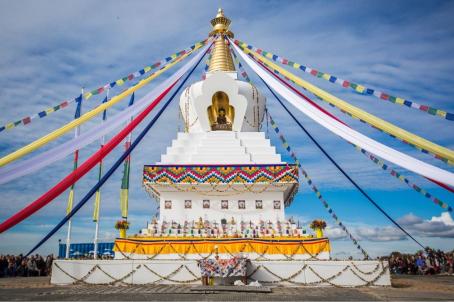
10 Buddhist stupas to discover in Europe

Stupas are symbols of enlightenment and peace that commemorate different stages of Buddha's life. Since the mid-20th century, thousands of stupas have begun to populate Europe. We have compiled some of the most impressive ones in this list.