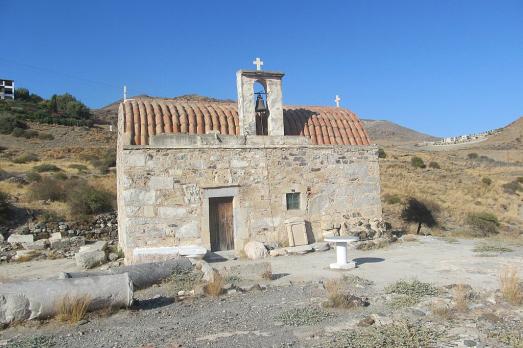
Church of St. John, Lentas
Lentas, GR
.

Here you can search for a building to visit. You can use the map find destinations, or you can use the filters to search for a building based upon what different criteria.
Lentas, GR
.
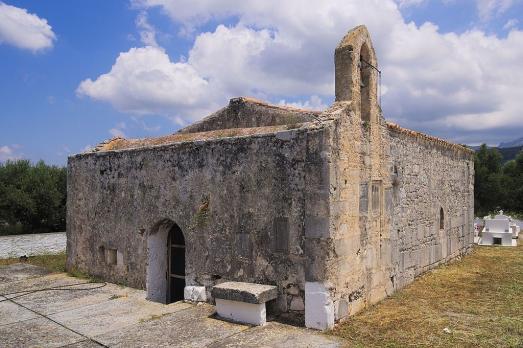
Liliano, GR
The cemetery church of St. John the Forerunner (Agios Ioannis Rigologos) was built between the 12th and 13th centuries.
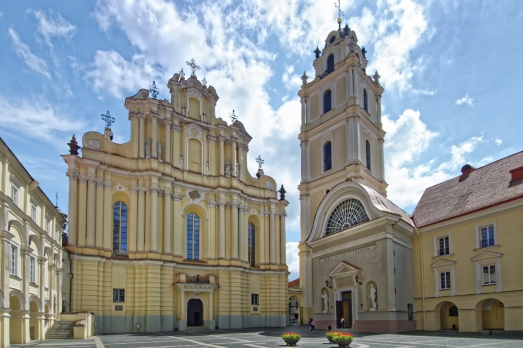
Vilnius, LT
The Church of St. John the Baptist and St. John the Evangelist, or Church of St. Johns, is a late Baroque church. A wooden church was built on the market square as early as 1387, but it was replaced by a Gothic stone church with three naves, which was consecrated in 1427. In 1571, the church was entrusted to the Polish Jesuits by King Sigismund Augustus, who completely transformed it in the Renaissance style. A bell tower was erected at the turn of the 16th and 17th centuries, then chapels, crypts, etc. were added. After a fire in 1737, the façade was redecorated in the Jesuit style, notably by Johann Christoph Glaubitz. The interior was redesigned in 1825-1829 and the façade was completely rebuilt with columns of the neo-classical Corinthian order. The church now serves as a church for the University of Vilnius.
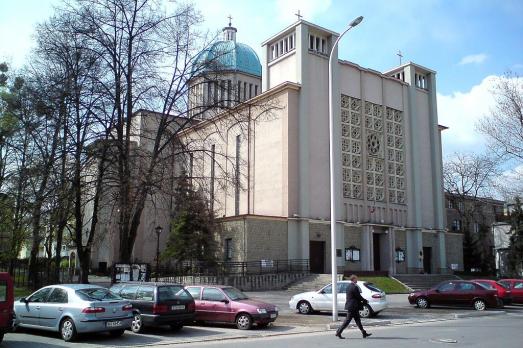
Warszawa, PL
The history of the parish church of St. Joseph Spouse of the Blessed Virgin Mary in Warsaw dates back to the erection of the parish in 1938. In the same year, a temporary wooden chapel was consecrated and the construction of the present brick church, designed by Felix Michalski, began. The church was consecrated in 1963. The decoration of the upper church is stylistically very heterogeneous. It includes naturalistic and abstract, historicist and modern, and transitional works.
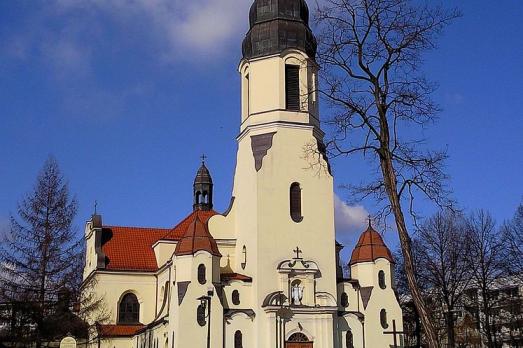
Katowice, PL
The church of St. Joseph the Worker was built from 1935 to 1939. The church is in neo-baroque style and was built according to the plan of the local architect Jan Kapołka.
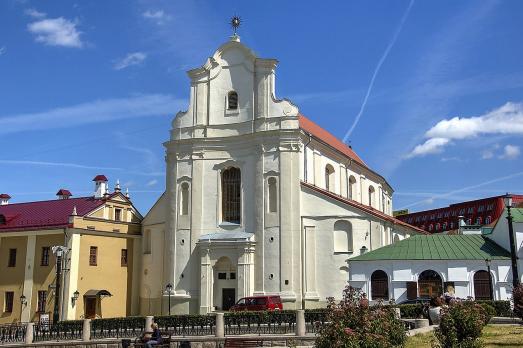
Minsk, BY
The Catholic Church of St. Joseph is a monument of 17th-century Baroque architecture. The church used to be an abbey, but in 1864 the church and monastery were closed and confiscated by the Russian authorities. The church was adapted to the Orthodox church, and the monastery buildings were transformed into barracks of the Kolomna Infantry Regiment and the premises of the Investigation Commission. Since the end of the 19th century, this desecrated church has housed the archives.
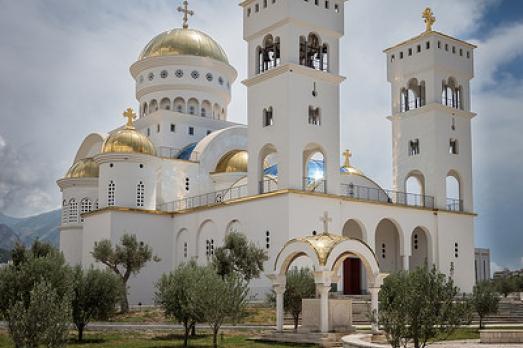
Bar, ME
The Church of St. Jovan Vladimir, consecrated in 2016, one of the largest churches in Montenegro. Although the construction of this church was discussed as early as 1979, construction work on the church did not begin until 2006. The temple is painted using the traditional fresco technique.
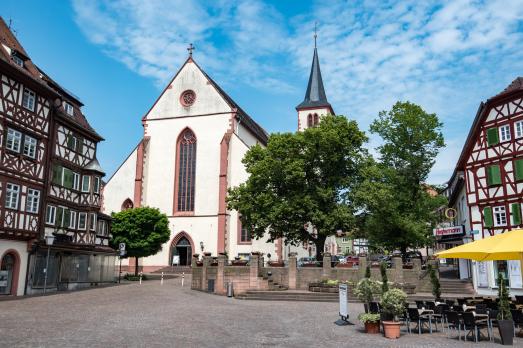
Mosbach, DE
The Church of St. Juliana is said to have been founded in 736 by St. Pirmin as part of a Benedictine monastery. The oldest document in which the church is mentioned dates from 1277, but from 1370 the collegiate church was rebuilt in several phases. The Reformation was officially introduced into the church in 1556. During the Peace of Rijswijk, which succeeded the War of the Palatinate Succession in 1697, religious practice in the church was granted to Catholics. However, as conflicts between denominations continued to occur, the Elector began in 1705 to separate all the shared churches by a wall. Gone from most of the shared churches, the wall still exists in the church of Sainte-Julienne. In 2007, on the 300th anniversary of the separation, Protestant and Catholic parishes agreed to open the separation wall. The wall was pierced and gates and a few steps were built, which now connect the Protestant and Catholic sides.
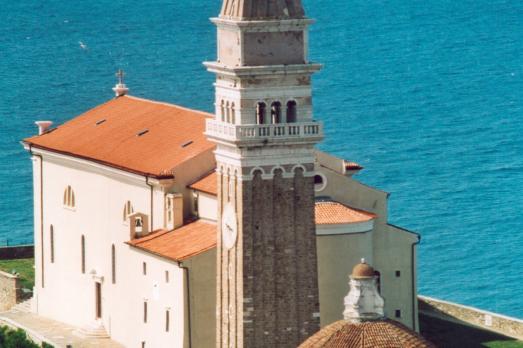
Piran, SI
The church of St. Jurija was built in the Venetian Renaissance style between 1595 and 1637. The existence of the first Christian church from the 6th to the 7th century is known from archaeological research. Subsequently, historical sources confirm the existence of a parish in the 10th century, as evidenced by fragments of an old church in a lapidary dating from the 10th to the 12th century. The former Aquilian-style church basilica was replaced by a Gothic church with three naves, consecrated in 1344.
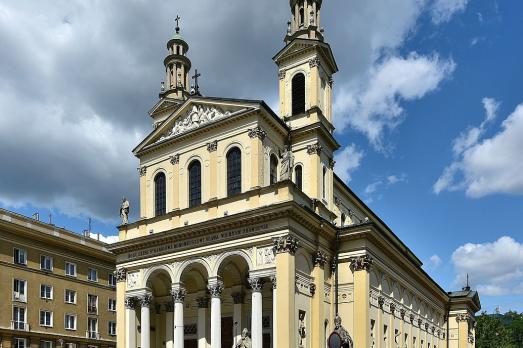
Warszawa, PL
The Church of St. Karol Boromeusz was built in 1841-49 in the neo-Renaissance style according to the design of Henryk Marconi. It was modelled on the Roman basilica of Santa Maria Maggiore, the basilica of St. Paul behind the walls and the interior on the church of Notre-Dame-de-Lorette in Paris. The façade is flanked by two towers and preceded by a three-bay vestibule. On the façade are statues of the apostles Peter and Paul. The façade is crowned by a pediment with a tympanum depicting the patron saint of the church, Carlo Borromi, administering the sacrament of Holy Communion to the inhabitants of Milan during the plague epidemic of 1567.
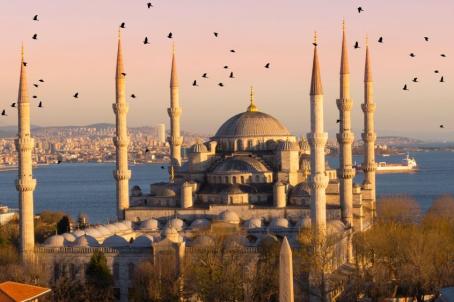
new
For a long time, Europe was ruled by powerful monarchies. Monarchy and religion have been connected since time immemorial. Here are 7 sites across Europe where royalty historically bent the knee to a higher power and received their crown.
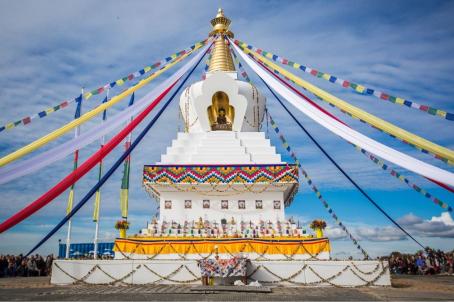
Stupas are symbols of enlightenment and peace that commemorate different stages of Buddha's life. Since the mid-20th century, thousands of stupas have begun to populate Europe. We have compiled some of the most impressive ones in this list.
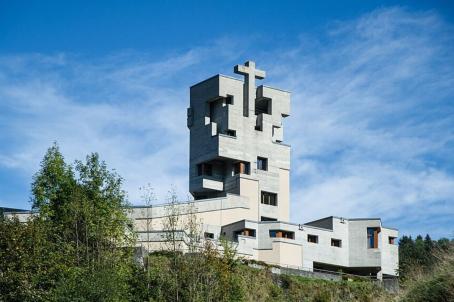
Walter Maria Förderer (1928–2006) was a Swiss architect and sculptor renowned for his neo-expressionist church designs in the 1960s. In this list we have compiled 6 of his church designs that seamlessly integrate religious and secular elements.

How is Religiana helping to conserve and promote Religious Heritage in Europe and why should you get involved?
Find out about Religiana
Are you a tourism organisation or religious heritage sites manager? Discover the advantages of becoming a partner.
See current partners
We can keep you up to date with the latest news from Religiana and religious heritage conservation across Europe.
Sign up to the FRH newsletter