
Explore Religious Heritage Across Europe

Here you can search for a building to visit. You can use the map find destinations, or you can use the filters to search for a building based upon what different criteria.

Refine search

Heilige Jeroen

Noordwijk-Binnen, NL

Non-oriented colossal neo-Gothic hall church with high tower in Noordwijk-Binnen. Built in two phases. The first phase was designed by architect N. Molenaar, the second by his son. In 1892 this church was granted the status of pilgrimage church. Behind the water board church from 1834, the transept and choir of the neo-Gothic church were built in 1894. When further expansion was necessary, the old water board church was demolished. In 1925-1926 the church was completed with the construction of the nave, front facade, tower and parsonage, designed by Nicolaas Molenaar Jr. (1892-1973). At the top of the facade is a statue of the patron saint of the church, Saint Jeroen. The falcon on his arm is said to indicate his noble origins. This church is listed as a National Monument of the Netherlands.
Heilige Joachim

De Moer, NL

Large, important neo-Gothic church with tower. In 1894, De Moer became an independent parish. Before that, the area belonged to the parish of Loon op Zand. When the parish was founded, a temporary wooden church was placed that had been taken over from Dussen. In 1902, this was replaced by the current church, designed by CF van Hoof from Tilburg. The consecration by pastor AHF Kamp took place on 2 February 1902, after which it was consecrated on 6 June 1903 by W. van der Ven, bishop of 's-Hertogenbosch. The pastor had a brother, Joachim, who had been a chaplain and had died at a young age. Out of love for him, and in his memory, the pastor chose St. Joachim as the patron saint of his newly founded parish. At the initiative of pastor Kamp, a veneration of St. Anna (feast day 16 July) was created. After his death in 1939, this quickly declined. In the fifties of the previous century the last pilgrims came to visit the place. Behind the church is the cemetery where pastor Kamp, who died on September 22, 1939, is also buried.

Heilige Joannes de Doper

Noord-Scharwoude, NL

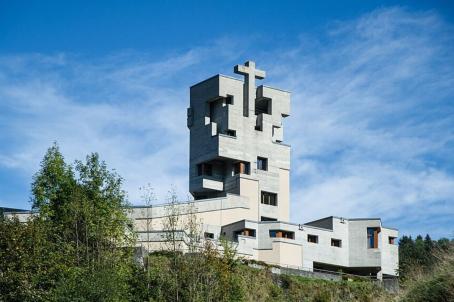
The St. John the Baptist Church is the Roman Catholic parish church of Langedijk, in North Holland. The church has been in use since 1906. This church is listed as a National Monument of the Netherlands.
Heilige Joannes van Oisterwijk

Oisterwijk, NL

Extremely important church with a wide saddle roof tower. This church is listed as a National Monument of the Netherlands.

Heilige Johannes Apostel

Enschede, NL

Characteristic modern church with tower. Replaced an earlier St. Jan church from 1921, demolished "due to dilapidation", designed by W. te Riele Gzn.

Heilige Johannes Bosco

Maastricht, NL

The Bosco Church is a modern church building in Maastricht built in the 1950s. The church was withdrawn from Catholic worship in 2017. The Maastricht Baptist Community briefly used it as a meeting place. The building is now pending a decision on its future use.

Heilige Johannes de Doper

Keijenborg, NL

Late neo-Gothic church with tower. This is the last church designed by architect Jan Stuyt.

Heilige Johannes de Doper

Hoofddorp, NL

Neo-Romanesque church with tower. Forms a beautiful ensemble with all the preserved outbuildings and the cemetery behind the church.

Heilige Johannes de Doper

Oud-Valkenburg, NL

Probably a small hall church was built on this site in the 11th or 12th century . Parts of the tower and the nave date from that time. The south aisle was added later. In the 16th century the tower and the north aisle were renovated.

Heilige Johannes de Doper

Eygelshoven, NL

Large church with a tower placed on the side. The church was built when the old Gothic church on the nearby church hill became too small due to the expansion of Eygelshoven, as a result of the Laura and Julia mines. In 1920, construction began on the new church, designed by A. Boosten in Maastricht and J. Ritzen in Heerlen.

Be inspired

Stupkalnis.lt

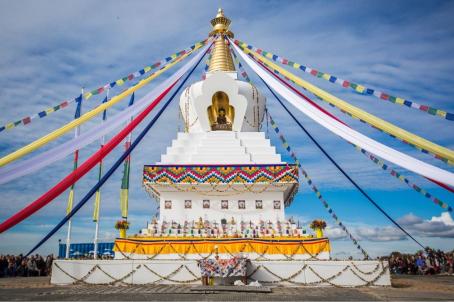
10 Buddhist stupas to discover in Europe

Stupas are symbols of enlightenment and peace that commemorate different stages of Buddha's life. Since the mid-20th century, thousands of stupas have begun to populate Europe. We have compiled some of the most impressive ones in this list.