Heilige Johannes de Doper
Pijnacker, NL
Neo-Romanesque church with tower. Replaced a barn church from 1775. In 2017 celebration of the 125th anniversary of this church building. Also restoration of church and tower.

Here you can search for a building to visit. You can use the map find destinations, or you can use the filters to search for a building based upon what different criteria.
Pijnacker, NL
Neo-Romanesque church with tower. Replaced a barn church from 1775. In 2017 celebration of the 125th anniversary of this church building. Also restoration of church and tower.
Schoorl/Catrijp, NL
Modern church with tower. Consecrated 26 February 1972. Replaced an earlier Roman Catholic church building. The building is partly used as the De Vier Trappen Health Centre.
Mijdrecht, NL
This church is listed as a National Monument of the Netherlands.
Montfoort, NL
This church is listed as a National Monument of the Netherlands.
Den Burg, NL
After the Roman Catholic church was plundered by the Watergeuzen in 1572, a separate church was built here in 1573. The current church was built in 1862-1863. Romanesque pseudo-basilica with a partially built-in tower, designed by Th. Molkenboer. Enlarged in 1912 with a transept and a new choir. Internally plastered barrel vaults. Organ with two manuals by L. Ypma from 1879, restored by Vermeulen in 1984.
Baexem, NL
The church in Baexem was mentioned in 1485 at least as independent of the mother church in Thorn. The oldest remains of church buildings were found during the archaeological research after the Second World War by P. Glazema. In his reconstruction, the oldest remains of a stone church were not dated, the tower was dated from around 1200. This tower remained standing until 1944. The old church was a small hall church, against which a polygonal chancel was built at some point later. The church was also enlarged at some point with a second nave. A memorial stone with the date 1576, which was built into the tower above the entrance, could indicate the renovation of the church, or the cladding of the tuff tower with marl. In 1850, the old church, with the exception of the tower, was demolished and replaced by a three-aisled neoclassical church. The church of 1850 became too small for the growing population. Therefore, in 1928, under the direction of architect Caspar Franssen, the side aisles were extended along the chancel. New sacristies and a new baptismal chapel were added next to the tower. On 15 November 1944, the tower was blown up by the retreating Germans. Almost the entire inventory was destroyed by the explosion. The bell from 1829 had already been stolen by the occupiers on 11 January 1943, the bell from 1450, cast by Jan van Asten, which was still hanging in the tower, fell to the ground during the explosion, virtually undamaged.
Boskoop, NL
Modern church with a detached tower, built to replace a neo-Romanesque church from 1870 on the Reijerskoop, which was closed in 1971 due to dilapidation and demolished in 1974.
Merselo, NL
St. John the Baptist's Church is a late Gothic choir with a three-sided closure, 16th century. Internal corbels with sculpted heads and as the final piece of the vault a wooden bust of St. John the Baptist. Vault paintings. The inventory includes a Crucifix, 16th century, a Madonna statue, 16th century and three statues of St. John the Baptist, respectively 15th, 16th and 19th centuries. This church is listed as a National Monument of the Netherlands.
Nieuwstadt, NL
During the Second World War, the church of Nieuwstadt was located where the front stopped in September 1944. It is therefore one of the few churches around Sittard that suffered considerable war damage. The first shelling took place between 19 and 29 September 1944 by the Americans, which incidentally caused little damage. On 12 November 1944, however, when the Americans were in Nieuwstadt, the Germans started firing back with much heavier material. This happened in the morning hours, when a Holy Mass was in progress. The shelling lasted for three quarters of an hour, during which one person was fatally hit and the church suffered considerable damage. This was repeated two days later, but now no one was injured. On 21 November 1944, the English relieved the Americans and Nieuwstadt was evacuated. The village suffered from German grenade and mortar fire for another four months. (Source: [1]
Hoofddorp, NL
Neo-Romanesque church with tower. Forms a beautiful ensemble with all the preserved outbuildings and the cemetery behind the church.
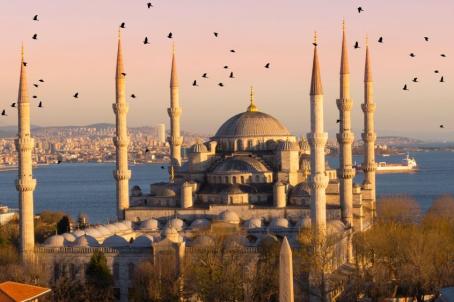
new
For a long time, Europe was ruled by powerful monarchies. Monarchy and religion have been connected since time immemorial. Here are 7 sites across Europe where royalty historically bent the knee to a higher power and received their crown.
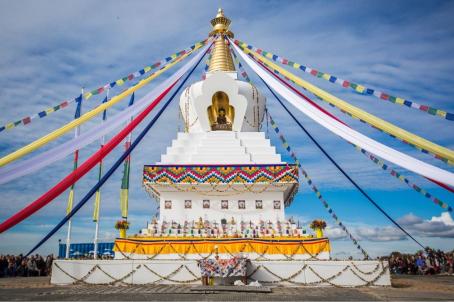
Stupas are symbols of enlightenment and peace that commemorate different stages of Buddha's life. Since the mid-20th century, thousands of stupas have begun to populate Europe. We have compiled some of the most impressive ones in this list.
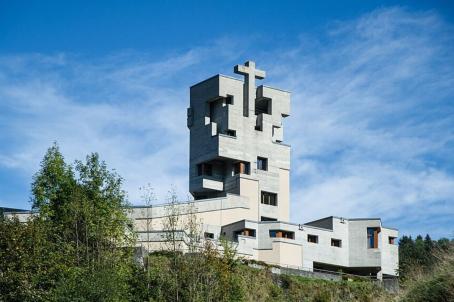
Walter Maria Förderer (1928–2006) was a Swiss architect and sculptor renowned for his neo-expressionist church designs in the 1960s. In this list we have compiled 6 of his church designs that seamlessly integrate religious and secular elements.

How is Religiana helping to conserve and promote Religious Heritage in Europe and why should you get involved?
Find out about Religiana
Are you a tourism organisation or religious heritage sites manager? Discover the advantages of becoming a partner.
See current partners
We can keep you up to date with the latest news from Religiana and religious heritage conservation across Europe.
Sign up to the FRH newsletter