Heilige Johannes de Doper
Meerlo, NL
The Joannes de Doperkerk is the parish church of Meerlo. The current neo-Gothic basilica was built in 1934-1935.

Here you can search for a building to visit. You can use the map find destinations, or you can use the filters to search for a building based upon what different criteria.
Meerlo, NL
The Joannes de Doperkerk is the parish church of Meerlo. The current neo-Gothic basilica was built in 1934-1935.
Kudelstaart, NL
The Kudelstaart station was founded in 1661. Churches were held in a wooden shed on the Robend. In 1822, a three-aisled neoclassical church was built, which was restored in 1837 after a flood. In 1868-1870, the west side was provided with a nice neo-Romanesque facade with built-in tower by Th. Asseler (consecrated 22-4-1870). In 1959, modern paintings and Stations of the Cross were already installed. The original furniture was removed in 1968-1969 and the interior was drastically modernized at that time.
Blerick, NL
Carnival chapel, replaced emergency church from 1954. Modern, relatively small church without a tower.
Boskoop, NL
Modern church with a detached tower, built to replace a neo-Romanesque church from 1870 on the Reijerskoop, which was closed in 1971 due to dilapidation and demolished in 1974.
Leimuiden, NL
Replaced barn church from 1752. Single-nave neo-Gothic church with tower, built in 1854-1856. Internal plastered vaults. Altar, pulpit and other furnishings from the construction period, probably from Louis Veneman. Organ by Gebr. Adema from 1856. Neo-Gothic front designed by Dirk Ypma.
Meterik, NL
A hall church from 1899-1900. In 1907 the nave was partly demolished again to expand the church by adding side aisles along the nave. This church is listed as a National Monument of the Netherlands.
Elsendorp, NL
Parish of Saint Christoffel. The predecessor, a temporary wooden church, also called a 'car church', was destroyed by fire in 1959. The current church was put into use in 1960. Hall church in modernist forms under a gently sloping lean-to roof and a squat, low bell tower against the front facade.
Breezand, NL
Spacious, single-nave cruciform church in traditionalist forms with a large west tower, covered by a brick spire. The design is in line with the concept of the people's church. Internally covered by wooden barrel vaults. Characteristic work in the oeuvre of HPJ de Vries.
Elshout, NL
The parish of Elshout has existed since the 13th century, when it was part of the parish of Oudheusden. When the church in Oudheusden was burned down by the Geuzen in 1579, the chapel in Elshout became the parish church. That older church served until 1879. The history of this church building begins with pastor Van den Bogaert. On 15 April 1878, he laid the first stone. Architect Van Tulder from Tilburg and contractor Van Rooy from The Hague managed to build the church in one year, so that it could be completed in April 1879. On 24 April, the church was blessed and on 1 May, the abbot of Berne celebrated the first solemn Holy Mass. On 16 April 1883, the new church was solemnly consecrated by Mgr. Godschalk, bishop of Den Bosch. During the Second World War, the church and the rectory suffered damage, but they survived the war violence of November 1944. The church suffered damage on April 3, 1973, when a heavy storm raged over the region, and the church tower collapsed. After some emergency measures and with the cooperation of the entire parish, the tower stood proudly on the church again in 1975.
Hoensbroek, NL
New neo-Gothic St. John's Church with roof turret, tower not built. The church replaced the adjacent "Little St. John" from the thirteenth century. This beautiful neo-Gothic church, and the historic Little St. John, are the only church buildings still in use in the Hoensbroek Parish.
new
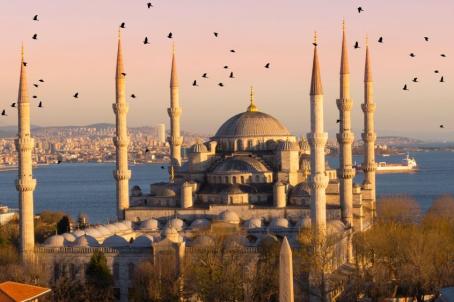
For a long time, Europe was ruled by powerful monarchies. Monarchy and religion have been connected since time immemorial. Here are 7 sites across Europe where royalty historically bent the knee to a higher power and received their crown.
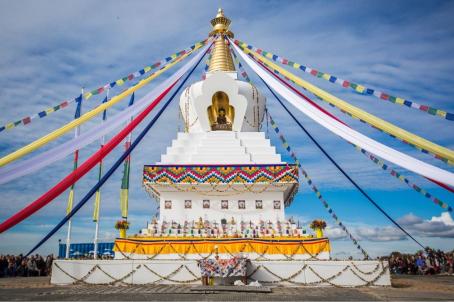
Stupas are symbols of enlightenment and peace that commemorate different stages of Buddha's life. Since the mid-20th century, thousands of stupas have begun to populate Europe. We have compiled some of the most impressive ones in this list.
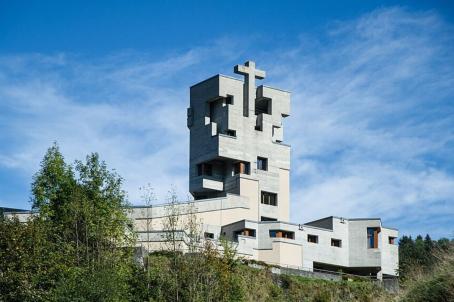
Walter Maria Förderer (1928–2006) was a Swiss architect and sculptor renowned for his neo-expressionist church designs in the 1960s. In this list we have compiled 6 of his church designs that seamlessly integrate religious and secular elements.

How is Religiana helping to conserve and promote Religious Heritage in Europe and why should you get involved?
Find out about Religiana
Are you a tourism organisation or religious heritage sites manager? Discover the advantages of becoming a partner.
See current partners
We can keep you up to date with the latest news from Religiana and religious heritage conservation across Europe.
Sign up to the FRH newsletter