Hervormde Kapel
Hulshorst, NL
Interesting church with roof turret. Built as a Reformed church. Ecclesiastically falls under Nunspeet.

Here you can search for a building to visit. You can use the map find destinations, or you can use the filters to search for a building based upon what different criteria.
Hulshorst, NL
Interesting church with roof turret. Built as a Reformed church. Ecclesiastically falls under Nunspeet.
Boven-Hardinxveld, NL
Important neoclassical church with roof turret. The current church building was put into use on 16 February 1862. Before that, there was probably already a chapel on the same site, dating from Roman Catholic times. This was therefore already built before the Reformation. This chapel was probably partly destroyed during the Eighty Years' War and was also once ravaged by fire.
Hierden, NL
Although the H. Severinus chapel stood here around 1350, the current church was only built around 1850. An old schoolroom from 1658 was converted into a church in 1851. This created a hall church with barrel vaults. The addition of two side wings with portals in 1937 changed this design. The front facade has two pointed arch windows and a round window. Striking is the climbing arch frieze in which pointed arches and entire circle shapes are also incorporated, as well as the clock face. The facade is crowned with a small bell tower.
Oude-Tonge, NL
The church building is a late Gothic church, built in the 15th century. In a deed of approval dated 8 November 1499, the Bishop of Utrecht, Frederik van Baden, confirmed the foundation of the church by the Ambachtsheren. The oldest part of the current church is the choir with the sacristy, the current consistory or church council room. There must have been a cruciform church dedicated to Mary here as early as around 1468. In the choir there is still a gravestone from 1492 of one of the dike builders of Grijsoord, the polder in which the village of Oude Tonge is located. The main nave therefore dates from 1499. Shortly afterwards, in the first half of the 16th century, a major renovation took place: the choir and the sacristy remained unchanged, but the existing nave was enlarged in a westerly direction, with a tower being partially built in and extended with a north nave. In 1742, a portal was built on the south side of the main nave, with a facade stone above the entrance stating the year of construction. By order of the French occupiers, the tower was robbed of its crowning (an onion-shaped spire) in 1812. The resulting tower slab was used as a telegraph facility. Later, the municipality placed a small bell tower on top, with another “onion” with a spire on top. Various 'modernisations' of the church building resulted in little remaining of the original condition. In 1831, the 'church interior was attractively embellished', and the floor was also restored. Church services were then temporarily held in the choir. Later, the floor of the choir was also 'renewed with blue bricks'. Another very drastic renovation took place in 1854, when a church council floor was constructed in the choir. (Source: Website church community )
Didam, NL
The Reformed Church in Didam worshipped in the old Mariakerk until 1951. Because this building was much too large, it was sold to the Roman Catholic parish in that year, and a small new church was built. In 1956, Van Vulpen delivered a new organ for this church. The instrument is almost identical to the organ that Van Vulpen placed at the World Exhibition "Expo 1958" in Brussels two years later. E. Verschueren from Tongeren (B) carried out revision work in 1974. Various changes were made: the pedal was placed in its own case against the back of the church on a larger new wind chest. The Vox Humana 4' of the pedal was replaced by a Fagot 16'. Verschueren adjusted the intonation of the organ and remedied the 'spucking'. Finally, the composition of the Scherp was adjusted. Hans Kriek was the advisor for the work. In the years that followed, Hans Kriek made several changes: the Scherp was changed into a Mixtuur, placed on a raised bench, in order to improve accessibility during tuning. The Quint 1 1/3' was moved up to 2 2/3'. Instead of the Cimbel, a Terts 1 3/5' from c.° was introduced. The Fagot 16', which contributed little to the total sound, was replaced by a stronger register. Since 1 May 2004, the church has been in use by the Protestant Community of Didam.
Kerkwerve, NL
Neo-church with roof turret. The predecessor of the church dated from the 15th century and was demolished in 1895. After that, a temporary wooden church was in use from 1895 to 1900, which was replaced in 1900 by the current Reformed Church.
Haamstede, NL
Reformed church. Rebuilt 16th century after fire around 1500. Crucifix church without choir with open roof turret at the crossing. In the west wall a gate with a basket-handle arch and a large closed arch window. Nave and transept of brick with sandstone corner blocks in the bears. In the basements of the walls on the south side moldings of tufa, originating from an earlier church. Nave covered by a wooden barrel vault and aisles by half-half barrel vaults. Nave separated from transept by a painted partition 19th century. Transept with high closed windows in the north and east side, roofing as in the nave. In use as a consistory and winter church. Board with the name list of ministers. Interior: fragment of a baptismal font of red sandstone. Pulpit 18th century, copper lectern. Baptismal fence 17th century with candle holder. Pew 18th century with alliance coat of arms. Two pews. Three copper crowns around 1700. Board with the name list of ministers. Interior: fragment of baptismal font of red sandstone. Pulpit 18th century, copper lectern. Baptismal fence 17th century with candle holder. Gentlemen's pew 18th century with alliance coat of arms. Two pews. Three copper crowns circa 1700. In the tower on the crosswork is the modern bell from 1950. During the Second World War, a bell from an unknown founder disappeared. A second bell, made in 1532 by Jacob Waghevens, was preserved after the war and was subsequently placed in the church. There is also said (?) to have been a bell by J. van den Ghein from 1532.
Nieuw-Beijerland, NL
This church is listed as a National Monument of the Netherlands.
Elim, NL
Reformed church built in 1916 to a design by architect J. Beijlevelt from Amsterdam. An anonymous donor from the Soest area made the foundation of the church possible through a donation. The peat colony canal village, located in one of the younger development areas, emerged from the foundation of the Reformed Church in 1915.
Opeinde, NL
Simple hall church from 1748. Enlarged on the east side in 1930. In the church 18th century pulpit with rear bulkhead and sounding board; 18th century crown. Extension in 1908 and 1930. This church is listed as a National Monument of the Netherlands.
new
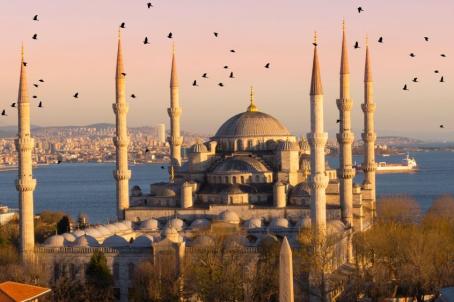
For a long time, Europe was ruled by powerful monarchies. Monarchy and religion have been connected since time immemorial. Here are 7 sites across Europe where royalty historically bent the knee to a higher power and received their crown.
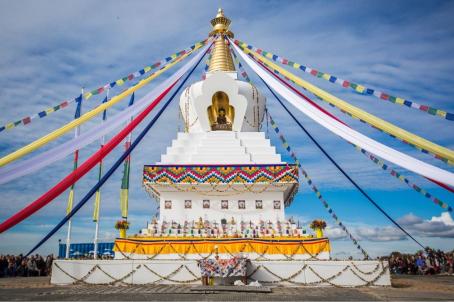
Stupas are symbols of enlightenment and peace that commemorate different stages of Buddha's life. Since the mid-20th century, thousands of stupas have begun to populate Europe. We have compiled some of the most impressive ones in this list.
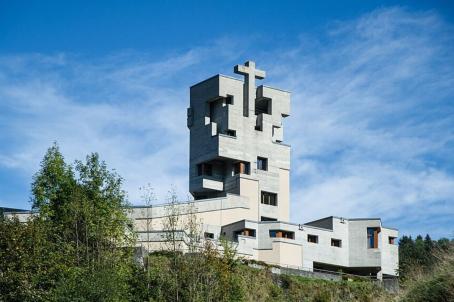
Walter Maria Förderer (1928–2006) was a Swiss architect and sculptor renowned for his neo-expressionist church designs in the 1960s. In this list we have compiled 6 of his church designs that seamlessly integrate religious and secular elements.

How is Religiana helping to conserve and promote Religious Heritage in Europe and why should you get involved?
Find out about Religiana
Are you a tourism organisation or religious heritage sites manager? Discover the advantages of becoming a partner.
See current partners
We can keep you up to date with the latest news from Religiana and religious heritage conservation across Europe.
Sign up to the FRH newsletter