Explore Religious Heritage Across Europe

Here you can search for a building to visit. You can use the map find destinations, or you can use the filters to search for a building based upon what different criteria.

Refine search

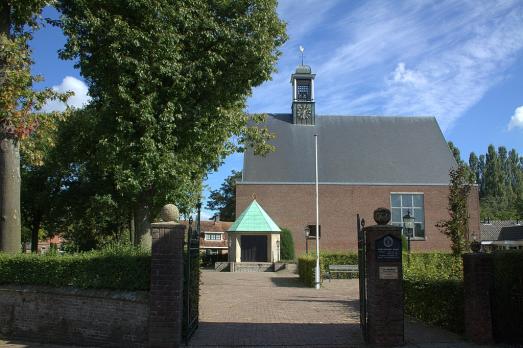
Hervormde Kerk

Hervormde Kerk

Almkerk, NL

Hall church with roof turret in traditionalist forms, built in 1950 to a design by the architects Chr. Nielsen and JHC Spruit from Amsterdam to replace a medieval church that was largely destroyed in 1944. The gables are open-worked as windows. Internally visible roofing. Some mourning boards have been preserved from the old inventory, as well as the Adema organ from 1877.
Hervormde Kerk

Brantgum, NL

The 19th century tower is the youngest part, the choir is early 16th century. But then the nave: tuff stone and completely Romanesque, clearly recognizable by the arched frieze decoration and the small round arched windows on the north side. For more light, larger windows have been installed in the south wall. Inside is a remarkable church council bench, perhaps a former communion bench.

Hervormde Kerk

Beusichem, NL

Three-aisled pseudo-basilica with five-sided closed choir from the 15th century with a tower of which the lower four sections are still 12th century. Internal wooden barrel vaults. Replaced an older church. Beautiful tuff stone tower (ca. 1200) of the Reformed Church, raised with a brick floor in the Gothic period.

Hervormde Kerk

Gellicum, NL

The previous church was destroyed by fire in 1928.

Hervormde Kerk

Noordhorn, NL

Single-nave in construction from the 13th century with a straight choir closure, in which two round-arched windows and parts of recessed panels of the top. In the side walls, there are traces of round-arched windows, entrances and a hagioscope. Strong uncut tower with high spire. In the church pulpit from 1718 with screwed columns and a sounding board. Communion table. Five gentlemen's pews, one with spindle friezes three others with knobs and richly carved rear panels, an 18th-century pew. Three 17th-century tombstones. In the tower bell from 1774. This church is listed as a National Monument of the Netherlands. On 8 November 2002, the restoration of the Dutch Reformed Church began. On Friday 16 January 2004, the church, which dates from 1280, was put back into use. It is striking that the vaults, reminiscent of the Catholic era, have been reinstalled. The gentlemen's pews, which were moved back during the 1978 restoration, are also back in their old place. Furthermore, moisture-resistant measures have been taken. The last service before the restoration was on 17 November 2002. During the restoration, church services were held in the De Wegwijzer community centre.

Hervormde Kerk

Elahuizen, NL

Dutch Reformed Church, national monument because of the single-manual organ, made in 1865 by W. Hardorff in Leeuwarden.

Hervormde Kerk

Sint-Kruis, NL

In 1296, a parish in Sint Kruis was first mentioned, which was subordinate to the Ter Doest Abbey. Due to flooding, partly as a result of the Geuzen breaching the dikes in 1584 to stop the Spanish troops, the area was flooded and was not drained again until 1651. The current church building dates largely from the 14th century and initially consisted of a single-nave church with a tower. In 1467 and 1483, the church was enlarged to a three-nave church with a choir and transept. This church was badly damaged during the Dutch Revolt, but in 1652 it was restored to serve as a Reformed church building. What remained was a single-nave church with a straight-ended nave and the tower. Another renovation took place in 1872. In 1944, the church was badly damaged by war violence and was restored in 1948-1949.

Hervormde Kerk

Paasloo, NL

Brick church from the early 16th century; modified in the 17th century. Three-aisled layout with internal wooden trusses. Single-manual organ made in 1920 by the firm P. van Dam. Bell frame with a bell by S. Butendiic, 15th century, diam. 51.5 cm.

Hervormde Kerk

Kedichem, NL

Brick tower built in the middle of the 14th century, raised in the 16th century and provided with a constricted spire. In 1867, the current neoclassical church building was built against the remaining tower to replace the associated medieval church. It is said that the stones of the former church were used for the foundation of the new building. Inventory from the construction period.

Hervormde Kerk

Sint Annaland, NL

Large church with tower of the Reformed Church of Sint Annaland. Reformed Federation signature.

Be inspired

Stupkalnis.lt

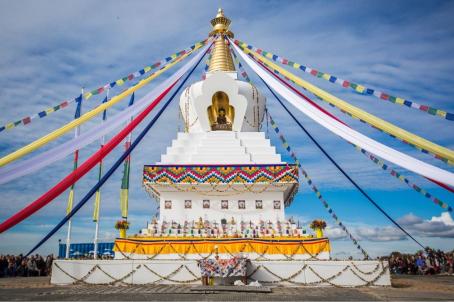
10 Buddhist stupas to discover in Europe

Stupas are symbols of enlightenment and peace that commemorate different stages of Buddha's life. Since the mid-20th century, thousands of stupas have begun to populate Europe. We have compiled some of the most impressive ones in this list.