Explore Religious Heritage Across Europe

Here you can search for a building to visit. You can use the map find destinations, or you can use the filters to search for a building based upon what different criteria.

Refine search

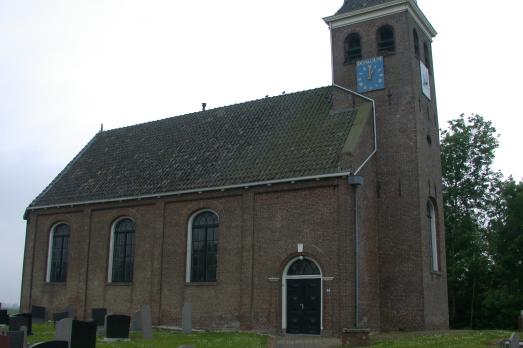
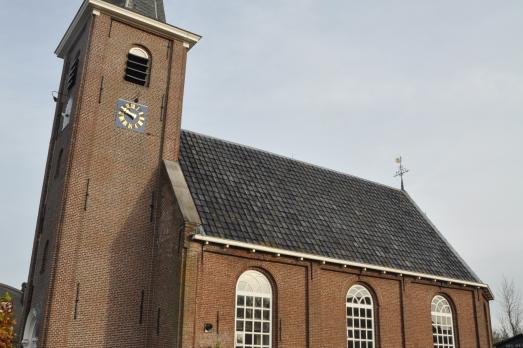
Hervormde Kerk

Longerhouw, NL

Church building rebuilt in the 18th century with upright tower of small yellow stone. Interior richly carved pulpit tub with rear bulkhead, sounding board; baptismal fence, all mid-18th century. Organ with main work and upper work, made in 1868 by L. van Dam and Sons. Bell tower with bell by JN Derck, 1742, diam. 95 cm.

Hervormde Kerk

Oostwold, NL

Cross-shaped church from 1775, enlarged in 1882. This church is listed as a National Monument of the Netherlands. Since 2020 the church has been closed for safety reasons due to the inestability of the building's structure.

Hervormde Kerk

Haaften, NL

Very interesting early neo-Gothic village church with tower. The interior of the church has been largely restored to its original state. The pulpit dating from 1834 is striking. (59-08)

Hervormde Kerk

Meeuwen, NL

The Reformed Church is a Reformed church building in the town of Meeuwen.

Hervormde Kerk

Mookhoek, NL

Charming, richly detailed small neo-Gothic church with tower, at the bottom of the high dike on site. Various extensions. Reformed Church Strijen, district municipality "Ichthus". This church is listed as a Municipal Monument of the Netherlands.

Hervormde Kerk

s-Gravendeel, NL

Crucifix church with three-sided closed choir, wide transept and unarticulated tower with perpendicular buttresses. Built in 1905 to a design by J.Th. Beijers to replace a church from 1637/1767 that burned down in 1904. The spire that was destroyed in 1940 was rebuilt in 1951. Pulpit from the construction period. Stained glass windows by Wim Korteweg and JJ van Staveren.

Hervormde Kerk

Elim, NL

Reformed church built in 1916 to a design by architect J. Beijlevelt from Amsterdam. An anonymous donor from the Soest area made the foundation of the church possible through a donation. The peat colony canal village, located in one of the younger development areas, emerged from the foundation of the Reformed Church in 1915.

Hervormde Kerk

Otterlo, NL

Single-nave village church with early 14th century nave without buttresses, simple, brick tower from probably the same period with a corbelling on arch frieze and slender spire at the height of the church and a deep, buttressed with three-sided closure. The nave, raised in 1865, has a 19th century cove ceiling. The church is completely plastered on the outside. In the choir good 17th century furniture: panelling and benches with lobe ornament within the arches surrounded by acanthus leafwork, well-carved pulpit and simple, sliding gentlemen's benches against the straight sides of the choir. The church also has two copper chandeliers in 17th century style. Mechanical tower clock, has been decommissioned. This church is listed as a National Monument of the Netherlands.

Hervormde Kerk

Oosterhesselen, NL

The church dates from the second half of the 15th century and was originally connected to the tower. At that time, the building had the tower, a low nave and a high choir. Around 1592, part of the nave was destroyed (siege of Coevorden). The remaining part of the nave was brought to the same height as the choir in 1628 and the west facade was then bricked up. Since then, the church and tower have been separated. Of the Gothic church, only the ruined eastern part and the freestanding tower (ca. 1450 - 1500) remain. The nave is said to have collapsed during the Eighty Years' War - or was the church never finished due to lack of money? When the church was plastered in 1862, the furniture, including two 17th century pews, remained reasonably intact. This church is listed as a National Monument of the Netherlands.

Hervormde Kerk

Didam, NL

The Reformed Church in Didam worshipped in the old Mariakerk until 1951. Because this building was much too large, it was sold to the Roman Catholic parish in that year, and a small new church was built. In 1956, Van Vulpen delivered a new organ for this church. The instrument is almost identical to the organ that Van Vulpen placed at the World Exhibition "Expo 1958" in Brussels two years later. E. Verschueren from Tongeren (B) carried out revision work in 1974. Various changes were made: the pedal was placed in its own case against the back of the church on a larger new wind chest. The Vox Humana 4' of the pedal was replaced by a Fagot 16'. Verschueren adjusted the intonation of the organ and remedied the 'spucking'. Finally, the composition of the Scherp was adjusted. Hans Kriek was the advisor for the work. In the years that followed, Hans Kriek made several changes: the Scherp was changed into a Mixtuur, placed on a raised bench, in order to improve accessibility during tuning. The Quint 1 1/3' was moved up to 2 2/3'. Instead of the Cimbel, a Terts 1 3/5' from c.° was introduced. The Fagot 16', which contributed little to the total sound, was replaced by a stronger register. Since 1 May 2004, the church has been in use by the Protestant Community of Didam.

Be inspired

Stupkalnis.lt

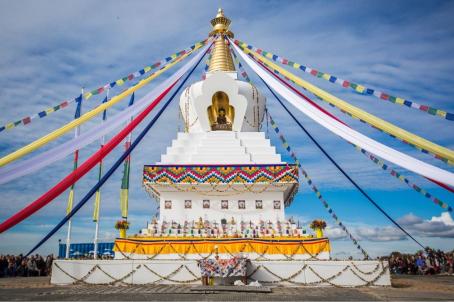
10 Buddhist stupas to discover in Europe

Stupas are symbols of enlightenment and peace that commemorate different stages of Buddha's life. Since the mid-20th century, thousands of stupas have begun to populate Europe. We have compiled some of the most impressive ones in this list.