Explore Religious Heritage Across Europe

Here you can search for a building to visit. You can use the map find destinations, or you can use the filters to search for a building based upon what different criteria.

Refine search

Hervormde Kerk

Kerkwerve, NL

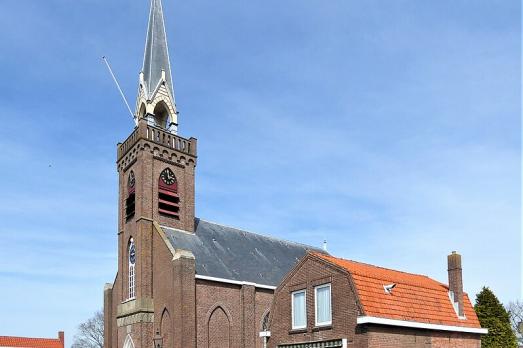
Neo-church with roof turret. The predecessor of the church dated from the 15th century and was demolished in 1895. After that, a temporary wooden church was in use from 1895 to 1900, which was replaced in 1900 by the current Reformed Church.
Hervormde Kerk

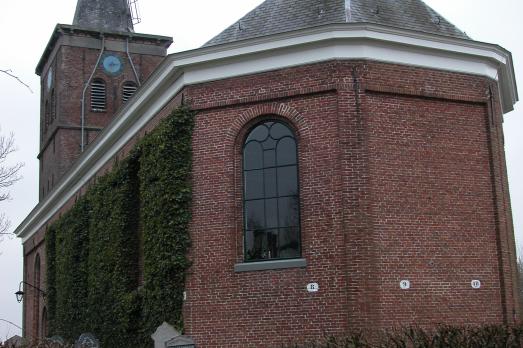
Oude Wetering, NL

The Reformed Church of Oude and Nieuwe Wetering originally belonged to the church in Leimuiden. The first minister, Rev. Johan Vossius, was there from 1578–1579. Single-nave church on a T-shaped plan, created by expanding a small church built parallel to the road in 1691 with a wing perpendicular to it in 1843. Hexagonal wooden bell tower at the intersection of the roofs. In the church covered by wooden barrel vaults a pulpit, late 17th century, with a carved coat of arms on the sounding board and a copper lectern from 1696. Furthermore a carved organ case from 1784 and two psalm boards in a carved frame, around 1700. This church is listed as a National Monument of the Netherlands.

Hervormde Kerk

Hervormde Kerk

Engelum, NL

In its current form, the church of Engelum is a three-sided closed hall church with a tower of three sections with a constricted spire. The tower, which is not accessible from the church, was sheathed in 1887 and is said to still have thirteenth-century masonry from the original church. According to the memorial stone in the south wall of the tower (inv. no. 16), the rest of the church was also renovated in 1887. Incidentally, the nave and choir were said to have been rebuilt in 1773.

Hervormde Kerk

Daarle, NL

Nice reconstruction church with tower. In this church a historical organ.

Hervormde Kerk

Hervormde Kerk

Arnemuiden, NL

The chronicler Reigersberg writes that on 9 May 1505 the first stone was laid for a new church, a cruciform church. That church was put into use in 1545 and dedicated to Saint Martin.

Hervormde Kerk

Bourtange, NL

Reformed Church. In the rear facade of the church built in 1869 two stones; one with the coat of arms of the united provinces, below that a text concerning the construction of the fortress by Willem Lodewijk and the putting into defensive condition in 1593. The church has a 17th century pulpit, a credo board from around 1600 in the form of a triptych, a copper crown and some 18th century tombstones. Mechanical tower clock, Jos van de Kerkhof, Aarle-Rixtel, ca. 1900.

Hervormde Kerk

Elim, NL

Reformed church built in 1916 to a design by architect J. Beijlevelt from Amsterdam. An anonymous donor from the Soest area made the foundation of the church possible through a donation. The peat colony canal village, located in one of the younger development areas, emerged from the foundation of the Reformed Church in 1915.

Hervormde Kerk

Siddeburen, NL

The oldest, Romanesque, part is the base of the tower and the two westernmost bays. This part was built around 1200. A few decades later, the building was extended in Romanesque Gothic style, with a recessed semicircular apse being built on the east side. The beautiful brickwork was hidden for years by a layer of plaster. Halfway through the 20th century, the church was restored, with the brickwork being made visible again. (Source: [1] )

Hervormde Kerk

Brantgum, NL

The 19th century tower is the youngest part, the choir is early 16th century. But then the nave: tuff stone and completely Romanesque, clearly recognizable by the arched frieze decoration and the small round arched windows on the north side. For more light, larger windows have been installed in the south wall. Inside is a remarkable church council bench, perhaps a former communion bench.

Hervormde Kerk

Goënga, NL

Herv. Church on Cemetery. The simple church was built in 1758. The pulpit has 17th century panels on the tub. Single manual organ, made in 1900 by Bakker and Timmenga. Bell tower with Stephanus bell, 1342, diam. 92 cm. Mechanical wrought iron tower clock, 17th century, restored in 1981. In the cemetery large 16th century gravestone.

Be inspired

Stupkalnis.lt

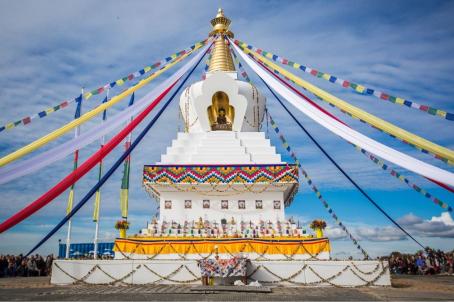
10 Buddhist stupas to discover in Europe

Stupas are symbols of enlightenment and peace that commemorate different stages of Buddha's life. Since the mid-20th century, thousands of stupas have begun to populate Europe. We have compiled some of the most impressive ones in this list.