Hervormde Kerk
Haaften, NL
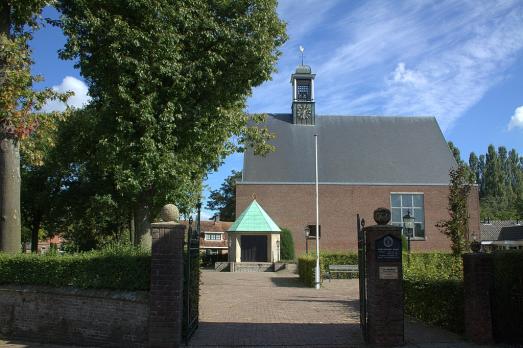
Very interesting early neo-Gothic village church with tower. The interior of the church has been largely restored to its original state. The pulpit dating from 1834 is striking. (59-08)
Here you can search for a building to visit. You can use the map find destinations, or you can use the filters to search for a building based upon what different criteria.
Haaften, NL
Very interesting early neo-Gothic village church with tower. The interior of the church has been largely restored to its original state. The pulpit dating from 1834 is striking. (59-08)
Den Bommel, NL
Reformed Church. Hall church with a three-sided closure at both ends and an octagonal, wooden roof turret, built 1646-1647. Against one of the polygonal closures a small portal with a curved gable in Louis XV style, 1779. Restored 1963. The inventory includes: a pulpit from the period of construction with a copper lectern and candle arm, a copper precentor's lectern flanked by candlesticks, 18th century, two small chandeliers, 17th century. Bell tower with clock by C. and DJ Ouderogge, 1642, diameter 66 cm.
s-Gravenmoer, NL
Dutch Reformed Church. Since changes after destruction by the French in 1672 consisting of a three-sided closed choir of two bays, from the 15th century, two low, 15th century, shortened in the 19th century, transepts, a 15th century nave of five bays, enlarged around 1500 with a north aisle and a built-in 14th century tower with buttresses on the west side, an arched frieze under the spire and a vault over the lower space. Internal columns with molding capitals and wooden barrel vaults. Restoration completed in 1963. Oak pulpit, baptismal fence and associated copper work from 1680, replaced. 17th and 18th century tombstones. Mechanical wrought iron tower clock by Juriaan van Zutphen, 1695, electric winding.
Glanerbrug, NL
Nice neo-romanesque church with saddle roof tower in Glanerbrug. Restoration second half 2000s.
Lekkum, NL
The former reformed church of Tijnje is a simple hall church without a tower built around 1890 or in 1907-1908: the exact year of complete construction is not clear. The straight-closed church building was originally built of brown brick, but the walls were all plastered at a later stage.
Neerijnen, NL
Neo-Gothic village church with tower. Replaced a church from 1692. This church is listed as a National Monument of the Netherlands.
Kesteren, NL
New church, the old church was destroyed by war. The historic tower was preserved. Oak pulpit, second quarter 17th century with copper lectern and baptismal font arm; a 17th century chandelier and several 17th century tombstones.
Iens, NL
Herv. Church and Cemetery. Picturesquely situated in the construction of a 13th century church, renovated in 1874 with the exception of a section on the north side; western saddle roof tower, in the core also still 13th century. The church contains: 17th century oak pulpit with rear bulkhead and sounding board; crowned carved coat of arms, two oak text boards. Bell tower with the sound of two bells, one of which was cast by H. Wegeaert, 1612, diam. 87.8 cm. and a modern bell.
Colijnsplaat, NL
Hall church with tower. Built as a Reformed church. Enlarged 1615, rebuilt 1769.
Dinteloord, NL
NH Church. Square brick building from 1693 designed by Johan van Swieten. Square, domed covered bell chamber on the roof, which is supported internally by four wooden columns. Against the rear facade a square staircase tower. Above the entrance with natural stone frame a niche, in which a natural stone cartouche with inscription: 1693, and the coat of arms of the king-stadholder Willem III, by the sculptor Jan Blommendaal.
new
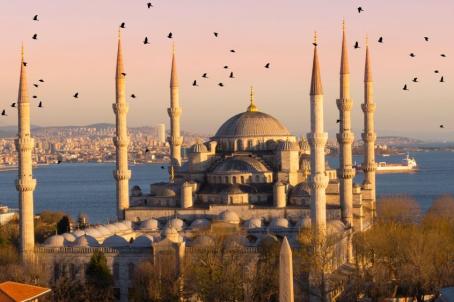
For a long time, Europe was ruled by powerful monarchies. Monarchy and religion have been connected since time immemorial. Here are 7 sites across Europe where royalty historically bent the knee to a higher power and received their crown.
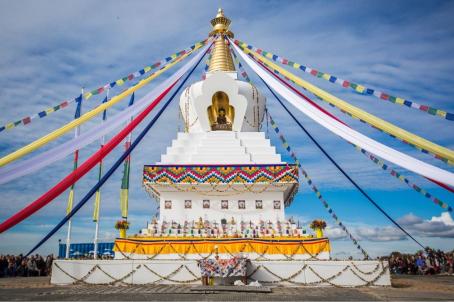
Stupas are symbols of enlightenment and peace that commemorate different stages of Buddha's life. Since the mid-20th century, thousands of stupas have begun to populate Europe. We have compiled some of the most impressive ones in this list.
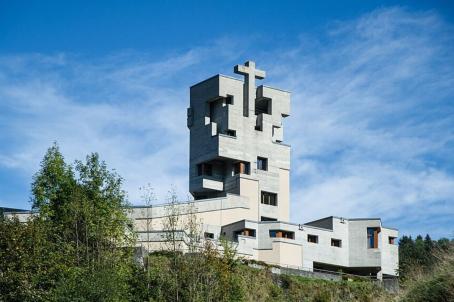
Walter Maria Förderer (1928–2006) was a Swiss architect and sculptor renowned for his neo-expressionist church designs in the 1960s. In this list we have compiled 6 of his church designs that seamlessly integrate religious and secular elements.