Hervormde Kerk
Oosterwolde, NL
This church is listed as a National Monument of the Netherlands.

Here you can search for a building to visit. You can use the map find destinations, or you can use the filters to search for a building based upon what different criteria.
Oosterwolde, NL
This church is listed as a National Monument of the Netherlands.
Sint Anthoniepolder, NL
Reformed church. Single-nave late Gothic church with three-sided choir closure and simple tower, the upper part of which has three high unprofiled round-arched niches in three facade surfaces, probably 16th century. The church is covered with a wooden barrel vault on tie beams. South Wall renewed in the 19th century. The inventory includes: a simple 17th century pulpit, with 18th century lectern and four simple 19th century pews. Oak bell frame with bell by G. Butendiic, 1436, diam. 85.2 cm.
Haastrecht, NL
Reformed Church. Late Gothic wooden-arched CROSS CHURCH, of which only the short nave, the transept and the tower remain. The side aisle bays have gables. Tower hull XIII B in early Gothic forms, Renaissance superstructure restored after fire damage in 1896; tower again approx. 1960. Interior: two copper crowns (XVII). Organ with Hoofdwerk and Bovenwerk, made in 1847 by L. van Dam and Sons for the Reformed Church in Bovenkarspel. Transferred to Haastrecht in 1968.
Oude Wetering, NL
The Reformed Church of Oude and Nieuwe Wetering originally belonged to the church in Leimuiden. The first minister, Rev. Johan Vossius, was there from 1578–1579. Single-nave church on a T-shaped plan, created by expanding a small church built parallel to the road in 1691 with a wing perpendicular to it in 1843. Hexagonal wooden bell tower at the intersection of the roofs. In the church covered by wooden barrel vaults a pulpit, late 17th century, with a carved coat of arms on the sounding board and a copper lectern from 1696. Furthermore a carved organ case from 1784 and two psalm boards in a carved frame, around 1700. This church is listed as a National Monument of the Netherlands.
Langezwaag, NL
Reformed church and tower on churchyard. Simple church building with built-in tower 1781. In the church richly carved pulpit with back wall and sounding board; lectern 17th century communion table. Seven carved gravestones, three 17th century and four 18th century. Organ case and front by H. Knipscheer from 1866. Knipscheer used an old four-foot front that was extended on both sides. Mechanical tower clock by Bergen, Midwolda, 1923, no. 1236.
Daarle, NL
Nice reconstruction church with tower. In this church a historical organ.
Elahuizen, NL
Dutch Reformed Church, national monument because of the single-manual organ, made in 1865 by W. Hardorff in Leeuwarden.
Bourtange, NL
Reformed Church. In the rear facade of the church built in 1869 two stones; one with the coat of arms of the united provinces, below that a text concerning the construction of the fortress by Willem Lodewijk and the putting into defensive condition in 1593. The church has a 17th century pulpit, a credo board from around 1600 in the form of a triptych, a copper crown and some 18th century tombstones. Mechanical tower clock, Jos van de Kerkhof, Aarle-Rixtel, ca. 1900.
Rouveen, NL
Simple, in 1641 on the site of an older predecessor, built of brick CHURCH BUILDING, on a rectangular foundation. The tower, built in two sections, under an equally constricted slate-covered tent roof and with a sober entrance, located within a pointed arched recessed panel with a round window under a Tudor-style arch; sound holes within pointed arched recessed panels; rod anchors. The straight-closed nave, covered by a hipped roof covered with tiles, supported by buttresses with tiled offsets and provided with Tudor-style pointed arch windows in the rear and side facades; door and several small windows. The following interior elements are of interest internally: three 17th century copper crowns and a late 17th century (17th century) copper lectern. Church building with some interior elements of interest because of their architectural and art historical value.
Brandwijk, NL
Early neo-Gothic church with tower. On site of medieval predecessor.
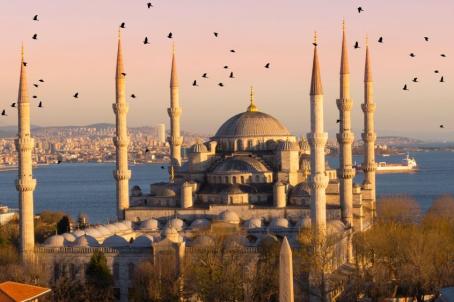
new
For a long time, Europe was ruled by powerful monarchies. Monarchy and religion have been connected since time immemorial. Here are 7 sites across Europe where royalty historically bent the knee to a higher power and received their crown.
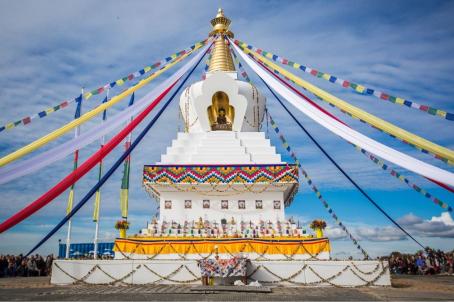
Stupas are symbols of enlightenment and peace that commemorate different stages of Buddha's life. Since the mid-20th century, thousands of stupas have begun to populate Europe. We have compiled some of the most impressive ones in this list.
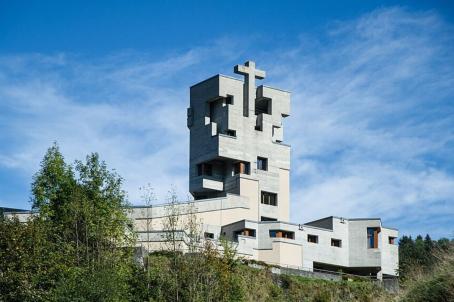
Walter Maria Förderer (1928–2006) was a Swiss architect and sculptor renowned for his neo-expressionist church designs in the 1960s. In this list we have compiled 6 of his church designs that seamlessly integrate religious and secular elements.

How is Religiana helping to conserve and promote Religious Heritage in Europe and why should you get involved?
Find out about Religiana
Are you a tourism organisation or religious heritage sites manager? Discover the advantages of becoming a partner.
See current partners
We can keep you up to date with the latest news from Religiana and religious heritage conservation across Europe.
Sign up to the FRH newsletter