Protestantse Kerk
Steggerda, NL
Renovated in 1903

Here you can search for a building to visit. You can use the map find destinations, or you can use the filters to search for a building based upon what different criteria.
Steggerda, NL
Renovated in 1903
Heesselt, NL
The single-nave neo-Gothic church built in 1887 with a three-sided choir closure under a saddle roof is built against the late 15th-century tower; the church and tower are strikingly situated near the Waaldijk. Built in brick and on a plinth, a four-bay long nave with buttresses cut between the windows and the sides of the choir with natural stone covering on the cutting and at the top; decorative brickwork molding under the gutter; wide lancet-shaped windows with tracery and in a frame of bright red brick and accents in natural stone; stained glass in a pointed diamond motif in green and white, along the edges of the windows strips in red and blue glass; on the roof covered with braised tiles three dormers covered with slates and provided with a piron; on the north side of the nave an extended entrance with double wooden door with fittings, set in a bright red brick frame; there also, the consistory room built against the tower under a hipped saddle roof with dormer; in the consistory room large windows with cross-bar division and slightly recessed round-arched fields above; the frame of the fields and the window styles in bright red stone; on the south side of the tower a mortuary house. In the interior a wooden barrel vault with tie rods and on cove, the ribs resting on consoles with decorative carvings; hexagonal pulpit and rear bulkhead with Gothic decorations from 1864, organ balcony on three simple wooden columns; wainscoting, gentlemen's pews and general pew plan made of wood; two late 19th-century psalm and hymn boards; two twelve-arm copper crowns from the construction period with tronies on the inside. At the entrance to the church two memorial stones from 1849 and 1887. Intact single-manual organ, made in 1857 by H. Knipscheer from Amsterdam. The neo-Gothic village church, built in 1887, is of cultural and architectural-historical value due to its location and the intactness of its interior and exterior, so that protection as a national monument is justified.
Lemele, NL
Around 1860, the committee for the Foundation of a Reformed Church of Lemele and Archem was established. At that time, the inhabitants of Lemele still had to walk about nine kilometres to Ommen to attend church services on Sundays. This proved to be too much of a task for many people. The efforts of the committee paid off. On 21 May 1865, the Koepelkerk was consecrated. This soon proved to be too small and after several renovations, it was decided to build a new church at the end of the 1930s. This was put into use in January 1940.
Nieuw-Vossemeer, NL
Dutch Reformed Church. Hall building from 1649, restored and provided with a new front facade in 1849. Above the facade a bell tower. Along the side walls buttresses, pointed arch windows with bevelled jambs and natural stone sills with drip moulding profile. Interior: flat ceiling. Bell tower with clock by J. Burgerhuys, 1652.
Ochten, NL
The older Reformed Church of Ochten was destroyed in the fall of 1944 during the Battle of the Betuwe. The current church building dates from the 1950s, and is a typical example of Protestant church building from the reconstruction period, influenced by traditionalism, and as such a very important reconstruction church. In the tower hangs a bell by Peter van Johan van Trier, 1643. At the end of 2017, the Cuypersgenootschap submitted a request for recognition as a Municipal Monument.
Hensbroek, NL
Five-sided closed church with built-in tower, provided with constricted spire. The church was built in 1658 and restored in 1838. Internally a pressed barrel vault. Pulpit, baptismal fence and pews from the 17th century. Single manual organ from 1907, made by the Gebr. Spanjaard (Alkmaar).
Hoogwoud, NL
Single-nave church with five-sided closure, covered internally by a wooden barrel vault, rebuilt in 1680 on the site of a cruciform Gothic church, restored in 1966/67. Baptismal font XV; pulpit XVIIb/c. Baptismal gate XVII; covered oak pew with three cartouches, 1634; Ten Commandments board 1687; old oak door in the entrance to the organ; two wooden lions on the organ gallery; copper baptismal arch and candle arm XVII B, three large sixteen-armed crowns XVIIb/c, candlestick arm. Organ with main work and upper work made in 1878 by L. van Dam and Sons.
Cuijk, NL
So-called Lodewijkskerkje, one of the dozens built in North Brabant at the beginning of the 19th century, after the historic churches in various places had to be "returned" to the Roman Catholic Church by the Reformed Church.
Halfweg, NL
This architecturally very interesting, special church (architect JA Smits), with a small tower, was called the "Small Church" since the local SOW / PKN process, opposite the Reformed "Large Church" of Tj. Kuipers. In the long term, the PKN Halfweg-Zwanenburg only wanted to maintain this "Small Church", which was being restored and redesigned for this purpose from around the end of 2009 to spring 2011. Delays in the implementation of these plans arose due to the fact that all of this had to be financed from the proceeds of the (eventually to be demolished) Reformed "Large Church". In terms of architecture and layout, this Small Church is somewhat similar to Anglican churches and cathedrals in Great Britain, especially the elongated and straight-ended choir.
Eijsden, NL
Built as Dutch Reformed Church. Small neo-Gothic church with tower.
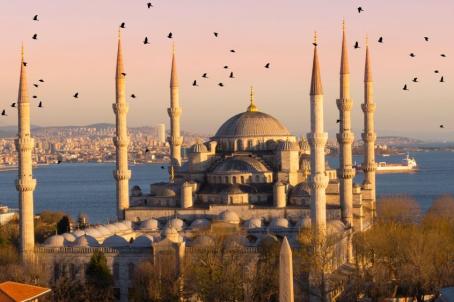
new
For a long time, Europe was ruled by powerful monarchies. Monarchy and religion have been connected since time immemorial. Here are 7 sites across Europe where royalty historically bent the knee to a higher power and received their crown.
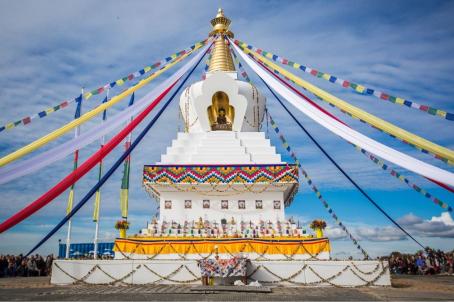
Stupas are symbols of enlightenment and peace that commemorate different stages of Buddha's life. Since the mid-20th century, thousands of stupas have begun to populate Europe. We have compiled some of the most impressive ones in this list.
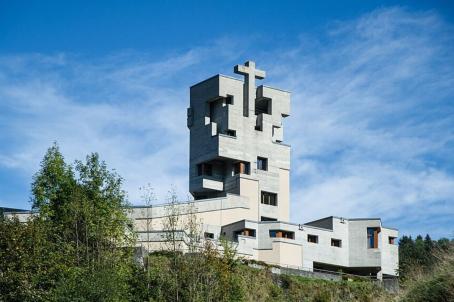
Walter Maria Förderer (1928–2006) was a Swiss architect and sculptor renowned for his neo-expressionist church designs in the 1960s. In this list we have compiled 6 of his church designs that seamlessly integrate religious and secular elements.

How is Religiana helping to conserve and promote Religious Heritage in Europe and why should you get involved?
Find out about Religiana
Are you a tourism organisation or religious heritage sites manager? Discover the advantages of becoming a partner.
See current partners
We can keep you up to date with the latest news from Religiana and religious heritage conservation across Europe.
Sign up to the FRH newsletter