Protestantse Kerk
Eijsden, NL
Built as Dutch Reformed Church. Small neo-Gothic church with tower.

Here you can search for a building to visit. You can use the map find destinations, or you can use the filters to search for a building based upon what different criteria.
Eijsden, NL
Built as Dutch Reformed Church. Small neo-Gothic church with tower.
Lent, NL
Tower of the Reformed Church because of a bell frame with a bell by M. Fremy, 1683, diam. 73 cm.
Dussen, NL
Characteristic reconstruction church with tower. Built as Dutch Reformed Church.
Kaag, NL
Dutch Reformed Church from 1873. The inventory includes: a copper lectern on the pulpit and a precentor's lectern; a copper baptismal font holder and two copper candle holders, all dating from the 18th century.
Hilvarenbeek, NL
NH Church, built in 1809 in a mixed classical-neo-Gothic style after a design by L. van Heijst; brick hall church with 3/8 closure and an open octagonal tower on the roof. Front facade with pilasters and pediments. Pointed arch windows. Interior: stucco. Oak pulpit from around 1775, brass lectern and baptismal font holder from the same period. An 18th century cabinet organ, which had been here since 1809, has long since disappeared. The current organ was delivered in 1952 by the Vreeken company (Bodegraven).
Roswinkel, NL
Dutch Reformed Church. Nave from 1759, tower from 1853. Inventory: pulpit from 1662. Memorial board from 1759. Bell tower with bell from an anonymous founder, 1362, 83 cm. Vertical sundial on the south side of the church.
Deurne, NL
The Protestant Church is a Protestant church building in the North Brabant town of Deurne , located at Helmondseweg 5.
Hensbroek, NL
Five-sided closed church with built-in tower, provided with constricted spire. The church was built in 1658 and restored in 1838. Internally a pressed barrel vault. Pulpit, baptismal fence and pews from the 17th century. Single manual organ from 1907, made by the Gebr. Spanjaard (Alkmaar).
Hoogwoud, NL
Single-nave church with five-sided closure, covered internally by a wooden barrel vault, rebuilt in 1680 on the site of a cruciform Gothic church, restored in 1966/67. Baptismal font XV; pulpit XVIIb/c. Baptismal gate XVII; covered oak pew with three cartouches, 1634; Ten Commandments board 1687; old oak door in the entrance to the organ; two wooden lions on the organ gallery; copper baptismal arch and candle arm XVII B, three large sixteen-armed crowns XVIIb/c, candlestick arm. Organ with main work and upper work made in 1878 by L. van Dam and Sons.
Kuinre, NL
Reformed Church. Built in 1678-81 and largely renovated in 1844, retaining the substructure. Simple hall church with three-sided closure and stepped gable on the entrance side. Organ with main work and subpositive, made in 1856 by Gebr. Scheuer. Mechanical tower clockwork, has been decommissioned.
new
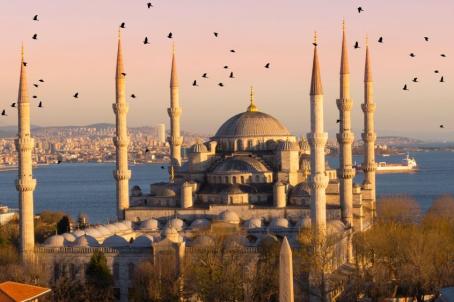
For a long time, Europe was ruled by powerful monarchies. Monarchy and religion have been connected since time immemorial. Here are 7 sites across Europe where royalty historically bent the knee to a higher power and received their crown.
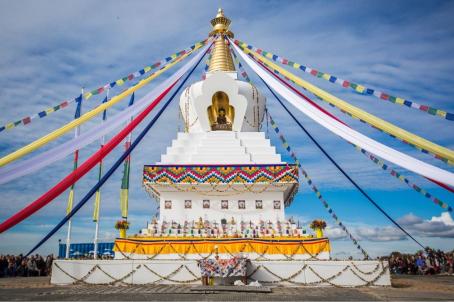
Stupas are symbols of enlightenment and peace that commemorate different stages of Buddha's life. Since the mid-20th century, thousands of stupas have begun to populate Europe. We have compiled some of the most impressive ones in this list.
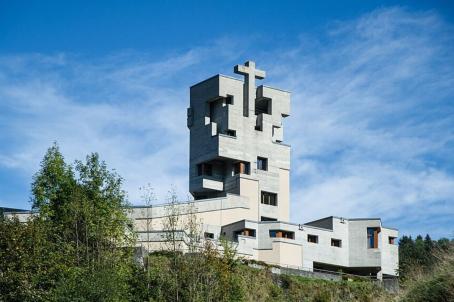
Walter Maria Förderer (1928–2006) was a Swiss architect and sculptor renowned for his neo-expressionist church designs in the 1960s. In this list we have compiled 6 of his church designs that seamlessly integrate religious and secular elements.

How is Religiana helping to conserve and promote Religious Heritage in Europe and why should you get involved?
Find out about Religiana
Are you a tourism organisation or religious heritage sites manager? Discover the advantages of becoming a partner.
See current partners
We can keep you up to date with the latest news from Religiana and religious heritage conservation across Europe.
Sign up to the FRH newsletter