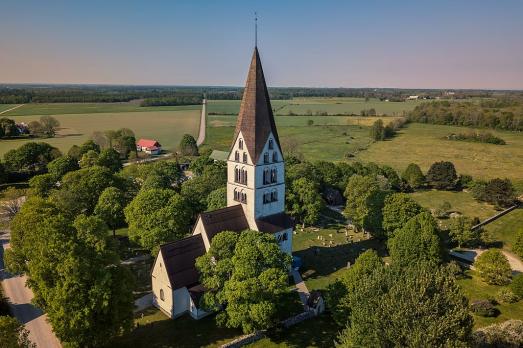
Stenkyrka Church
Tingstäde, SE
Stenkyrka Church is one of the 92 medieval churches on the island of Gotland.

Here you can search for a building to visit. You can use the map find destinations, or you can use the filters to search for a building based upon what different criteria.
Tingstäde, SE
Stenkyrka Church is one of the 92 medieval churches on the island of Gotland.
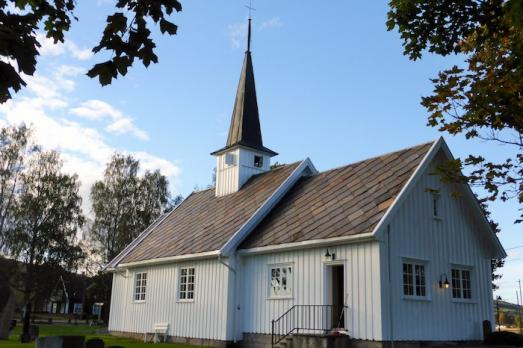
Nannestad, NO
Stensgård Church is a long church from 1902. The church was built according to the same plans as the Landsmarka chapel and originally had the same style inspired by the Stave church. In 1954-55, however, it was rebuilt according to the plans of Wilhelm Karlson. At the same time, the church received new furniture.
Hardenberg, NL
Reformed Church. Building on a rectangular foundation with list facades divided by lesenes and pointed arch windows. The seven-bay wide side facade on the Voorstraat has a risalit of three bays crowned by a triangular pediment. Simple entrance frame (1847). Pulpit XIX A; Organ 1819; forged iron lectern. Originally a single-manual organ made in 1819 by JC Scheuer. Extended in 1953 with a Rugpositief and a free Pedal. Restored in 1992 by the Gebr. Reil, whereby the Rugpositief was replaced by a Onderpositief.
Beilen, NL
The Stefanuskerk is a Gothic church building of the Protestant community in Beilen. The church was founded before 1139 as a Roman Catholic church and dedicated to the martyr Stephen. The current church building dates from the 14th, 15th or 16th century. Karstkarel dates the construction of the nave, tower and choir around 1500. According to Stenvert [et al.] the church would have been built earlier, namely at the end of the 14th century and the choir at the beginning of the 15th century. The Cultural Heritage Agency of the Netherlands speaks of a building from the 16th century with a tower from the 15th century. At the time it was the most important church of the dingspel Middenveld and the building also served as an ecclesiastical court.
Hasselt, NL
The church replaced an older Romanesque church, which was destroyed by fire in 1380. The nave and tower were completed in 1466 and by the end of the century the northern and southern choirs were also finished. Both aisles were extended along the tower. Sacristy and chapel of the Holy Sepulchre were added to the south side of the church around 1500.
Finsterwolde, NL
The church building was built at the beginning of the thirteenth century. Originally it was a Romanesque-Gothic cruciform church. But in 1600 the transepts were demolished. From that time on it is no longer a cruciform church. In the same period the church building was lowered 5.5 meters and a choir section was added to the church. In 1970 the church was thoroughly restored. The pews were removed from the choir. In the choir section you can find gravestones and a burial vault. The foundation stone for the tower, which is separate from the church, was laid on June 16, 1820 and was completed 2 years later. The tower is built on 96 piles. On the spire is not a rooster, but a horse.
Oldeholtpade, NL
This church is listed as a National Monument of the Netherlands.
Schingen, NL
The church, which was demolished in 1877, probably dated from the 12th century. However, by 1877 the church had become so dilapidated that the church council had it demolished and a new church with a tower built on its site.
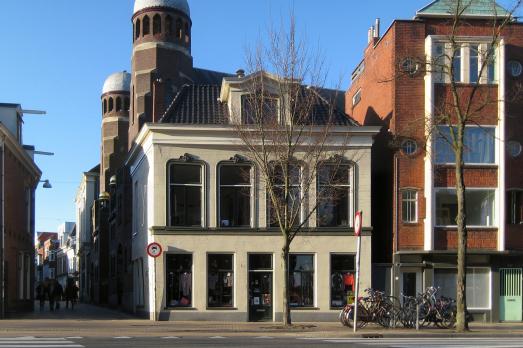
Groningen, NL
An important synagogue, with beautiful interior decoration.
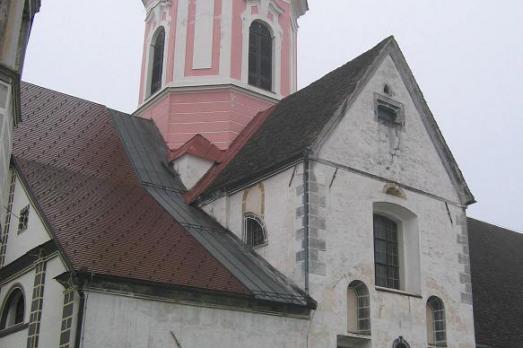
Ivančna Gorica, SI
The Stična Abbey, dating back to 1132, is one of the oldest monasteries in Slovenia. Today, despite its closure (between 1784 and 1898), it still serves as a monastery for the Cistercian order.
new
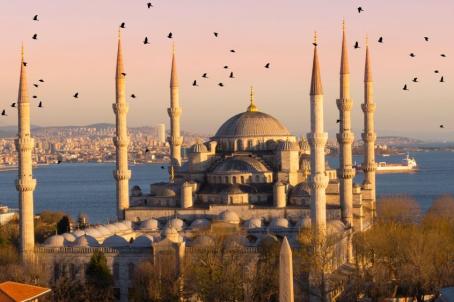
For a long time, Europe was ruled by powerful monarchies. Monarchy and religion have been connected since time immemorial. Here are 7 sites across Europe where royalty historically bent the knee to a higher power and received their crown.
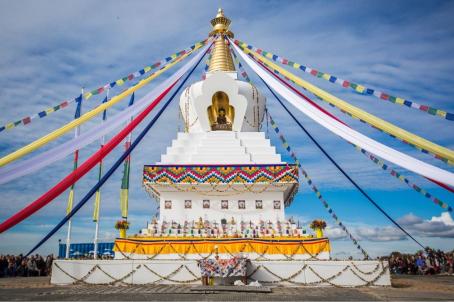
Stupas are symbols of enlightenment and peace that commemorate different stages of Buddha's life. Since the mid-20th century, thousands of stupas have begun to populate Europe. We have compiled some of the most impressive ones in this list.
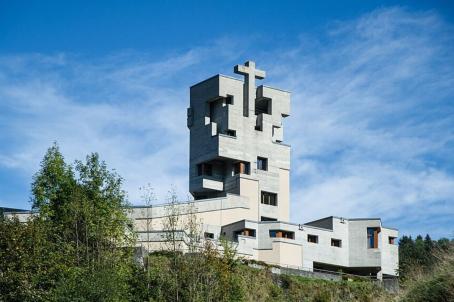
Walter Maria Förderer (1928–2006) was a Swiss architect and sculptor renowned for his neo-expressionist church designs in the 1960s. In this list we have compiled 6 of his church designs that seamlessly integrate religious and secular elements.

How is Religiana helping to conserve and promote Religious Heritage in Europe and why should you get involved?
Find out about Religiana
Are you a tourism organisation or religious heritage sites manager? Discover the advantages of becoming a partner.
See current partners
We can keep you up to date with the latest news from Religiana and religious heritage conservation across Europe.
Sign up to the FRH newsletter