Heilige Johannes' Onthoofding
Moordrecht, NL
This church is listed as a National Monument of the Netherlands.

Here you can search for a building to visit. You can use the map find destinations, or you can use the filters to search for a building based upon what different criteria.
Moordrecht, NL
This church is listed as a National Monument of the Netherlands.
Eindhoven, NL
Until 1796 a reformed (also called: reformed) church, then Roman Catholic, demolished in 1885. In 1884 the foundation stone was laid for the current Roman Catholic St. Joriskerk. Hendrik van Tulder from Tilburg drew the design. The church was put into use in 1885. A tower with side chapels was added in 1910 to a design by Jac. van Gils. Restoration started in 2003.
Haarlem, NL
Exceptionally important neoclassical church. Main work of architect HH Dansdorp. Roman Catholic Church of St. Joseph, consecrated 1843. From 1853 to 1898 cathedral of the re-established Diocese of Haarlem. Extended for this purpose in 1856. Large neoclassical church with turret on the front facade. Architect: HH Dansdorp; three-aisled neoclassical church, provided with a barrel vault over the central nave. Façade of natural stone; high round columns carry tympanum, round dome tower on Corinthian columns. Largely late nineteenth-century decoration and inventory.
Meers, NL
The St. Josef Church is a Roman Catholic Church built in 1910 and expanded in 1932.
Noord-Deurningen, NL
The Church of Saint Joseph was built in 1934.
Doenrade, NL
Charming neo-Gothic village church with tower.
Hooglanderveen, NL
During the Reformation, the Catholics in this region were served by Jesuits from Nijkerk. Services were held in 't Veen in the 'Sandhuysken'. Later, the residents of 't Veen came under Hoogland and went to church in Hoogland (an hour and a quarter's walk) or Amersfoort (no less than 1 to 2 hours' walk). Around 1853, the desirability of establishing a separate parish for this part of Hoogland and Hoevelaken was first mentioned. Due to all kinds of difficulties, the plans for a separate parish could not be realised until 1917. The population of Hooglanderveen had increased in the meantime, partly due to the construction of the railway. This increase in families also caused problems with regard to catechism education for children who had to travel far too far for this.
Oost-Maarland, NL
With elements of Neo-Romanesque, in 1927, to a design by architect Joseph Franssen from Roermond, a CATHOLIC CHURCH was built in honour of Saint Joseph. The architect was Johannes Duijf and the contractor was Fincken from Stevensweert. The church is connected to the adjacent rectory on the right side, and on the left and rear side is the Catholic cemetery. This church is listed as a National Monument of the Netherlands.
Blerick, NL
The original church from 1934 was a creation of the architect A. Rats. This church was destroyed by war on 20 November 1944. The entire western part was destroyed, and the vaults collapsed. The destruction was so extensive that only the foundations were still visible. The tower clock was destroyed, as well as the harmonium, the pews and the Stations of the Cross. The bells had already been stolen by the occupier in 1942. Immediately after the liberation, the masses were read in the cellars of various parishioners. Shortly afterwards, the Custers hall was put into use for this purpose, but it was also too small. From 11 March 1945, the Lemmen hall was therefore set up as an emergency church. This burned down in 1946, so that the Custers hall had to provide a solution again. In the meantime, the Lemmen hall was renovated and purchased, so that it could be used as a permanent emergency church. This temporary church was put into use in 1958 as a nursery school, which in turn left the building in 1969.
Nieuw-Namen, NL
Neo-Gothic church with tower. Original design by architect P. Soffers.
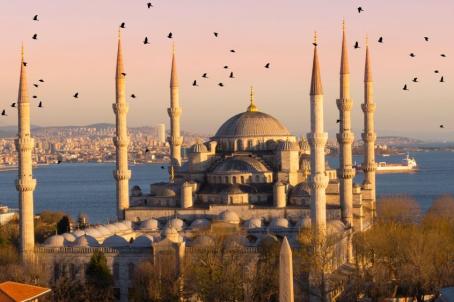
new
For a long time, Europe was ruled by powerful monarchies. Monarchy and religion have been connected since time immemorial. Here are 7 sites across Europe where royalty historically bent the knee to a higher power and received their crown.
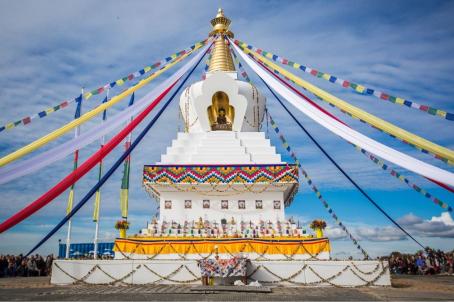
Stupas are symbols of enlightenment and peace that commemorate different stages of Buddha's life. Since the mid-20th century, thousands of stupas have begun to populate Europe. We have compiled some of the most impressive ones in this list.
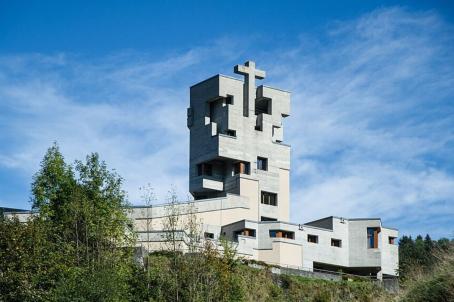
Walter Maria Förderer (1928–2006) was a Swiss architect and sculptor renowned for his neo-expressionist church designs in the 1960s. In this list we have compiled 6 of his church designs that seamlessly integrate religious and secular elements.

How is Religiana helping to conserve and promote Religious Heritage in Europe and why should you get involved?
Find out about Religiana
Are you a tourism organisation or religious heritage sites manager? Discover the advantages of becoming a partner.
See current partners
We can keep you up to date with the latest news from Religiana and religious heritage conservation across Europe.
Sign up to the FRH newsletter