Heilige Jozef
Nieuw-Namen, NL
Neo-Gothic church with tower. Original design by architect P. Soffers.

Here you can search for a building to visit. You can use the map find destinations, or you can use the filters to search for a building based upon what different criteria.
Nieuw-Namen, NL
Neo-Gothic church with tower. Original design by architect P. Soffers.
Doenrade, NL
Charming neo-Gothic village church with tower.
Brunssum, NL
Modern hall church without tower from 1959-1960, built at the former mining colony of Egge in Brunssum-Oost.
Roosendaal, NL
Very important expressionist interbellum church with tower. Restoration in 1966. Later church of the Emmaus parish in Roosendaal-Oost. Restored again in stages from 2004.
Holten, NL
The Roman Catholic parish of Holten was founded in the 1960s as a split from the parish of the same name in Nieuw-Heeten. After temporarily using a gymnasium, the Catholics of Holten still attend church in the Dutch Reformed community center Irene.
Heerlen, NL
Replaced old church from 1917, which was demolished due to mine damage. Construction followed in 1957. Consecration 26 June 1960 by mgr. Moors. Important work in the oeuvre of JJ Fanchamps (1912-1982): hall church, built in concrete skeleton construction and Kunrade stone, covered by curved shell roofs. To the left of the front facade is a semi-detached tower. The side facades are externally provided with a loggia, to support the shell roof. Remarkable and innovative example of Roman Catholic church construction after the war, especially due to the wide span of the nave. The front facade contains reliefs by W. van Hoorn, representing the Holy Trinity, the four evangelists and the twelve apostles. As an important example of Roman Catholic church construction from the reconstruction period, the church was nominated in 2007 and later designated as a national monument in the context of the reconstruction top hundred.
Melissant, NL
The St. Joseph Chapel in Melissant was put into use on 14 November 1900. Until then, the Roman Catholics of the village had to rely on the parish church in Middelharnis. The construction of the chapel and residence was financed by the diocese of Haarlem, under which the South Holland islands belonged at the time, from a legacy received from the estate of Baron RHI van Brienen and from several creations. This church is listed as a National Monument of the Netherlands.
Blerick, NL
The original church from 1934 was a creation of the architect A. Rats. This church was destroyed by war on 20 November 1944. The entire western part was destroyed, and the vaults collapsed. The destruction was so extensive that only the foundations were still visible. The tower clock was destroyed, as well as the harmonium, the pews and the Stations of the Cross. The bells had already been stolen by the occupier in 1942. Immediately after the liberation, the masses were read in the cellars of various parishioners. Shortly afterwards, the Custers hall was put into use for this purpose, but it was also too small. From 11 March 1945, the Lemmen hall was therefore set up as an emergency church. This burned down in 1946, so that the Custers hall had to provide a solution again. In the meantime, the Lemmen hall was renovated and purchased, so that it could be used as a permanent emergency church. This temporary church was put into use in 1958 as a nursery school, which in turn left the building in 1969.
Enschede, NL
Extremely important, iconic, late neo-Gothic church with a high tower.
Rozenburg, NL
The Roman Catholic community in Rozenburg has existed since about 1955. In the mid-fifties, there were indeed some Catholics living in Rozenburg, but they belonged to the parish of Brielle. Because Brielle was quite far away, the pastor of Maassluis was the designated pastor for the Rozenburg Catholics.
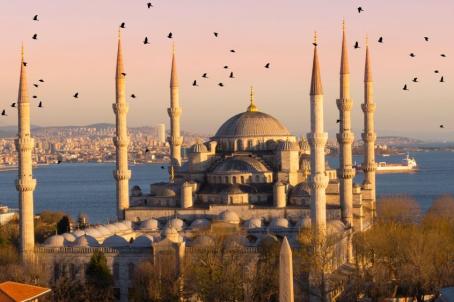
new
For a long time, Europe was ruled by powerful monarchies. Monarchy and religion have been connected since time immemorial. Here are 7 sites across Europe where royalty historically bent the knee to a higher power and received their crown.
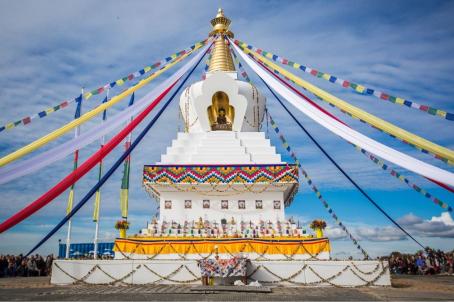
Stupas are symbols of enlightenment and peace that commemorate different stages of Buddha's life. Since the mid-20th century, thousands of stupas have begun to populate Europe. We have compiled some of the most impressive ones in this list.
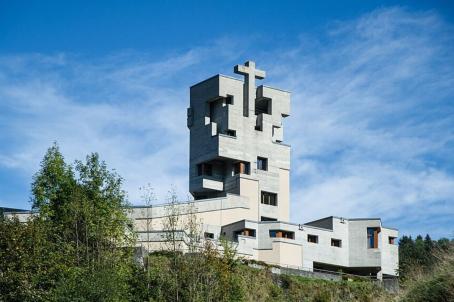
Walter Maria Förderer (1928–2006) was a Swiss architect and sculptor renowned for his neo-expressionist church designs in the 1960s. In this list we have compiled 6 of his church designs that seamlessly integrate religious and secular elements.

How is Religiana helping to conserve and promote Religious Heritage in Europe and why should you get involved?
Find out about Religiana
Are you a tourism organisation or religious heritage sites manager? Discover the advantages of becoming a partner.
See current partners
We can keep you up to date with the latest news from Religiana and religious heritage conservation across Europe.
Sign up to the FRH newsletter