Heilige Jozef
Doenrade, NL
Charming neo-Gothic village church with tower.

Here you can search for a building to visit. You can use the map find destinations, or you can use the filters to search for a building based upon what different criteria.
Doenrade, NL
Charming neo-Gothic village church with tower.
Hooglanderveen, NL
During the Reformation, the Catholics in this region were served by Jesuits from Nijkerk. Services were held in 't Veen in the 'Sandhuysken'. Later, the residents of 't Veen came under Hoogland and went to church in Hoogland (an hour and a quarter's walk) or Amersfoort (no less than 1 to 2 hours' walk). Around 1853, the desirability of establishing a separate parish for this part of Hoogland and Hoevelaken was first mentioned. Due to all kinds of difficulties, the plans for a separate parish could not be realised until 1917. The population of Hooglanderveen had increased in the meantime, partly due to the construction of the railway. This increase in families also caused problems with regard to catechism education for children who had to travel far too far for this.
Kerkrade, NL
In the western district of Kaalheide. Beautiful, original, monumental church with tower and roof turret. The history of the St. Joseph's Church in Kerkrade, Kapelweg 5, is closely linked to the development of the Kaalheide district. Kaalheide was a rural area until the 1920s, but due to industrialization in the region, the population of Kerkrade grew rapidly. In 1922, Kaalheide became an independent parish and it was decided to build a new church. The architect of the church was Hubert van Groenendael, a prominent architect from Roermond. He designed a neo-Romanesque church with a basilica floor plan. The church has a tower of 45 meters high. Construction of the church began in 1926 and was completed in 1928. The church was consecrated on September 11, 1928 by the bishop of Roermond, mgr. JJ Lemmens.
Oost-Maarland, NL
With elements of Neo-Romanesque, in 1927, to a design by architect Joseph Franssen from Roermond, a CATHOLIC CHURCH was built in honour of Saint Joseph. The architect was Johannes Duijf and the contractor was Fincken from Stevensweert. The church is connected to the adjacent rectory on the right side, and on the left and rear side is the Catholic cemetery. This church is listed as a National Monument of the Netherlands.
Blerick, NL
The original church from 1934 was a creation of the architect A. Rats. This church was destroyed by war on 20 November 1944. The entire western part was destroyed, and the vaults collapsed. The destruction was so extensive that only the foundations were still visible. The tower clock was destroyed, as well as the harmonium, the pews and the Stations of the Cross. The bells had already been stolen by the occupier in 1942. Immediately after the liberation, the masses were read in the cellars of various parishioners. Shortly afterwards, the Custers hall was put into use for this purpose, but it was also too small. From 11 March 1945, the Lemmen hall was therefore set up as an emergency church. This burned down in 1946, so that the Custers hall had to provide a solution again. In the meantime, the Lemmen hall was renovated and purchased, so that it could be used as a permanent emergency church. This temporary church was put into use in 1958 as a nursery school, which in turn left the building in 1969.
Nieuw-Namen, NL
Neo-Gothic church with tower. Original design by architect P. Soffers.
Gouda, NL
As of August 1, 2002, the St. Joseph parish, the OLVrouw Hemelvaart parish and the parish of the Blessed Sacrament were merged into one parish with the new name H. Antonius. Remarkable, because John the Baptist is the patron saint of Gouda. These three church buildings would remain, according to the reports at the time, and on Sunday, September 15, 2002, the first celebration of the new parish was held. But already in November 2002 it was announced that maintaining all three church buildings would be impossible for financial reasons. Which church would ultimately remain in use was not yet known at that time.
Smakt, NL
Before the war, there were already plans to replace the previous neo-Gothic pilgrimage church from 1886 with a new building. The intention was to be able to put a new church into use in 1949 - then the Smakt would have been a place of pilgrimage for 250 years. However, these plans led to nothing. However, the rectorate of De Smakt was transferred to the Discalced Carmelites in 1949. The existing church was renovated. In 1965 it became clear that the old church was becoming too small. The new church would have to have at least 200 seats with wide aisles and plenty of standing room with a view to the pilgrims. Money had been collected for a new church since 1963. The pilgrims donated approximately 100,000 guilders in three years. In 1966, the Carmelites approached architect JJ Fanchamps to draw up the new building plans. The foundation stone was laid on 24 June 1968, after which contractor Koenen from Holthees completed the church, so that it could be blessed by Mgr. Beel on 11 March 1969. The new church is connected to the Carmelite monastery. De Smakt is the only place of pilgrimage in the Netherlands where St. Joseph is specifically venerated. Every year, around 20,000 people visit De Smakt, especially in the month of March, to venerate St. Joseph. The pilgrimage complex currently consists of the Joseph Chapel (1699), procession park (ca. 1900), the Pilgrim House (1910), the Carmelite monastery (1949) and the Joseph Church (1969). The Pilgrim House should have been demolished to create a better entrance and improve the view of the church, but this plan was not carried out due to a lack of finances. Something similar applied to the monastery: only half of it was built.
Brunssum, NL
Modern hall church without tower from 1959-1960, built at the former mining colony of Egge in Brunssum-Oost.
Helmond, NL
Large characteristic W. te Riele church with tower. The interior of the Roman Catholic St. Joseph church (1922, Wolter te Riele, extension 1927, renovation 1993) is split. The half on the choir side is still a church. The half on the tower is equipped for childcare.
new
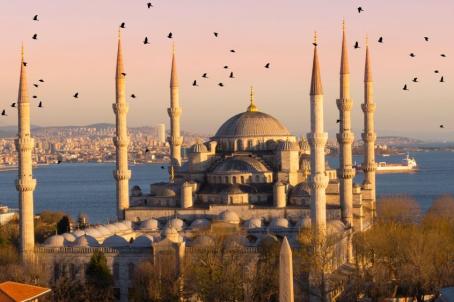
For a long time, Europe was ruled by powerful monarchies. Monarchy and religion have been connected since time immemorial. Here are 7 sites across Europe where royalty historically bent the knee to a higher power and received their crown.
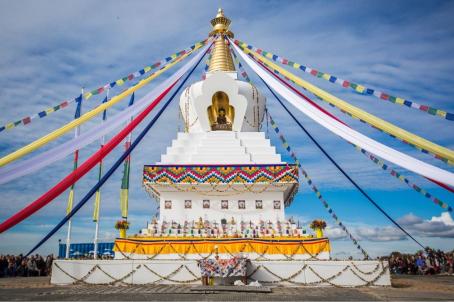
Stupas are symbols of enlightenment and peace that commemorate different stages of Buddha's life. Since the mid-20th century, thousands of stupas have begun to populate Europe. We have compiled some of the most impressive ones in this list.
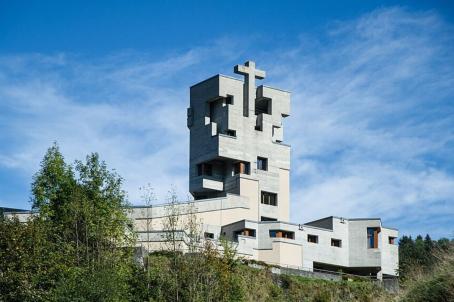
Walter Maria Förderer (1928–2006) was a Swiss architect and sculptor renowned for his neo-expressionist church designs in the 1960s. In this list we have compiled 6 of his church designs that seamlessly integrate religious and secular elements.

How is Religiana helping to conserve and promote Religious Heritage in Europe and why should you get involved?
Find out about Religiana
Are you a tourism organisation or religious heritage sites manager? Discover the advantages of becoming a partner.
See current partners
We can keep you up to date with the latest news from Religiana and religious heritage conservation across Europe.
Sign up to the FRH newsletter