Protestantse Kerk
Sint-Michielsgestel, NL
Originally a reformed church. Three-sided closed hall church with roof turret, lesenes and pointed arch windows, from 1801. Internal stucco vault.

Here you can search for a building to visit. You can use the map find destinations, or you can use the filters to search for a building based upon what different criteria.
Sint-Michielsgestel, NL
Originally a reformed church. Three-sided closed hall church with roof turret, lesenes and pointed arch windows, from 1801. Internal stucco vault.
Blitterswijck, NL
The church was founded in 1828 by AM Baroness Mackay. Hall church with roof turret. This church falls under the Protestant Community of Venray and surroundings, and is currently only in use in the summer.
Nieuw-Vossemeer, NL
Dutch Reformed Church. Hall building from 1649, restored and provided with a new front facade in 1849. Above the facade a bell tower. Along the side walls buttresses, pointed arch windows with bevelled jambs and natural stone sills with drip moulding profile. Interior: flat ceiling. Bell tower with clock by J. Burgerhuys, 1652.
Lisse, NL
Dutch Reformed Church. Tower exterior tuff stone circa 15th century. Single-nave nave and choir (15th century).
Reitsum, NL
Church with roof turret, in neo-Gothic style. It was extended in 1881. It has a mechanical tower clock made by Van Bergen in 1881.
Nijland, NL
In the churchyard stands the large mid-15th century village church with a somewhat younger tower raised in 1615. On the south side entrance gate with inscription about tower restoration 1664. Carved corbels in the choir closure. Internal wooden barrel vault, against which a stucco vault was placed in the nave in 1870. The original vault is still visible in the separated choir. Pulpit from 1659 with baptismal fence and baptismal font on arm. Organ gallery with carved panels. Organ with main work and lower positive, made around 1840 by W. van Gruisen. Under the wooden floor on gravestone by Vincent Lucas 1550 and a 17th century carved gravestone. In one of the windows small pieces of stained glass with representations of an ox. This church is listed as a National Monument of the Netherlands.

Angeren, NL
Small reconstruction church, built to replace a church destroyed during the war.
Ritthem, NL
The Reformed Church consists of a simple 16th century nave, rebuilt in 1611. The choir has been demolished. Interior: niches under the windows. Oak pulpit (17th century). The steeply sloping 14th century tower has three sections. On either side of the pointed arch above the entrance are niches with brick trefoils, which also appear on a frieze of the round staircase tower, the masonry of which is enlivened with glazed heads. The buttresses were probably added in the 16th century, the bell storey was raised and the entrance was changed. The stone vault in the tower has been broken out; its wall columns are provided with small capitals. Bell tower with clock by Johannes Burgerhuys, 1613, diam. 70 cm. Lower in the tower, in a clock case, is a mechanical tower clock, according to the nameplate: B. Eijsbouts, 1922, decommissioned.
Moerdijk, NL
Dutch Reformed Church. Simple hall building from 1815. Bell tower with clock by Bakker and Pootman, diam. 45 cm. The first Reformed Church, on the Zwaluwsedijk, was destroyed during the war in 1944. A new Reformed Church was built on the Grintweg in 1953, based on a design by C. van der Bom. After the formation of the PKN community, the last service was held in that church on 21 August 2005. This church is listed as a National Monument of the Netherlands.
Halfweg, NL
This architecturally very interesting, special church (architect JA Smits), with a small tower, was called the "Small Church" since the local SOW / PKN process, opposite the Reformed "Large Church" of Tj. Kuipers. In the long term, the PKN Halfweg-Zwanenburg only wanted to maintain this "Small Church", which was being restored and redesigned for this purpose from around the end of 2009 to spring 2011. Delays in the implementation of these plans arose due to the fact that all of this had to be financed from the proceeds of the (eventually to be demolished) Reformed "Large Church". In terms of architecture and layout, this Small Church is somewhat similar to Anglican churches and cathedrals in Great Britain, especially the elongated and straight-ended choir.
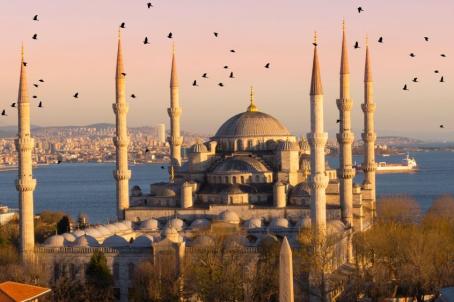
new
For a long time, Europe was ruled by powerful monarchies. Monarchy and religion have been connected since time immemorial. Here are 7 sites across Europe where royalty historically bent the knee to a higher power and received their crown.
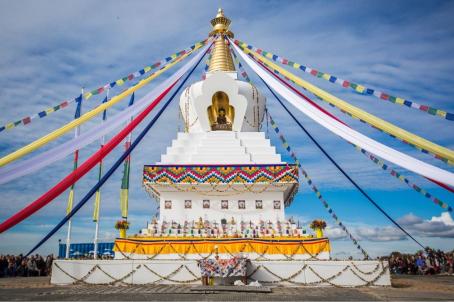
Stupas are symbols of enlightenment and peace that commemorate different stages of Buddha's life. Since the mid-20th century, thousands of stupas have begun to populate Europe. We have compiled some of the most impressive ones in this list.
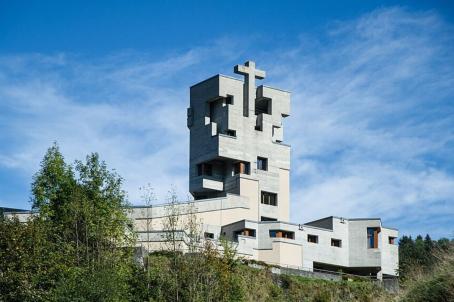
Walter Maria Förderer (1928–2006) was a Swiss architect and sculptor renowned for his neo-expressionist church designs in the 1960s. In this list we have compiled 6 of his church designs that seamlessly integrate religious and secular elements.

How is Religiana helping to conserve and promote Religious Heritage in Europe and why should you get involved?
Find out about Religiana
Are you a tourism organisation or religious heritage sites manager? Discover the advantages of becoming a partner.
See current partners
We can keep you up to date with the latest news from Religiana and religious heritage conservation across Europe.
Sign up to the FRH newsletter