Explore Religious Heritage Across Europe

Here you can search for a building to visit. You can use the map find destinations, or you can use the filters to search for a building based upon what different criteria.

Refine search

Convento di San Francesco

Convento di San Francesco

Lanciano, IT

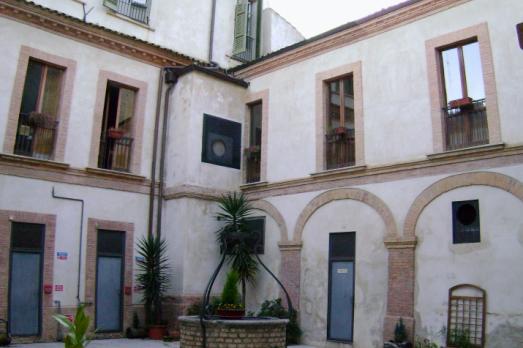
The convent of St. Francis is the seat of the Friars Minor Conventual, who also manage the adjacent church of St. Francis or the Church of the Eucharistic Miracle. Its construction, as well as that of the adjacent church, dates back to the years 1250-1260 on an ancient Basilian monastery, dedicated to St. Legonziano, which was then managed by the Benedictines of San Giovanni in Venere. The Franciscan friars settled there again, after having been expelled in 1799, at the beginning of the 19th century. With the advent of the Napoleonic laws in 1809, the monks were forced to leave the church and convent, which passed to the State and then to the municipality. In 1997, the entire complex was returned to the Friars Minor Conventual.
Convento di San Lucchese

Convento di San Lucchese

Poggibonsi, IT

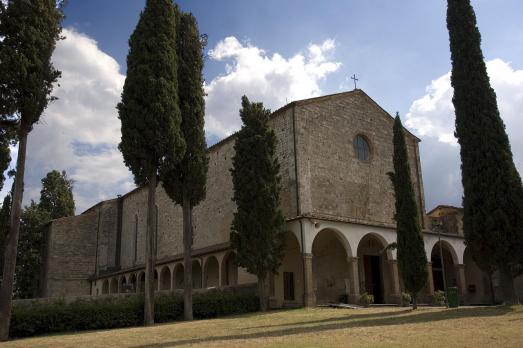
According to tradition, the convent of San Lucchese originated with the visit of St. Francis to Valdelsa in 1222 and his meeting with Luchese of Caggiano. The apsidal part of the chapels was built around the middle of the 14th century, the portico in front of the basilica in the 17th century, and then transformations and restructuring for the restoration, especially of the facade and the roof (due to landslides, earthquakes and the 1943 cannonading), brought the complex back to its original state.

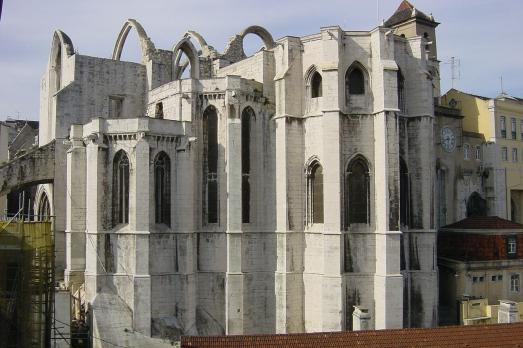
Convento do Carmo

Convento do Carmo

Lisbon, PT

Convento do Carmo de Lisboa is a former convent of the Carmelite order of the Ancient Observance. Its current state of ruin bears witness to the 1755 earthquake that destroyed most of Lisbon.

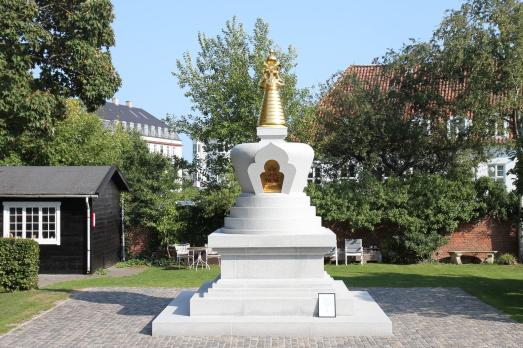
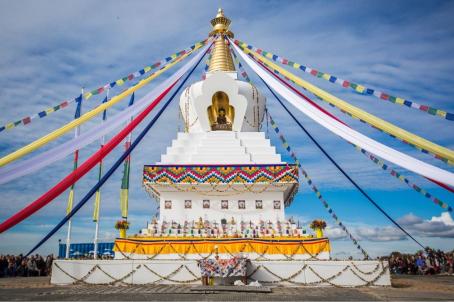
Copenhagen Victory Stupa

Copenhagen Victory Stupa

Copenhagen, DK

The Copenhagen Victory stupa is a Buddhist monument built in 2019 and inaugurated by Sherab Gyaltsen Rinpoche and Lama Ole Nydahl. It is located in the garden of the Diamond Way Buddhist Centre in Copenhagen.

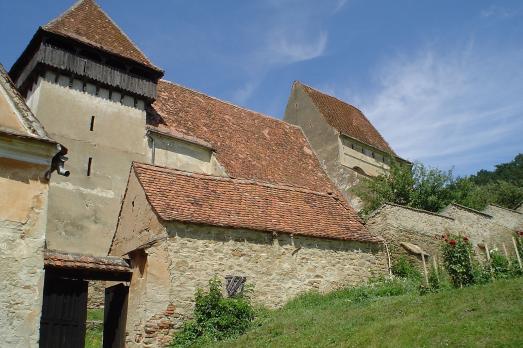
Copşa Mare Fortified Church

Copşa Mare Fortified Church

Copșa Mare, RO

On the eastern hill above the village an early Gothic basilica with tower was first erected. Around 1510 the church was fortified, thus the old chancel was demolished and replaced by a high chancel with polygonal closure strengthened by a defence level built in stone. Due to its height of almost 11 meters and its defence systems the chancel protected the ensemble against the slope. A wooden defence level was built on the tower. The chancel still preserves its stellar vault and the fine tracery on the windows originating from the construction time of the church, but the nave was rebuilt in 1795 in Baroque style. On the northern side of the chancel stands the two-leveled sacristy dated 1519. On its second level a chapel was set up. Especially valuable are the Renaissance portal of the sacristy and the Neoclassical altar.

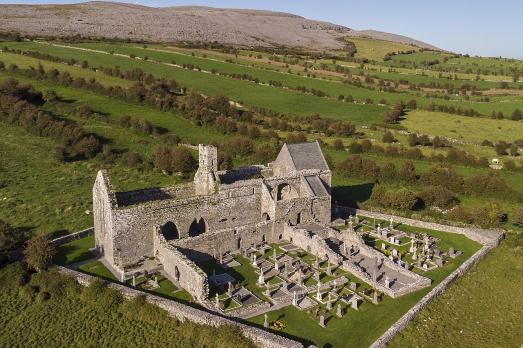
Corcomroe Abbey

Corcomroe Abbey

, IE

Corcomroe Abbey is an old Cistercian abbey from the 13th century. The English Reformation led to the dissolution of Catholic monasteries in England and Ireland. In 1554, the abbey was given to the Earls of Thomond. The monks continued to cultivate the fields and maintain the abbey when circumstances permitted, but the political climate led to a steady decline. The last abbot, the Reverend John O'Dea, was appointed in 1628.

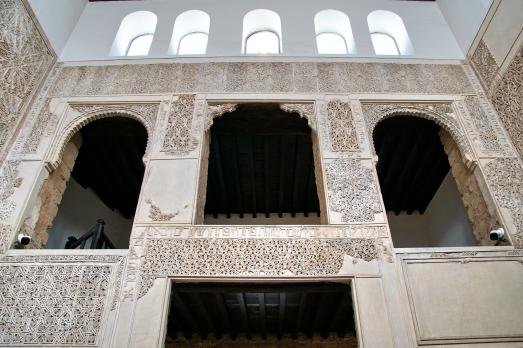
Córdoba Synagogue

Córdoba Synagogue

Córdoba, ES

The Synagogue in Cordoba was built n 1315 in the Jewish quarter of Cordoba, Spain. It is decorated in accordance with Mudejar tradition. It is the only synagogue in Cordoba to escape destruction during years of persecution. It no longer functions as a place of worship, but it is open to the public.

Corfinio Cathedral

Corfinio Cathedral

Corfinio, IT

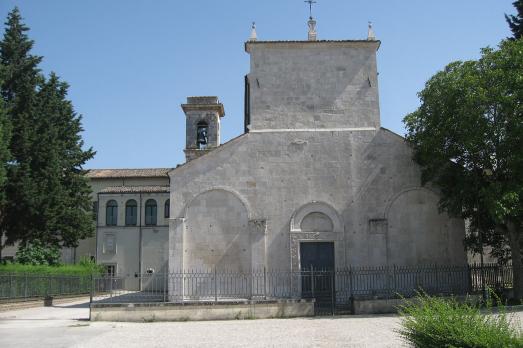
The Cathedral of Corfinio is a religious complex consisting of the church of San Pelinus and the oratory of Sant'Alessandro. The cathedral was built from 1075 until the 13th century on an ancient basilica built on the tomb of St. Pelinus, bishop of Brindisi, who was martyred at the time of Emperor Julian (361-363). Devastated several times by earthquakes, the church was rebuilt in the 17th and 18th centuries in Baroque style inside. These additions and renovations were completely removed during the restoration work carried out in the 1970s, which restored the building to its former Romanesque splendour.

Corfu Cathedral

Corfu Cathedral

, GR

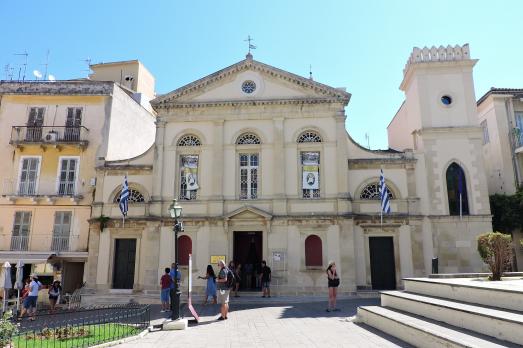
Corfu Cathedral was built in 1553 and renovated in 1658. The cathedral was then completely destroyed by the Germans during the Second World War on the night of September 13, 1943. The reconstruction was completed in 1970.

Corfu New Jewish Cemetery

Corfu New Jewish Cemetery

Kerkira, GR

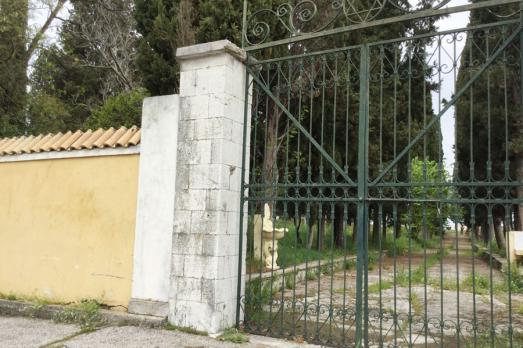
The exact period of the cemetery’s establishment is unknown, but it can be assumed that the new cemetery in Corfu emerged between the 19th and 20th centuries. The cemetery preserves 107 gravestones dating from 1942 to 2018.

Be inspired

Stupkalnis.lt

10 Buddhist stupas to discover in Europe

Stupas are symbols of enlightenment and peace that commemorate different stages of Buddha's life. Since the mid-20th century, thousands of stupas have begun to populate Europe. We have compiled some of the most impressive ones in this list.