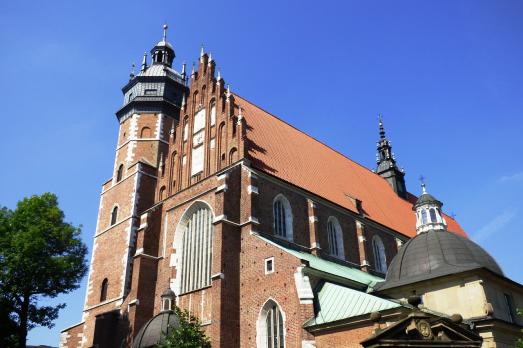
Corpus Christi Basilica
Kraków, PL
The Church of Corpus Christi is a Roman Catholic Gothic basilica founded around 1340 as a wooden church. It was rebuilt in brick a few decades later, in 1385.

Here you can search for a building to visit. You can use the map find destinations, or you can use the filters to search for a building based upon what different criteria.
Kraków, PL
The Church of Corpus Christi is a Roman Catholic Gothic basilica founded around 1340 as a wooden church. It was rebuilt in brick a few decades later, in 1385.
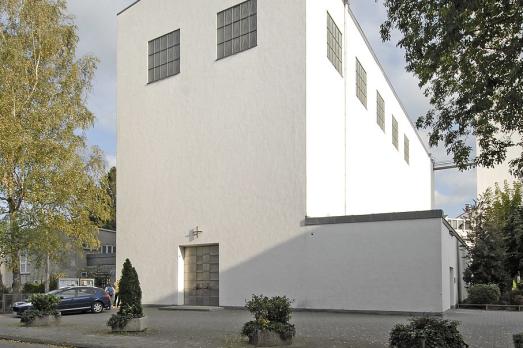
Aachen, DE
The revolutionary construction of Corpus Christi in Aix-la-Chapelle began in 1928 and the first mass was celebrated in 1930. It was planned by the Architect Rudolf Schwarz in cooperation with his colleague Hans Schwippert. Due to its uncompromising cubic design language and its stringent theological concept, the church of Corpus Christi represents a key work of modern sacred architecture.
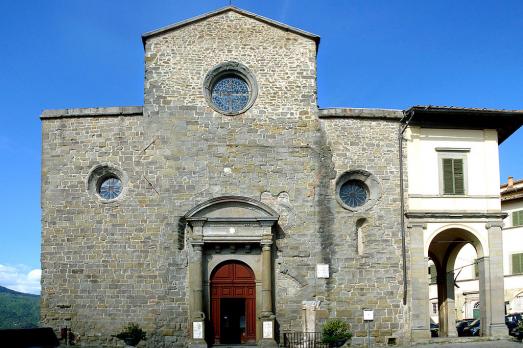
Cortona, IT
The cathedral of Cortona was built on the ruins of a pagan temple and mentioned as a church in the 11th century. The building was chosen as a cathedral when the diocese of Cortona was created in 1325. The façade bears the traces of interventions that took place at different times. The oldest remains, in Romanesque style, are a pillar with a capital and small columns at the corners and part of a large arch; their location bears witness to the lowering of the floor of the old parish church, which was raised when the square was paved. The long, narrow window and a marble plaque with a 14th-century coat of arms also date from the medieval period. For the rest, the east facade dates from the 15th century.
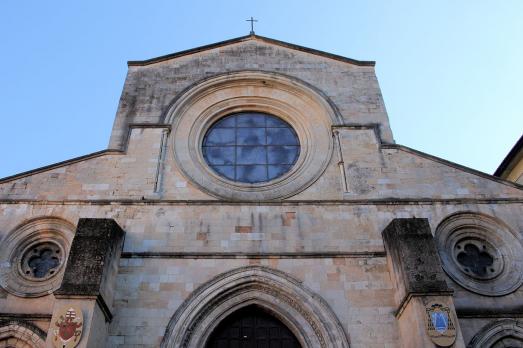
Cosenza, IT
Cosenza Cathedral was built in the mid 11th century but had to be rebuilt in the early 13th century after being destroyed by an earthquake in 1184. The cathedral, which is predominantly Romanesque, was given Baroque elements when it was enlarged in the 18th century and a neo-Gothic façade in the first half of the 19th century. On 12 October 2011, the Cathedral was recognized as a UNESCO World Heritage Site for the Culture of Peace.
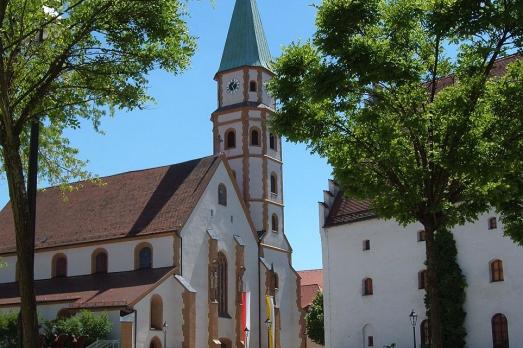
Neumarkt in der Oberpfalz, DE
The Court Church "To Our Lady" was originally a small chapel that would have been built on the site as early as 962. The chapel was enlarged into the present court church from 1418 to 1499. However, the church was only used by the court of Count Palatine for a few years: when Frederick II became an elector in 1544, he brought his seat of government back to Heidelberg. At the same time, the Count Palatine, who was increasingly Lutherian, also initiated the Reformation in Neumarkt. After many changes of faith, the church finally became Catholic again in 1649, after Neumarkt returned to the Bavarian fold.
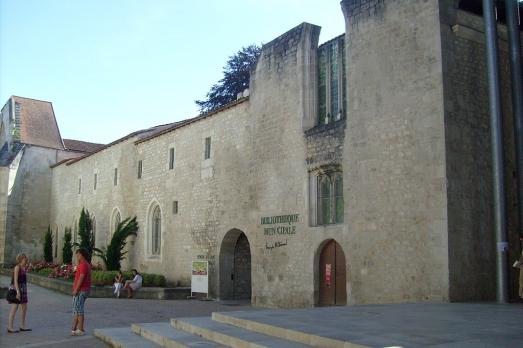
Saintes, FR
Founded at the beginning of the 13th century, the Jacobins convent was home to a community of Dominican monks until the Revolution. Sold as national property, the convent was finally transformed into a private house. At the end of the 19th century, the buildings were owned by Maurice Martineau, a cognac merchant. He devoted part of his time to building up an impressive library, which he bequeathed to the municipality on his death in 1928, together with the buildings of the former convent. The site became a municipal library ten years later.
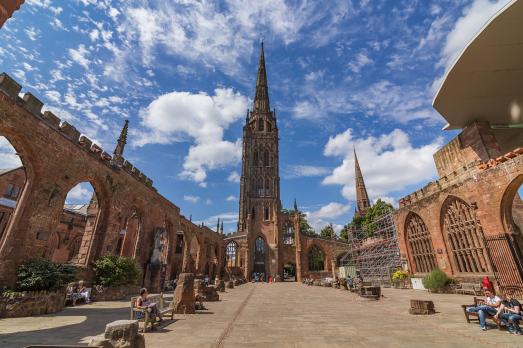
Coventry, GB
For a thousand years, Coventry has been a place of pilgrimage where visitors are greeted with a warm welcome, and this continues within Coventry Cathedral today. Combining the evocative ruins of the bombed Cathedral Church of St Michael with the magnificent ‘casket of jewels' designed by Sir Basil Spence, and voted the nation's favourite 20th century building, Coventry Cathedral is a truly inspirational place to visit.
Rotterdam, NL
On February 16, 1961, the new reformed Credo church in Zuidwijk was put into use. The church was part of a reformed enclave with schools and a gymnasium. The design by architectural firm Swaneveld & Goslinga was demolished in 2000. There is now a small church hall in the apartment complex that replaced the church. Interesting, sleek reconstruction church with tower. Protestant community Bethel. Out of use and demolished in 2000. Replaced by a small church hall, also called Credo church, at the bottom of an apartment complex.
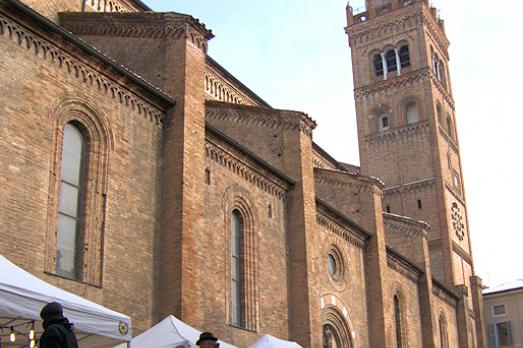
Crema, IT
The present Cathedral of Crema stands on the site of an earlier church, which was destroyed in 1160 by the army of Emperor Frederick I (1155-1190). Reconstruction began in 1284 and was completed in 1341. The façade is a typical example of Lombard Gothic. Above the main door are three statues of the Virgin and Child, St. Pantaleon and St. John the Baptist. In the central part of the façade, there is a large window with a marble rosette. The façade is crowned by a marble loggia. A campanile is attached to the eastern part of the cathedral.
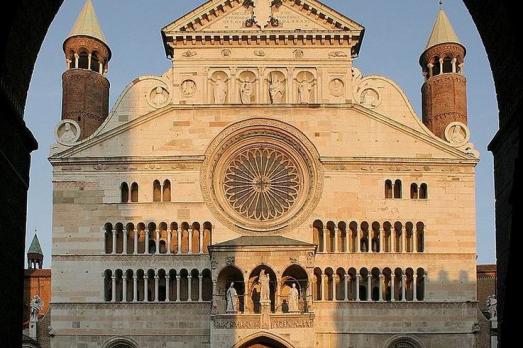
Cremona, IT
Cremona Cathedral, built between 1107 and 1491, is a vast Romanesque temple with Gothic, Renaissance and Baroque elements. Inside it preserves remarkable masterpieces of sculpture and painting, including the "Arca dei martiri persiani", the tomb of the Persian martyrs (Marius, Martha, Audifax and Abachum), martyred in Rome in the 3rd century.
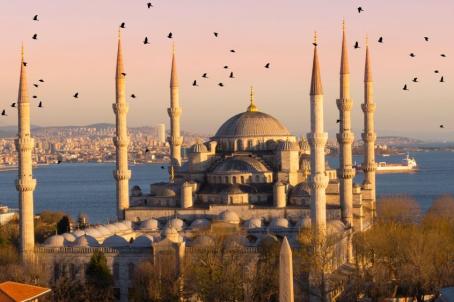
new
For a long time, Europe was ruled by powerful monarchies. Monarchy and religion have been connected since time immemorial. Here are 7 sites across Europe where royalty historically bent the knee to a higher power and received their crown.
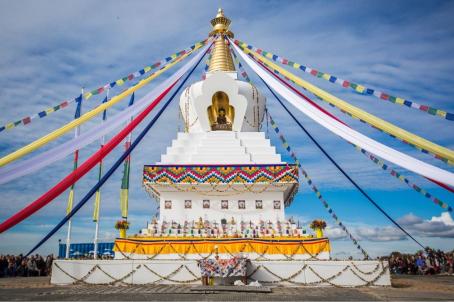
Stupas are symbols of enlightenment and peace that commemorate different stages of Buddha's life. Since the mid-20th century, thousands of stupas have begun to populate Europe. We have compiled some of the most impressive ones in this list.
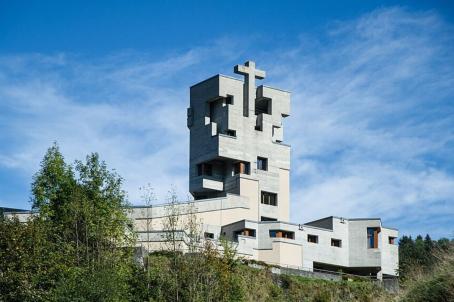
Walter Maria Förderer (1928–2006) was a Swiss architect and sculptor renowned for his neo-expressionist church designs in the 1960s. In this list we have compiled 6 of his church designs that seamlessly integrate religious and secular elements.

How is Religiana helping to conserve and promote Religious Heritage in Europe and why should you get involved?
Find out about Religiana
Are you a tourism organisation or religious heritage sites manager? Discover the advantages of becoming a partner.
See current partners
We can keep you up to date with the latest news from Religiana and religious heritage conservation across Europe.
Sign up to the FRH newsletter