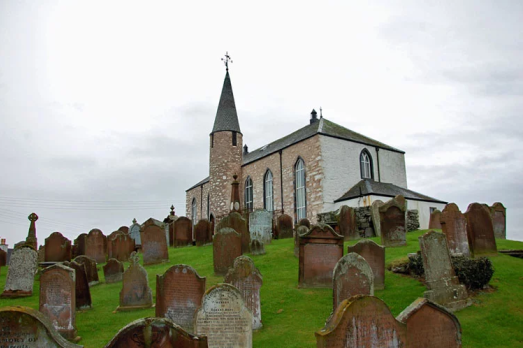
Crossmichael Church
Crossmichael, GB
This church with no dedication is located in Crossmichael, a village in Dumfries and Galloway in Scotland. It can be found on the A713, about 3 miles north of Castle Douglas.

Here you can search for a building to visit. You can use the map find destinations, or you can use the filters to search for a building based upon what different criteria.
Crossmichael, GB
This church with no dedication is located in Crossmichael, a village in Dumfries and Galloway in Scotland. It can be found on the A713, about 3 miles north of Castle Douglas.
s-Gravendeel, NL
Crosspoint is the own building, in 's-Gravendeel, of the Evangelical Community Ezra for all weekday activities. For the Sunday celebrations of this church community, they rented the Cultural Center "De Drie Lelies" in Puttershoek. Since 2018, services are held in their own building.
Covent Garden, GB
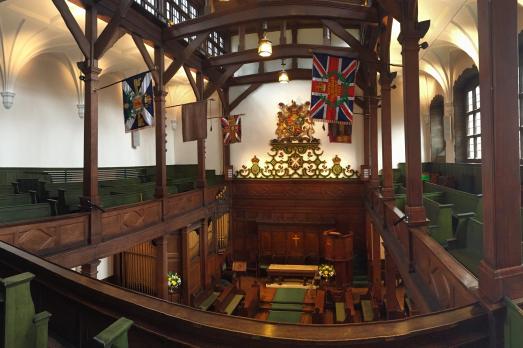
The Church of Scotland has been active in London since the time of James VI, King of Scots, who became King James I of England in 1603. There is some evidence that courtiers of the King who had followed him from Scotland worshipped in a chapel in the precincts of the old Whitehall Palace. This site became known as Scotland Yard and subsequently housed the original offices of the Metropolitan Police. The current building dates from 1909, but Crown Court Church has been on this site since 1719.
Midwolda, NL
Modern church that replaced an earlier church building.
Crvenka, RS
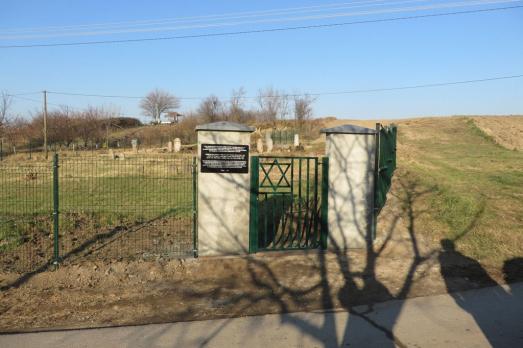
Prior to the Holocaust, the Jewish community in Crvenka existed as an outshoot of the Kula Jewish community. The cemetery remained in active use until WWII.
Cuenca, ES
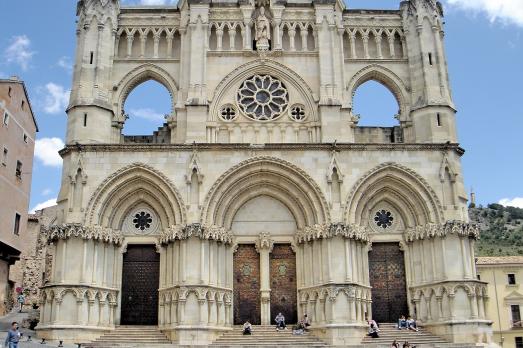
Cuenca Cathedral was built in the Gothic style between 1196 and 1257. At that time, the buildings were built in Romanesque style. However, the Norman influence of King Alfonso VIII's court weighed on the construction of this cathedral, making it the first Gothic cathedral in Castile, along with the one in Avila.
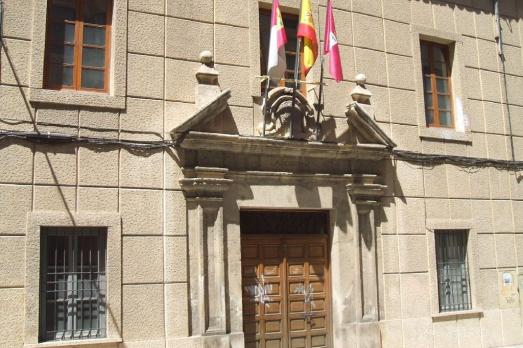
Albacete, ES
The Cultural Centre La Asunción is housed in the former Franciscan convent of La Encarnación. The religious order remained in the complex until 1843. After several uses, the Provincial Council decided to use the building as the site of the Cultural Centre La Asunción in 1982.
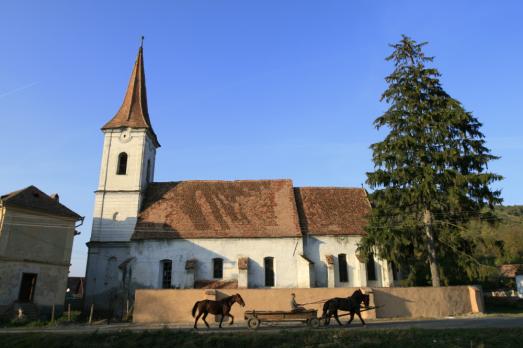
Cund, RO
On the western side of the 15th century hall church a bell tower was erected in 1804. The pilasters of the tower show late Baroque features. From the original fortification wall almost nothing survived to this day, but the fence surrounding the yard of the church marks the initial perimeter. The chancel still preserves its original late Gothic ribbed vault, while the paneled ceiling of the hall was replaced early 20th century by a flat plastered ceiling. The most valuable piece of the interior furniture is the pre-reformation winged altar depicting the Passion of Christ. Today this altar is displayed in Sighişoara inside the Hill Church. In the chancel one can admire the late Gothic pews from 1532.
Rhenen, NL
The Cunerakerk in its current form was built in the 15th century, around 1450. It was actually a thorough renovation of the building that was already there. That church was called Saint Peter. It was probably a stone cruciform basilica. The oldest parts of the church are the choir and the sacristy, which were probably started at the end of the 14th century. The choir has a sober late Gothic style, made of brick. The same style can also be found in the transept, of which the east facade of the southern transept seems to be the most original.
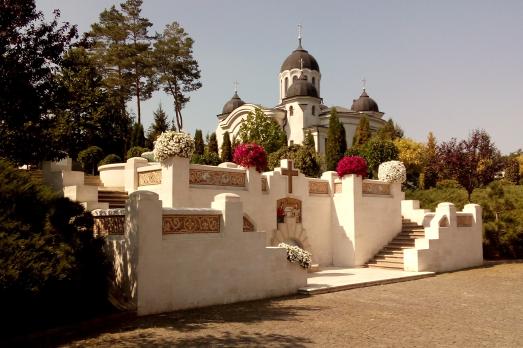
Curchi, MD
Curchi Monastery is one of the most important monuments of Bessarabian architecture. It is an architectural ensemble dating mostly from the 18th and 19th centuries. It consists of five churches, two buildings with cells, a stable, several auxiliary rooms, an orchard, a hermitage and an "archondaric" (guest wing). The Church of the Nativity of the Mother of God, built in 1775, is in neo-Byzantine style, and the Church of St. Nicholas (1808 - 1810) is built in the style of classicism with baroque elements. It is surrounded by a high stone wall. During the Soviet period, the monastery was transformed into a psychiatric hospital.
new
For a long time, Europe was ruled by powerful monarchies. Monarchy and religion have been connected since time immemorial. Here are 7 sites across Europe where royalty historically bent the knee to a higher power and received their crown.
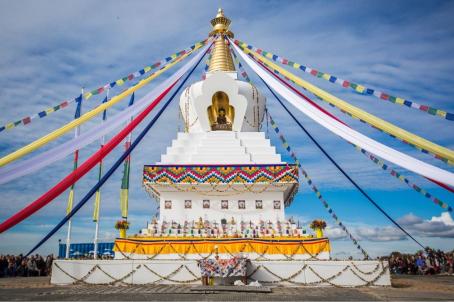
Stupas are symbols of enlightenment and peace that commemorate different stages of Buddha's life. Since the mid-20th century, thousands of stupas have begun to populate Europe. We have compiled some of the most impressive ones in this list.
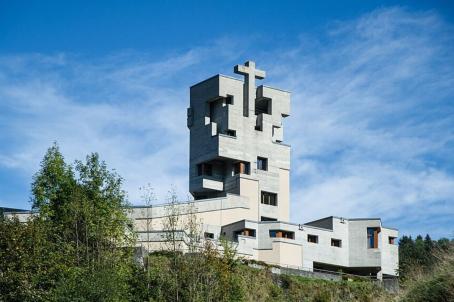
Walter Maria Förderer (1928–2006) was a Swiss architect and sculptor renowned for his neo-expressionist church designs in the 1960s. In this list we have compiled 6 of his church designs that seamlessly integrate religious and secular elements.

How is Religiana helping to conserve and promote Religious Heritage in Europe and why should you get involved?
Find out about Religiana
Are you a tourism organisation or religious heritage sites manager? Discover the advantages of becoming a partner.
See current partners
We can keep you up to date with the latest news from Religiana and religious heritage conservation across Europe.
Sign up to the FRH newsletter