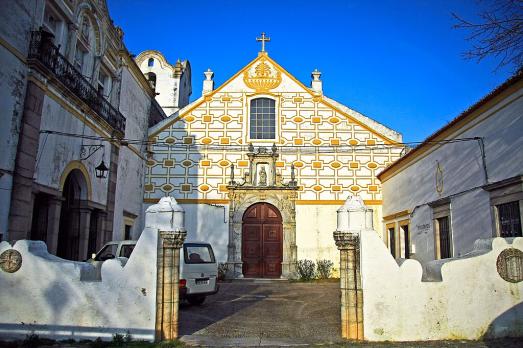
Carmo Church and Convent, Moura
Moura, PT
The Carmo Church and Convent (Igreja e Convento do Carmo) in Moura were the first headquarters of the Carmelite Order in the Iberian Peninsula. The complex features a predominant Renaissance-style.

Here you can search for a building to visit. You can use the map find destinations, or you can use the filters to search for a building based upon what different criteria.
Moura, PT
The Carmo Church and Convent (Igreja e Convento do Carmo) in Moura were the first headquarters of the Carmelite Order in the Iberian Peninsula. The complex features a predominant Renaissance-style.
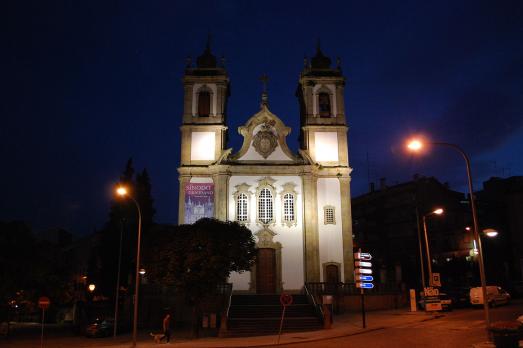
Viseu, PT
The Church of the Venerable Third Order of the Nossa Senhora do Monte do Carmo dates from the end of the 18th century. The Church was created as a result of a disagreement between the friars of the Franciscan Order. The unfortunate Franciscan friars abandoned the Capuchin friars and, with the support of the Discalced Carmelites, decided to create the Third Order of Mount Carmel. They proceeded to elect the Table of the Order and in 1735 the foundations of the new church were laid. The ceiling of the high choir was painted in 1862 by the painter Viseense António José Pereira.
Barendrecht, NL
Modern church with small bell tower. Built as a church of the Protestant Church in the Netherlands (PKN).
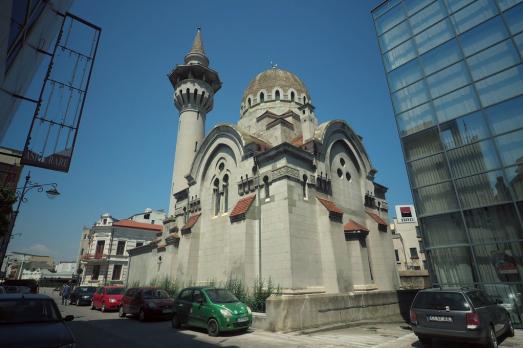
Constanța, RO
The Great Mosque of Constanța, also known as the Carol Mosque, was built between 1910 and 1913. Its name refers to King Carol I (1881-1914) who initiated the construction of the mosque, dedicated to the Muslim community of Constanta. Initially, the mosque was named "Carol I Mosque", then it was later renamed the Mahmoud II Mosque. The construction was carried out in the Egyptian-Byzantine style, with some Romanian architectural additions. It is the first building with reinforced concrete elements built in Romania.
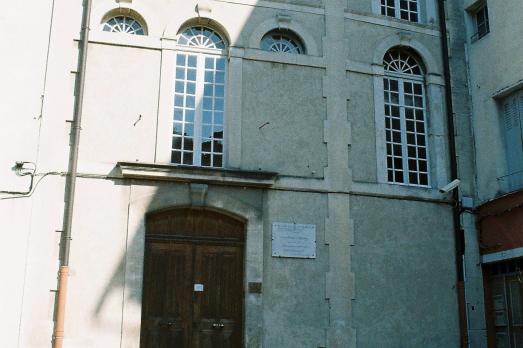
Carpentras, FR
The Carpentras Synagogue was built in 1367 and remains one of the oldest synagogues in France. It was restored in the 18th century by Antoine D’Allemand and updated to the contemporary baroque décor.
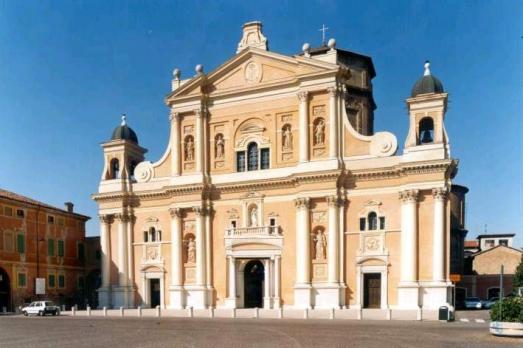
Carpi, IT
The construction of Carpi Cathedral began in 1514 at the instigation of Prince Albert III Pio and was completed towards the end of the 18th century, in 1791. The façade was completed in the second half of the 17th century with Baroque lines, while the high dome, built in 1768, was lowered in 1771.
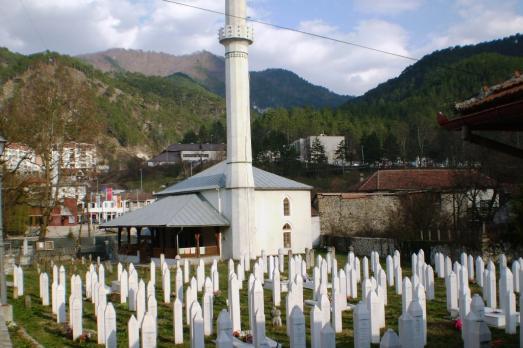
Konjic, BA
The mosque Čaršija was probably founded by a certain Junuz-čauš, and dates back to the 16th century. The mosque was completely renovated in 1922 when the stone floor was replaced by a wooden floor and the roof was covered again with sheet metal. During the war in Bosnia and Herzegovina (1992-1995), the mosque was hit several times by artillery shells. The roof structure and the walls of the building were damaged, and the minaret was hit several times by direct fire. Later, the upper part of the minaret and the sherefe (drum) were rebuilt, the building was plastered and painted, and covered.
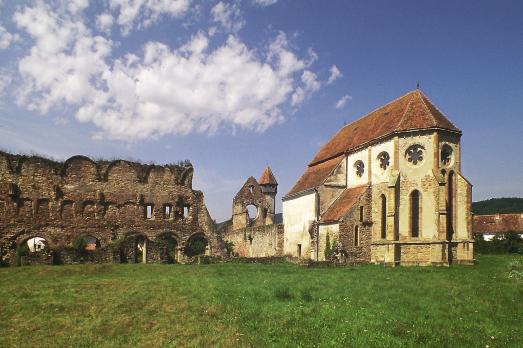
Cârța, RO
Not actually a fortified church, the ruins of the former monastery, which is considered the easternmost establishment of the Cistercians, still impresses with its appearance, erected according to the rules of the order. First it was built in the Romanesque style in 1202, but only after the first destruction in the 14th century it was completed. The monastery remained unfortified, therefore stood unprotected under the attacks of the Ottomans, which burned it in the mid 15th century. The last repair took at the end of the 15th century, then the order was dissolved and the city of Sibiu took it under protection. Starting with the 17th century, the buildings of the ensemble and the nave of the church fell into disrepair to a large extent. The walls of the church ruins still bear traces of the basilica with three naves and transept. From the other buildings of the monastery only the eastern wall of the convent building still stands. Today, the chancel and the transept are used as a church
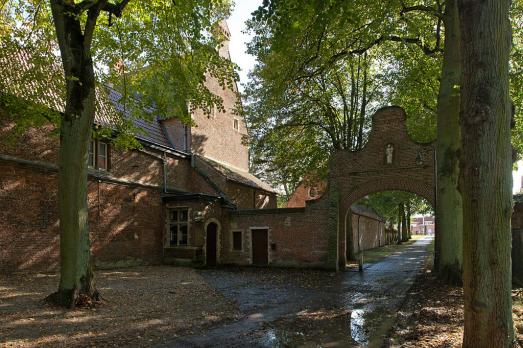
Leuven, BE
The first stone of the monastery was laid down in 1489 by Margarete van York (Margaret of York), the widow of Karel de Stoute (Charles the Bold). The build took until 1530, but the first Carthusian monks arrived in 1491. At the beginning of the 18th century, severe war devastation and financial distress made the monastery obliged to rent out some of its land. In 1773, the congregation had to sell some of their grounds again. The abbey gave shelter to Austrian military troops in 1779 and a part of the complex got damaged due to an explosion of some of their ammunition. In 1783, monastic orders in the Southern Netherlands were abolished. The abbey was sold and repurposed as an ammunition depot. A second explosion in 1793 caused extensive damage to the buildings. In 1806, the church was demolished and the site was used by farmers and gardeners throughout the 19th century. In 1912, the monastery was bought by Armand Thiéry (1868-1955). He organized a restoration and sold the abbey in 1917 to the Capuchins. They renovated the grounds and a second restauration was conducted from 1968 until 1976.
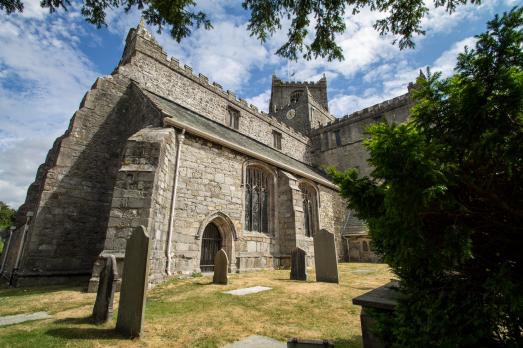
Cartmel, GB
Cartmel has been described as 'the medieval jewel among Lancashire churches.' It makes a lasting impression on the visitor, overshadowing the village as it does and giving an idea of the way early priories must have dominated their surroundings. It was founded as a priory for Augustinian canons in around 1189 and also served as a parish church, which saved it from outright destruction during the Dissolution of the Monasteries in the 1530s.
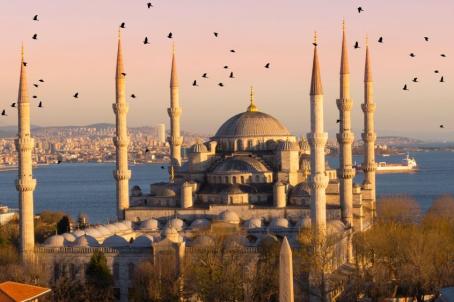
new
For a long time, Europe was ruled by powerful monarchies. Monarchy and religion have been connected since time immemorial. Here are 7 sites across Europe where royalty historically bent the knee to a higher power and received their crown.
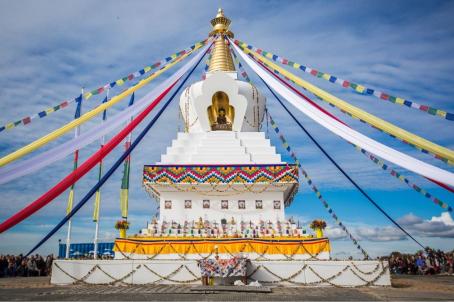
Stupas are symbols of enlightenment and peace that commemorate different stages of Buddha's life. Since the mid-20th century, thousands of stupas have begun to populate Europe. We have compiled some of the most impressive ones in this list.
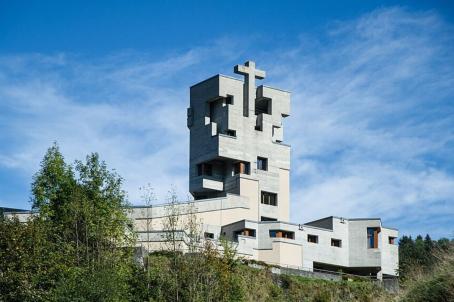
Walter Maria Förderer (1928–2006) was a Swiss architect and sculptor renowned for his neo-expressionist church designs in the 1960s. In this list we have compiled 6 of his church designs that seamlessly integrate religious and secular elements.

How is Religiana helping to conserve and promote Religious Heritage in Europe and why should you get involved?
Find out about Religiana
Are you a tourism organisation or religious heritage sites manager? Discover the advantages of becoming a partner.
See current partners
We can keep you up to date with the latest news from Religiana and religious heritage conservation across Europe.
Sign up to the FRH newsletter