Explore Religious Heritage Across Europe

Here you can search for a building to visit. You can use the map find destinations, or you can use the filters to search for a building based upon what different criteria.

Refine search

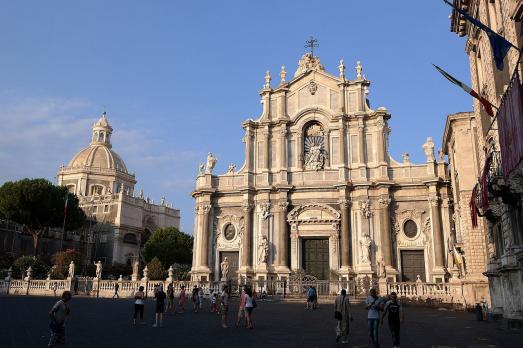
Catania Cathedral

Catania Cathedral

Catania, IT

For its dual religious and defensive function (against Saracen incursions), Catania Cathedral was called the fortress church (Ecclesia Munita). The church was dedicated to the city's patron saint, Saint Agatha, by Ansger in 1094. The 1169 earthquake destroyed the vaults and damaged the columns and its exterior walls. The reconstruction was destroyed by the 1693 earthquake, which shook a large part of eastern Sicily hard.

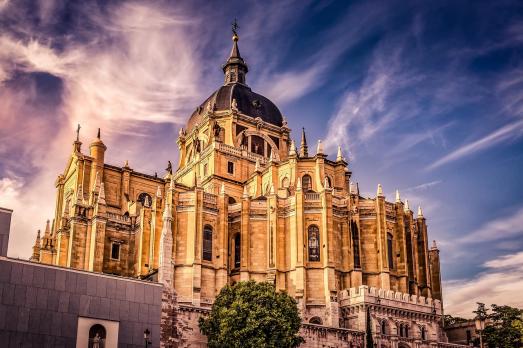
Catedral de la Almudena

Catedral de la Almudena

Madrid, ES

The Almudena Cathedral is the most important religious building in Madrid. On June 15, 1993, its construction began on April 4, 1883 when King Alfonso XII laid the first stone. The interior of La Almudena surprises by having completely different details to other cathedrals: the ceiling and the stained-glass windows set aside the classic style to give way to bright colours and straight lines.

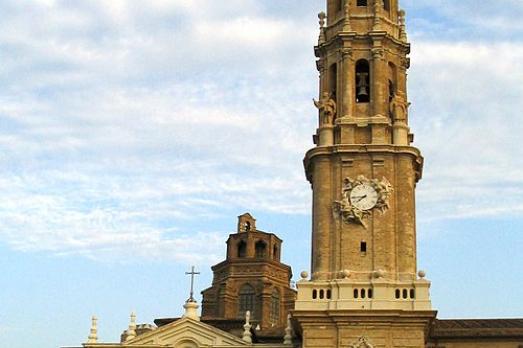
Catedral del Salvador de Zaragoza

Catedral del Salvador de Zaragoza

Zaragoza, ES

The Cathedral of the Savior in its Epiphany of Saragossa was built on the site of an ancient Roman forum and the mosque of Saraqusta, whose minaret still remains in the current tower. The construction of the building started in the 12th century, in the Romanesque style, and underwent many renovations and extensions until the 18th century. It is a UNESCO World Heritage Site since 1986.

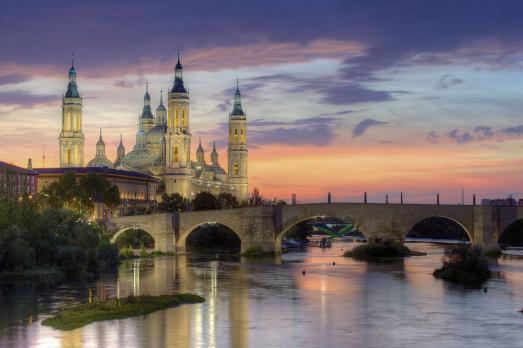
Catedral-basílica de Nuestra Señora del Pilar

Catedral-basílica de Nuestra Señora del Pilar

Zaragoza, ES

The Cathedral-Basilica of Our Lady of the Pillar was built between 1681 and 1754 in a classical style. It is famous for containing a pillar which, according to tradition, was placed by the Virgin Mary in the year 40. The cathedral is a listed monument and one of the 12 “Treasures of Spain”.

Catharinakapel

Lemiers, NL

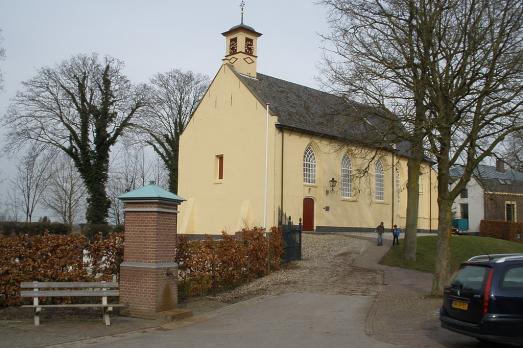
Old parish church, single-nave nave, with roof turret above the west facade, and narrower straight closed choir; built of rubble stone, 11th or 12th century. The choir was later raised and vaulted. Gravestone with date 1719. Boundary stone with double eagle, against south facade of the church. Bell frame with bell by anonymous founder, first half 14th century, diam. 45 cm, out of use. Later Patronage building. Since 1977 a chapel again. When the new Roman Catholic St. Catherine's Church was built in 1895, the old 11th century St. Catherine's Church fell into disuse. The old church now falls directly under the responsibility of the diocese of Roermond. It was recently determined that restoration is urgently needed. Damp is creeping up the walls. That damp is also affecting the Cobra-like murals made by painter Hans Truijen in 1978. Although there is currently no money, the diocese believes that the church should be preserved.

Catharinakerk

Catharinakerk

Asch, NL

Historical church. Situated on a traffic island. The tower was demolished in 1823.

Catharinakerk

Catharinakerk

Asperen, NL

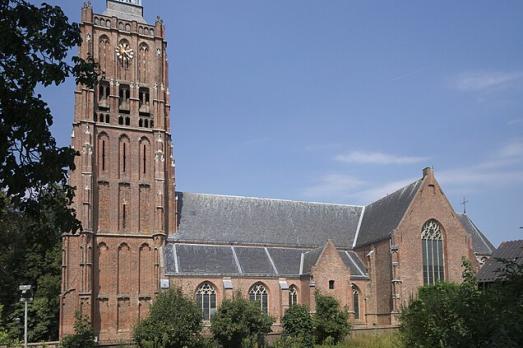
Built in the 15th century as the Roman Catholic St. Catherine's Church. It is a cruciform church with a pseudo-basilica nave. The naves in the church are separated by columns.

Cathedral Basilica of Eger

Cathedral Basilica of Eger

Eger, HU

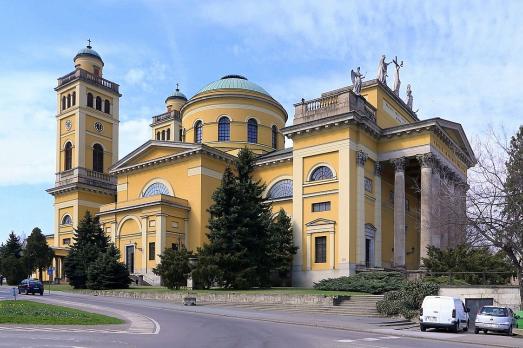
The Cathedral Basilica of Eger, built between 1831 and 1836 according to the plans of József Hild in the classicist style, is one of the largest churches in Hungary. It replaced a medieval church, which served as a mosque in Turkish times, and was demolished in the 1820s. The basilica was fully completed in the 1950s, when, among other things, the frescoes on the church ceiling were made.

Cathedral Basilica of Győr

Cathedral Basilica of Győr

Győr, HU

The Cathedral of the Assumption was first built in the Romanesque style in the 11th century, only the apse of this first building has survived to this day. In the second half of the 15th century, a reconstruction of the church was undertaken in the Gothic style, and was completed in the 1480's. Ruined after the passage of the Turks, the cathedral was rebuilt on the basis of the plans of the Italian architect Giovanni Battista Rava in the Baroque style from 1639 to 1645.

Be inspired

Stupkalnis.lt

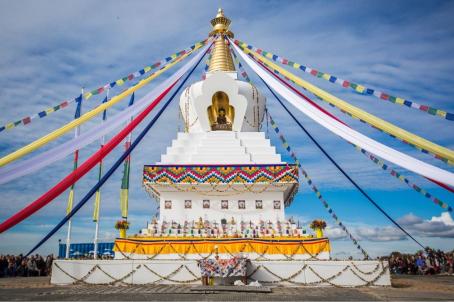
10 Buddhist stupas to discover in Europe

Stupas are symbols of enlightenment and peace that commemorate different stages of Buddha's life. Since the mid-20th century, thousands of stupas have begun to populate Europe. We have compiled some of the most impressive ones in this list.