Protestantse Kerk
Menaldum, NL
Neo-church with a tower from 1866. It was built to replace an older church. This church is listed as a National Monument of the Netherlands.

Here you can search for a building to visit. You can use the map find destinations, or you can use the filters to search for a building based upon what different criteria.
Menaldum, NL
Neo-church with a tower from 1866. It was built to replace an older church. This church is listed as a National Monument of the Netherlands.
Grijpskerk, NL
Built as a Reformed Church. Iconic interbellum church with tower. Hall church with high, side-standing tower in a light expressionist style.
Biervliet, NL
In 1659, construction of this church began. The Middelburg stained glass artist Cornelis Van Barlaar made three windows that were placed in the east facade (1660-1661). The oak wall paneling next to the pulpit (priest's chancel) is from the previous medieval church, as is the separation between the chairs and the garden. The copper chandelier is a gift from the local preacher Lucas Schortinghuis, late 18th century. During the liberation in 1944, the tower was destroyed. Reconstruction in a modified form took place in 1947.
Gasseltenijveen, NL
Reformed church, built in 1858 in the water board style. The facade tower placed above the front building was added in 1879. Next to it is the catechism room GAN-OV13B-59.
Roswinkel, NL
Dutch Reformed Church. Nave from 1759, tower from 1853. Inventory: pulpit from 1662. Memorial board from 1759. Bell tower with bell from an anonymous founder, 1362, 83 cm. Vertical sundial on the south side of the church.
Nieuwvliet, NL
NH Church. Modest freestanding hall church, hipped roof and roof turret and ball pirons. On the south side consistory built under a lean-to roof. Bell tower with bell by JA de Grave, 1720, diam. 64 cm.
Hoogkerk, NL
A Romanesque brick house of worship from the early 13th century. The church once had a tower but it was lost to war violence. With old, new facade from the 1960s. Also known as Haghekerke, Hogerkerken, Hoegekerk or Ollekerk.
Kleverskerke, NL
Around 1200 the first church was founded in Kerkwerve. For the first centuries it was Roman Catholic. Shortly after the siege of Zierikzee around 1576 the Reformation began to break through on Schouwen-Duiveland. The residents of Kerkwerve joined the new doctrine. The damaged church was partly demolished and partly restored and made suitable for the Reformed church service. In the 1980s the exterior of the Dutch Reformed church was restored. Between 1992 and 2004 the interior was restored in phases. Finally the coats of arms of the Lords of Kleverskerke were given a makeover. They are hanging back in their place in the pew. And with this the restoration was completed on 22 October 2004.
Pijnacker, NL
Dutch Reformed Church. From the late Gothic village church, the following were preserved during the construction of the neo-Gothic church in 1892: the foundations on which the new church was built, and the columns with capitals, provided with some curly cabbage leaf wreaths, as well as the arches of the nave. Two-manual organ, made in 1830 by H. Knipscheer. Bell frame with bell by G. van Hyntym from 1434, diam. 118 cm.
Meerssen, NL
Protestant church in Meerssen.
new
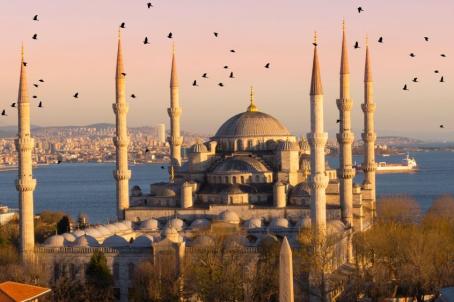
For a long time, Europe was ruled by powerful monarchies. Monarchy and religion have been connected since time immemorial. Here are 7 sites across Europe where royalty historically bent the knee to a higher power and received their crown.
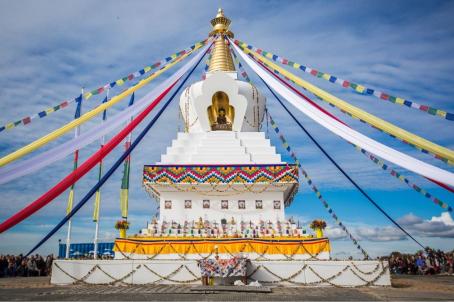
Stupas are symbols of enlightenment and peace that commemorate different stages of Buddha's life. Since the mid-20th century, thousands of stupas have begun to populate Europe. We have compiled some of the most impressive ones in this list.
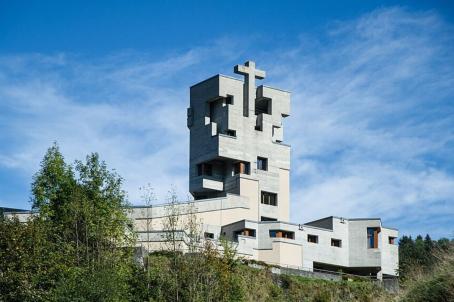
Walter Maria Förderer (1928–2006) was a Swiss architect and sculptor renowned for his neo-expressionist church designs in the 1960s. In this list we have compiled 6 of his church designs that seamlessly integrate religious and secular elements.

How is Religiana helping to conserve and promote Religious Heritage in Europe and why should you get involved?
Find out about Religiana
Are you a tourism organisation or religious heritage sites manager? Discover the advantages of becoming a partner.
See current partners
We can keep you up to date with the latest news from Religiana and religious heritage conservation across Europe.
Sign up to the FRH newsletter