Protestantse Kerk
Nieuwenhoorn, NL
Historic village church with tower. Nieuwenhoorn is a small village north of Hellevoetsluis. This church is listed as a National Monument of the Netherlands.

Here you can search for a building to visit. You can use the map find destinations, or you can use the filters to search for a building based upon what different criteria.
Nieuwenhoorn, NL
Historic village church with tower. Nieuwenhoorn is a small village north of Hellevoetsluis. This church is listed as a National Monument of the Netherlands.
Halfweg, NL
This architecturally very interesting, special church (architect JA Smits), with a small tower, was called the "Small Church" since the local SOW / PKN process, opposite the Reformed "Large Church" of Tj. Kuipers. In the long term, the PKN Halfweg-Zwanenburg only wanted to maintain this "Small Church", which was being restored and redesigned for this purpose from around the end of 2009 to spring 2011. Delays in the implementation of these plans arose due to the fact that all of this had to be financed from the proceeds of the (eventually to be demolished) Reformed "Large Church". In terms of architecture and layout, this Small Church is somewhat similar to Anglican churches and cathedrals in Great Britain, especially the elongated and straight-ended choir.
Menaldum, NL
Neo-church with a tower from 1866. It was built to replace an older church. This church is listed as a National Monument of the Netherlands.
Someren, NL
The church is a hall building with three-sided closure, four bays deep, under a saddle roof. The consistory room has a hipped roof. Both roofs are covered with natural stone slates in a mesh covering. On the square a symmetrical pilaster facade with a projecting portal with a pediment and pinnacle. The stepped gable has a climbing arch frieze, clock face with clockwork, horizontal bands and a plastered plinth. Furthermore, the facade is crowned by a square bell tower with a tower roof and weather vane. The tower carries a carillon of eighteen bells. The rising masonry consists of red machine-made bricks laid in cross bond. The nave has lisene-like pilasters. In the arch drum above the large window of the front facade decorative brickwork. Cement spring and keystones in pointed arch and arch frieze. The wall openings of the church are provided with cast iron Gothic pointed arch windows with diamond-shaped bars. In the transom of the portal and in the round window of the rear facade a geometric rod division. The interior has a stuccoed cross-ribbed vault with iron tie rods. In the outer wall cast iron wall anchors. In the church an octagonal oak pulpit from 1740 with copper lectern, baptismal font and wooden sounding board with golden halo, made by the carpenter Godefridus Scheepers from Heeze.
Haaksbergen, NL
From 1854, designed by the City Architect of Enschede F. Doorwaart Niermans, influenced by German examples. Octogenous ground plan and central tower. One of the eight sides, slightly projecting, provided with a classicistically framed entrance section. Organ with main work and subpositive, made in 1864 by H. Honhof.
Heeze, NL
Dutch Reformed Church. Hall building from 1906 on the foundations of the medieval chapel belonging to the castle. Bell tower with bell by Jan van Asten, 1451, 56 cm.
Ooltgensplaat, NL
Simple hall church from 1847 with a plastered tower, including a classicist portal with pilasters; triglyph list and pediment. The inventory includes a pulpit with a simple bowl, an excellent carved rear bulkhead, a sounding board, stairs and enclosure, all in Louis XIV style; pulpit lectern, candle arm, baptismal font holder and precentor's lectern, from the early 18th century. Furthermore, there are three chandeliers from the late 17th century. This church is listed as a National Monument of the Netherlands.
Rozendaal, NL
Dutch Reformed Church. Rectangular, high brick building (1758), under one roof with the parsonage built against it on the south side. The parsonage has a sober cornice facade and has two floors with a low upper floor. Six-pane sash windows in the windows. One-manual organ, made in 1880 by E. Leichel in an older casement.
Lemele, NL
Around 1860, the committee for the Foundation of a Reformed Church of Lemele and Archem was established. At that time, the inhabitants of Lemele still had to walk about nine kilometres to Ommen to attend church services on Sundays. This proved to be too much of a task for many people. The efforts of the committee paid off. On 21 May 1865, the Koepelkerk was consecrated. This soon proved to be too small and after several renovations, it was decided to build a new church at the end of the 1930s. This was put into use in January 1940.
Noordbroek, NL
This church is listed as a National Monument of the Netherlands.
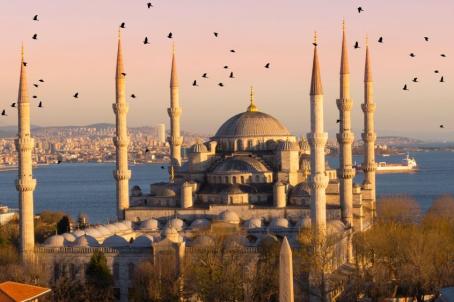
new
For a long time, Europe was ruled by powerful monarchies. Monarchy and religion have been connected since time immemorial. Here are 7 sites across Europe where royalty historically bent the knee to a higher power and received their crown.
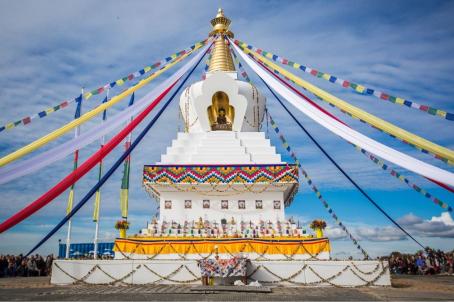
Stupas are symbols of enlightenment and peace that commemorate different stages of Buddha's life. Since the mid-20th century, thousands of stupas have begun to populate Europe. We have compiled some of the most impressive ones in this list.
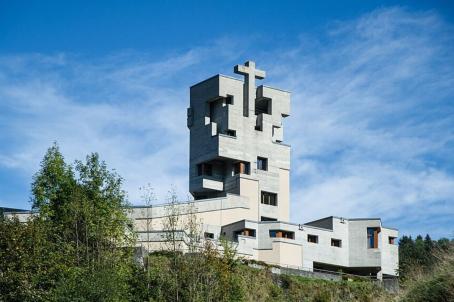
Walter Maria Förderer (1928–2006) was a Swiss architect and sculptor renowned for his neo-expressionist church designs in the 1960s. In this list we have compiled 6 of his church designs that seamlessly integrate religious and secular elements.

How is Religiana helping to conserve and promote Religious Heritage in Europe and why should you get involved?
Find out about Religiana
Are you a tourism organisation or religious heritage sites manager? Discover the advantages of becoming a partner.
See current partners
We can keep you up to date with the latest news from Religiana and religious heritage conservation across Europe.
Sign up to the FRH newsletter