Explore Religious Heritage Across Europe

Here you can search for a building to visit. You can use the map find destinations, or you can use the filters to search for a building based upon what different criteria.

Refine search

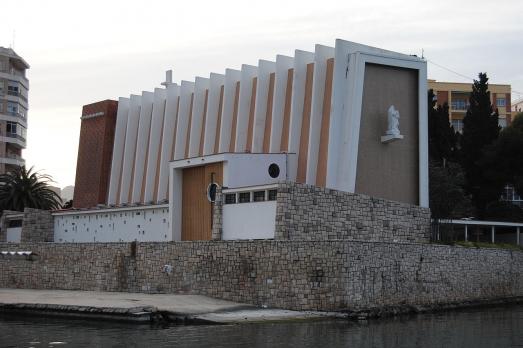
Church of San Nicolás de Bari

Church of San Nicolás de Bari

Gandia, ES

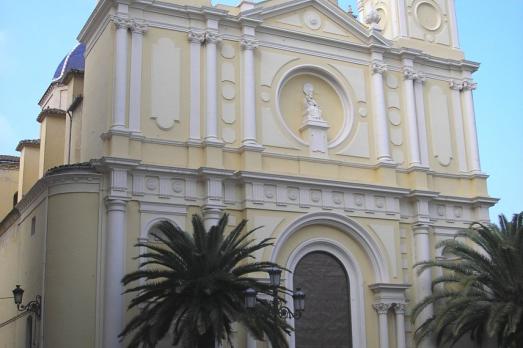
The church construction took place in response to the need to build a place of worship in Grao to replace the previously destroyed church during the Civil War. The church is conceived as a longitudinal nave with trapezoidal shape, which emphasizes the perspectives towards the presbytery. The south sea front presents the volume of the chapels that are presented as a temple podium.
Church of San Nicolás

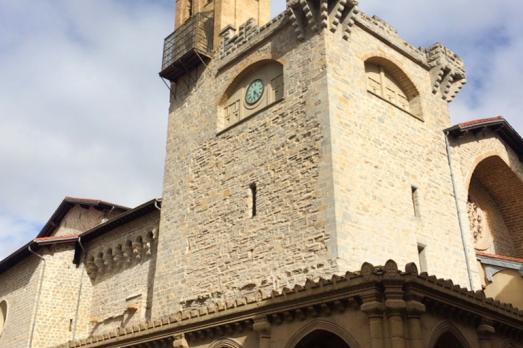
Church of San Nicolás

Pamplona, ES

The Church of San Nicolás, built from the 12th century, was the main church of the San Nicolás district, one of the three historic boroughs of Pamplona's old town. The church was built primarily to serve as a military and defensive bastion for the inhabitants of the borough. Destroyed by one of these neighbourhood attacks, the present Gothic church was therefore built and completed in 1231.

Church of San Pancrazio

Church of San Pancrazio

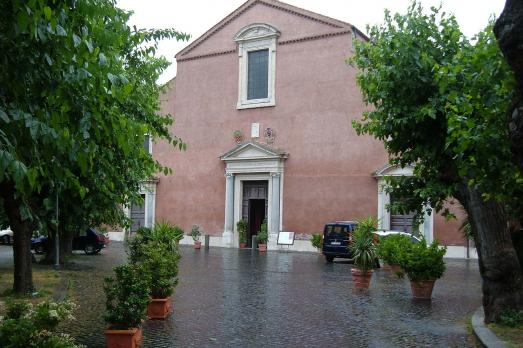
Roma, IT

The church of San Pancrazio was built in the 15th century by the Orsini family, owners of the castle in the Isola Farnese district. Later it was enlarged, with the present façade and a bell tower. The façade has a beautiful Roman marble portal and, above it, a rose window with polychrome glass decoration. The inside has three naves with an apse. Everywhere in the building, there are frescos or remains of frescos of the XVI century.

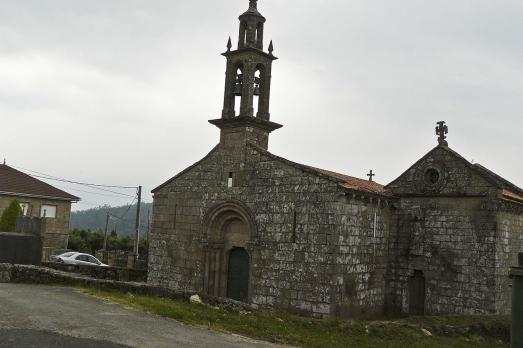
Church of San Pedro (Ansemil)

Church of San Pedro (Ansemil)

Ansemil, ES

San Pedro de Ansemil is the parish church of Ansemil, in the municipality of Silleda, province of Pontevedra.

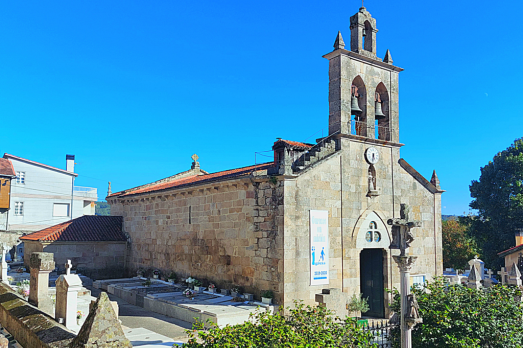
Church of San Pedro (Orense)

Church of San Pedro (Orense)

Orense, ES

The general characteristics of the temple, located in the Cudeiro neighborhood, place its construction around 1200 or in the first decades of the 13th century

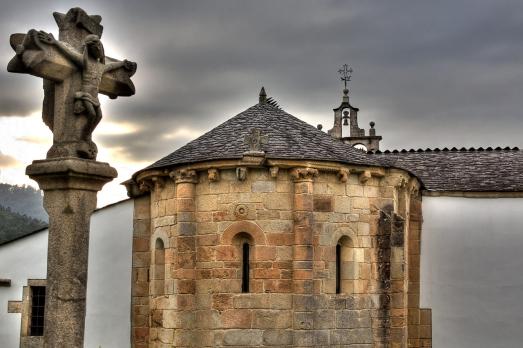
Church of San Pedro (Vivero)

Church of San Pedro (Vivero)

Vivero, ES

Romanesque style. The church of San Pedro is located in the parish of the same name. The current temple dates from the end of the 12th century. However, its origin dates back to the 6th century, as evidenced by an epigraph located on an exterior ashlar, which mentions a restoration from the 10th century.

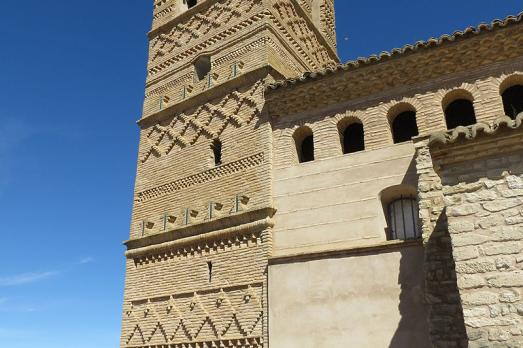
Church of San Pedro ad Vincula

Church of San Pedro ad Vincula

Torralba de Aragón, ES

The church of San Pedro ad Vincula in Torralba de Aragón (Province of Huesca, Spain) is a late Gothic building that underwent multiple additions and reforms in the Renaissance period, among which its change of orientation stands out.

Church of San Pedro Apóstol

Church of San Pedro Apóstol

Sueca, ES

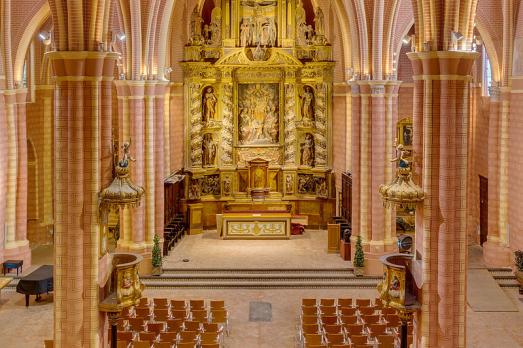
The Romanesque origin of the church has long gone after various modification over the course of its history. The hurch has three naves and a transept with a large dome on an octagonal drum resting upon the crossing. The Communion Chapel is in the center of the apse, which also has a dome similar to that of the transept. The interior is decorated with different colored marbles.

Church of San Pedro Apóstol

Church of San Pedro Apóstol

Alagón, ES

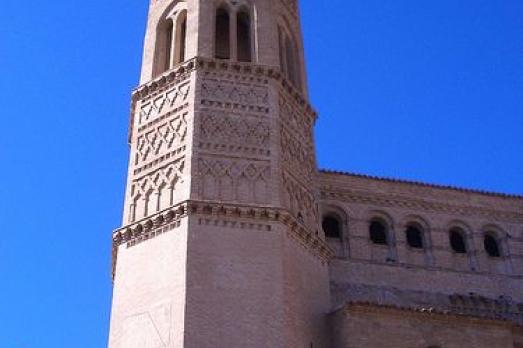
The construction of this church was started in the thirteenth and completed in the fourteenth centuries. At the end of the fifteenth century AD, two side chapels and an additional section for the upper choir were added to the original single nave with two parts and a semicircular apse on the inside and polygonal outside. Later, a perspective with double-threaded arches was added to the perimeter in the middle of the 16th century AD. C., and two further chapels in the baroque style were added to the first portion in the 17th century AD.It responds to the common Mudejar church type by having a sizable single nave that creates a unitary and open space.

Church of San Pedro de los Francos

Church of San Pedro de los Francos

Calatayud, ES

The church was built after the battle of Cutanda (1120), when, at the entrance of King Alfonso I the Battler to Calatayud, a contingent of Franks from Bigorra under the command of the Count of Alperche, who had supported the king in the Reconquest.

Be inspired

Stupkalnis.lt

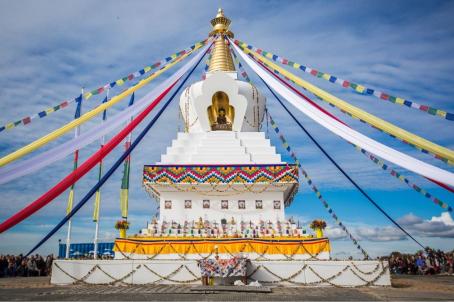
10 Buddhist stupas to discover in Europe

Stupas are symbols of enlightenment and peace that commemorate different stages of Buddha's life. Since the mid-20th century, thousands of stupas have begun to populate Europe. We have compiled some of the most impressive ones in this list.